Parc archéologique et botanique de Solutré, Archaeological and botanical park at Solutré-Pouilly, France
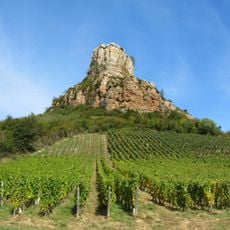
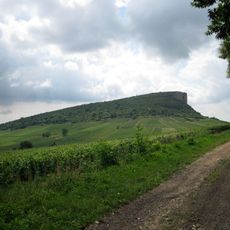
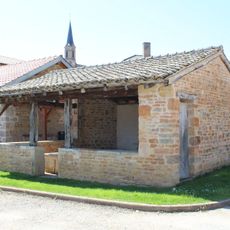
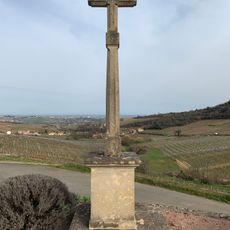
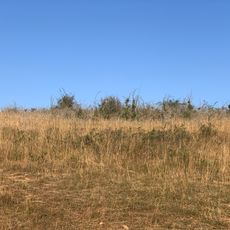
The Parc archéologique et botanique de Solutré is a 13,000 m² archaeological site and botanical garden in Solutré-Pouilly, Saône-et-Loire, maintained by the Musée départemental de Préhistoire. A marked trail crosses the former hunting site, with eight information areas covering geology, prehistoric animals, hunting techniques, the prehistoric landscape, the site's discovery and excavation in 1866, and later digs. Regional trees, shrubs and plants along the path are labelled with their scientific names.
The first excavations began in the 1800s and revealed that people conducted large hunting operations here during the Ice Age. These findings made the location key to understanding how early humans lived in one place over extended periods.
The park takes its name from Solutré-Pouilly, the commune where the site lies, and from the Solutrean flint industry identified here. Visitors follow a marked trail with eight information areas covering the geology, the prehistoric animals, the hunting techniques and the landscape of the Upper Paleolithic, alongside labelled regional trees, shrubs and plants.
The park covers 13,000 m² and is open daily except in December. A marked trail links eight information areas covering geology, prehistoric animals, hunting techniques, the prehistoric landscape, the site's discovery and excavation in 1866, and later research. Regional trees, shrubs and plants along the path are labelled with their scientific names.
At certain stations visitors can see vertical casts that work like a cross-section, showing how archaeological layers stack on top of each other. This visual presentation makes it easy to grasp which periods of human history overlap and how long people stayed in this location.
The community of curious travelers
AroundUs brings together thousands of curated places, local tips, and hidden gems, enriched daily by 94,658 contributors worldwide.