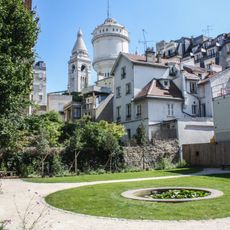
Rue Cortot, Historical street in Montmartre, Paris, France
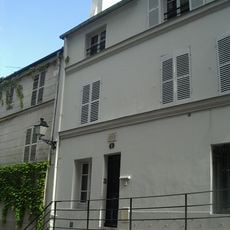
Rue Cortot is a 125-metre street in the 18th arrondissement, running from 19 Rue du Mont-Cenis to 18 Rue des Saules. It climbs steeply in grey cobblestones laid in uneven rows and fan patterns, with a dark metal handrail on one side and stone steps further up. Ivy covers facades on the left, and at no. 12 a light stone building bears the red lettering "MUSEE DE MONTMARTRE" above an arched doorway.
The street appears as Petite rue Saint-Jean on Albert Jouvin de Rochefort's 1672 map of Montmartre. After Montmartre joined Paris in 1859, it was officially classified in the Paris road network on 23 May 1863 and renamed the following year after sculptor Jean-Pierre Cortot (1787–1843).
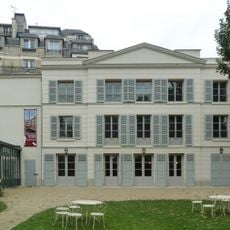
The Musée de Montmartre occupies the 16th-century Manoir de Rosimond at no. 12, one of the oldest houses on the butte. Painters Maximilien Luce and Raoul Dufy kept studios there, and Suzanne Valadon and André Utter lived on the premises from 1911 to 1933. Its collections cover the history and artists of Montmartre.
The best way to explore this street is on foot to notice the details and historic buildings. It helps to visit early in the day when fewer tourists are around.
At No. 6, Erik Satie rented a small second-floor room from 1890 to 1898 and described it as living "in a cupboard, in the corner of my cold". The anarchist songwriter Paul Paillette gave the same address for his 1891 collection Tablettes d'un lézard.
The community of curious travelers
AroundUs brings together thousands of curated places, local tips, and hidden gems, enriched daily by 93,015 contributors worldwide.