Réserve naturelle nationale des marais de Séné, National nature reserve in Séné, France
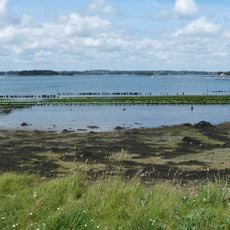
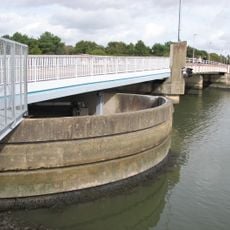
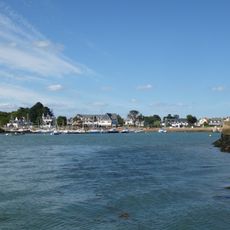
The Réserve naturelle nationale des marais de Séné covers 530 hectares at the head of the Gulf of Morbihan, including 410 hectares of reserve and a 120-hectare protection zone. It stretches nearly 6.5 km from north to south, with mudflats exposed at low tide, salt meadows, creeks and former salt pans forming a mosaic of wetlands. A wooden boardwalk with railings crosses the shallow water and marsh grass.
In 1720 the canons of the cathedral chapter of Saint-Pierre obtained the concession of the royal maritime domain to establish salt marshes. After the Revolution of 1789 the clergy's property was confiscated and the salt marshes sold; production stayed prosperous until the mid-19th century, then declined with falling salt prices, railway transport and sterilisation for food preservation. The last salt worker of Séné stopped shortly after 1950, and the reserve was created by decree on 21 August 1996.
The salt meadows and coastal lagoons are valued locally as places to watch migratory birds and experience how the landscape changes with the tides. The site reflects a long human connection to this tidal environment that remains visible in how people today use and protect it.
The reserve can be explored on marked paths that wind through different habitats and offer changing views of the landscape. Visitors should wear sturdy shoes and be prepared for soft or muddy ground, especially when walking closer to the water's edge.
The reserve was bought in 1979 with donations collected by SEPNB after the Amoco Cadiz oil spill: 14 hectares of old salt pans at Falguerec, classified as a hunting reserve in September 1980. It quickly became an internationally important site for water birds, which led to the national reserve decree of 21 August 1996.
The community of curious travelers
AroundUs brings together thousands of curated places, local tips, and hidden gems, enriched daily by 94,408 contributors worldwide.