Réserve naturelle régionale du cratère du Mont-Bar, Regional nature reserve in Allègre, France.
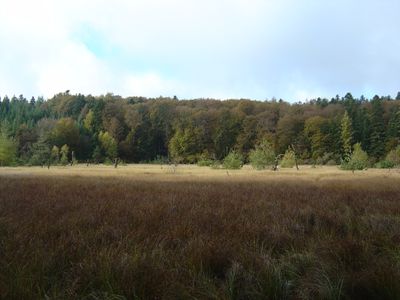
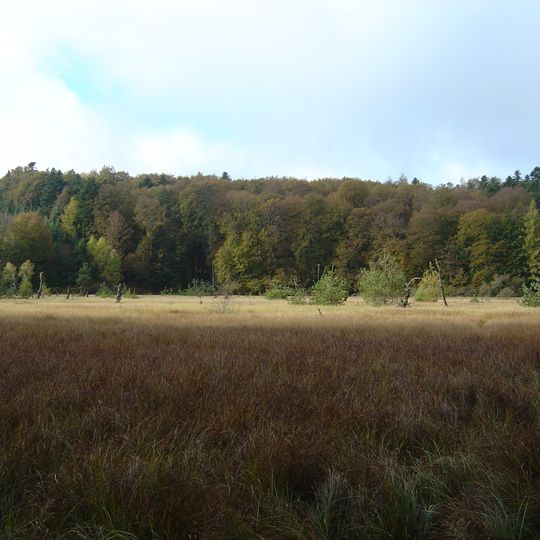
The regional nature reserve sits within a 500-meter-wide volcanic crater structure reaching 1,172 meters elevation in the Haute-Loire department, where a peat bog has developed within the volcanic depression. Marked trails guide visitors around the crater rim and through areas where water-logged soils support plant communities found nowhere else in France.
The volcanic crater formed more than 790,000 years ago through strombolian eruptions that shaped the landscape. Archaeological excavations in the 1800s uncovered ancient artifacts, revealing that people have known and valued this location for thousands of years.
The site functions as a place where visitors connect volcanic geology with living ecosystems through marked trails and observation points. People come to see how a harsh volcanic past has created conditions for specialized plant communities that thrive nowhere else in the region.
Visiting works best on foot using the marked trails that safely guide you through the protected areas without disturbing the fragile habitat. The paths are walkable year-round, but waterproof boots are recommended during wet seasons since boggy soils can be muddy and slippery.
The reserve contains sphagnum mosses and carnivorous sundew plants, species normally found mainly in northern peatlands, thriving here in this volcanic depression. These southern bog inhabitants serve as a living reminder of how landscapes and climate have shifted since the last ice age.
The community of curious travelers
AroundUs brings together thousands of curated places, local tips, and hidden gems, enriched daily by 92,634 contributors worldwide.