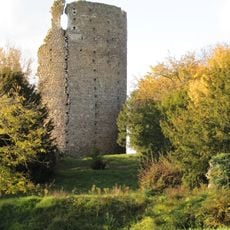
Tour de Grisset, Roman temple ruins in Fréteval, France.
Tour de Grisset is the surviving cella of a Gallo-Roman fanum, a roughly square structure measuring 6.80 by 6.15 m outside and 3.65 by 3.60 m inside, with a barrel-vaulted ceiling 7.15 m high. Its walls, 1.3 m thick, are rubble faced with small flint stones banded by rows of terracotta bricks. The preserved masonry rises 8.60 m to the top of the vault, and the base flares outward.
This temple dates to the Roman period and was part of a larger settlement around Fréteval. Excavations in the 1960s uncovered remains of a bath complex and other structures, revealing the presence of a secondary Roman site in the area.
The adjoining plot north of the tower was called "La Cohue" in medieval times, a name suggesting a meeting or fair ground, perhaps a conciliabulum. The temple stood within a small cadastral parcel of about 12 by 10 metres, possibly the trace of a gallery around the cella.
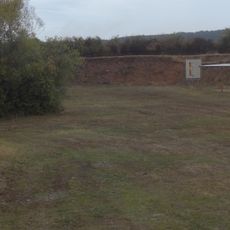
The tower stands in open ground beside the N10, 2 km north-west of Fréteval's village centre, 1 km from the right bank of the Loir, at an altitude of 103 m on the lower slopes of a hillside above the valley. The monument itself has not been excavated, so the surrounding earthworks and buried remains should not be disturbed. The site was long overgrown with bushes and scrub before its protection, so expect rough grass underfoot.
The structure preserves its original brick vault, making it a rare example of intact Gallo-Roman temple architecture. This well-preserved vaulting is uncommon for such ancient buildings and makes the site archaeologically valuable.
The community of curious travelers
AroundUs brings together thousands of curated places, local tips, and hidden gems, enriched daily by 93,301 contributors worldwide.