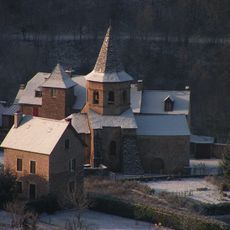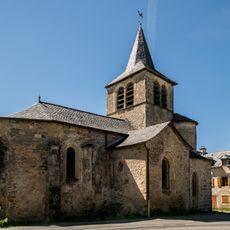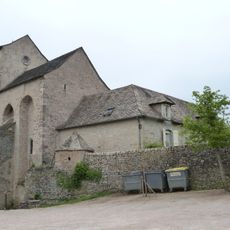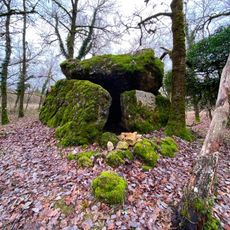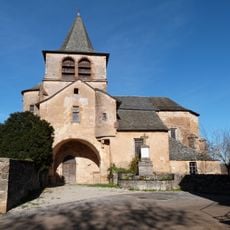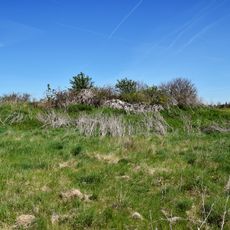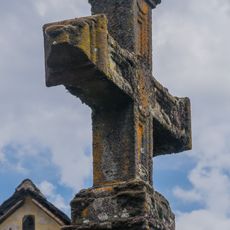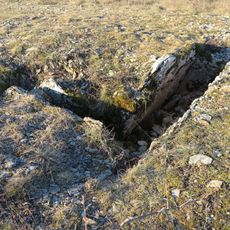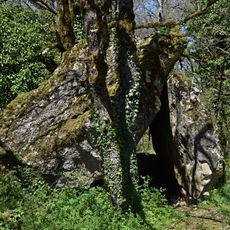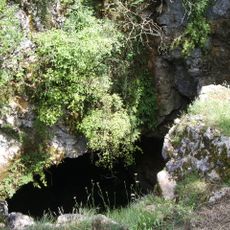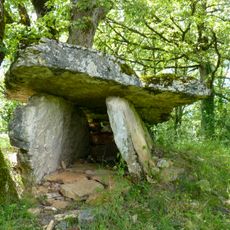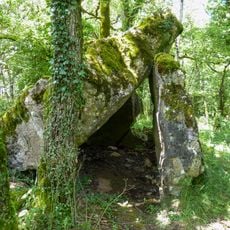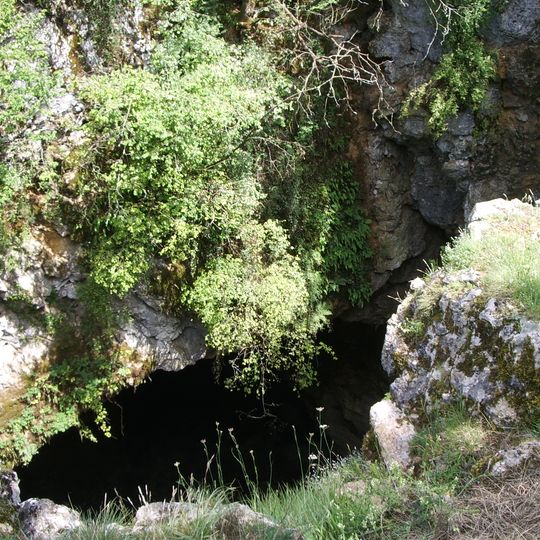
Tindoul de la Vayssière, Natural pit cave in Salles-la-Source, France.
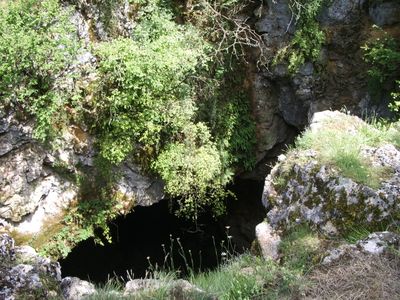
Tindoul de la Vayssière is a natural pit cave featuring an oval-shaped opening about 40 meters long and 25 meters wide. The shaft descends about 67 meters into limestone, with an extensive network of passages extending more than 2 kilometers below.
Exploration began in the 18th century, when the abbé Charles Carnus and his team descended to the bottom of the shaft. In summer 1892 Édouard-Alfred Martel explored it with his cousin Gaupillat, and in 1962 Francis Maurette and R. Veyrunes carried out the first reconnaissance. Louis Armand later installed a metal staircase, and in August 1949 Louis Balsan photographed a dry gallery he called his masterpiece.
The generic name tindoul comes from an Occitan onomatopoeia for the sound of stones thrown into a well, echoing back up. Related local terms for wells and chasms include tintarelle, tombarelle and donde, whose root dod- recalls a bell struck by a falling stone. The word tindoul itself simply means aven or gouffre in Occitan.
The pit opens directly in the rock face with no marked path or railing at the rim; the metal staircase Louis Armand installed serves cavers inside, not casual visitors. The main gallery runs about 4 km, but two or three galleries remain inaccessible. Access to the interior requires caving experience and equipment.
An underground river system beneath the pit connects to the waterfalls of Salles-la-Source through intricate limestone channels. This hidden water flow feeds the springs visible above ground, linking the hidden depths to the landscape people see every day.
The community of curious travelers
AroundUs brings together thousands of curated places, local tips, and hidden gems, enriched daily by 94,028 contributors worldwide.