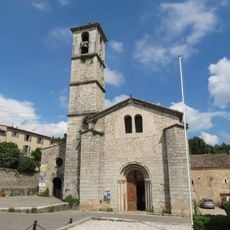
Église Notre-Dame du Brusc, Medieval church in Châteauneuf-Grasse, France.
Église Notre-Dame du Brusc is a church located on the Valbonne plateau featuring Romanesque design with a rounded apse and underground chambers beneath the choir area. The building displays medieval construction with stone walls and original architectural details that remain visible today.
The site began as a paleochristian cemetery in the 5th century, with a 6th-century church and a separate baptistery discovered during excavations from 1958 to 1975. In the 11th century, a large Romanesque basilica, 40 metres long, was built under the influence of the Abbey of Lérins. Partly destroyed during the Wars of Religion, it was restored in successive campaigns and classified as a historical monument on 20 August 1986.
The name Brusc probably comes from Provençal for a marsh in waterlogged ground, and springs still flow here, one beneath the church. The 11th-century basilica, 40 m long, was a major pilgrimage site with a miraculous spring. The baptismal font, a seven-sided basin with two small steps, is the only rural baptistery known in Provence.
The church stands at 129A chemin de Notre-Dame-du-Brusc, on the Valbonne plateau at the southern edge of a small plain below Châteauneuf-Grasse. The 6th-century baptismal font lies under a porch in front of the building, so look for it before entering. The ground around the walls is uneven and partly grassy.
The name Brusc comes from an Occitan word meaning marsh and refers to a natural spring flowing beneath the building. This water source was essential for early inhabitants and explains why the church was built in this isolated location.
The community of curious travelers
AroundUs brings together thousands of curated places, local tips, and hidden gems, enriched daily by 93,850 contributors worldwide.