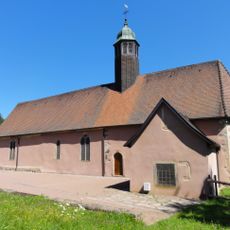
Zinnkoepflé, Grand Cru vineyard in Haut-Rhin, France
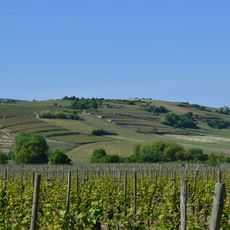
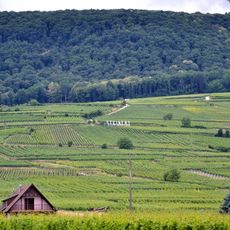
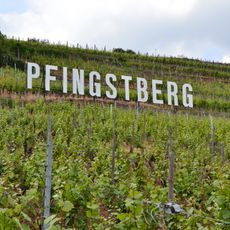
Zinnkoepflé is a north-south ridge between Soultzmatt and Westhalten, 18 km southwest of Colmar, whose south-facing slope is planted with 71.03 hectares of vines in one block between 230 and 430 metres. The slope is cut by six parallel faults into a geological puzzle: ocre-brown dolomitic sandstone, yellow dolomitic marls and pink Voltzia sandstone below, grey Muschelkalk limestone with crinoid fossils at the top. White letters spelling ZINNKOEPFLE stand on the hillside above the houses.
In the Middle Ages the slope belonged to the Obermundat, a possession of the bishop of Strasbourg. The Alsace grand cru appellation was created in 1975, but Zinnkoepflé was not among the 25 lieu-dit names added from 1983. Its growers obtained recognition as a grand cru on 17 December 1992. Yields were cut from 70 to 55 hl/ha in 2001 and to 50 hl/ha in May 2022.
The name has two explanations: from Sonne/Kopf, the sun-exposed hilltop, or from Sinnele, the fossil crinoid stems abundant in the summit limestone. Gewurztraminer dominates the plantings. Since 1992 the hillside has held its own grand cru appellation, and the white letters ZINNKOEPFLE are mounted on the slope above the houses of Westhalten and Soultzmatt.
Visitors can explore the vineyard through guided visits and tastings offered by local producers throughout the year. It is helpful to arrange visits in advance with individual producers to learn about their specific winemaking methods and availability.
The name may come from Alsatian Sinnele, a fossil crinoid stem found in quantity in the limestone cap of the hilltop; German surveyors recorded it as Zinnkoepfle. The other reading derives it from Sonne, sun, for this south-facing slope. The upper 10 to 15 metres of rock are Muschelkalk limestone packed with crinoid, saurian bone and crustacean fossils.
The community of curious travelers
AroundUs brings together thousands of curated places, local tips, and hidden gems, enriched daily by 94,049 contributors worldwide.