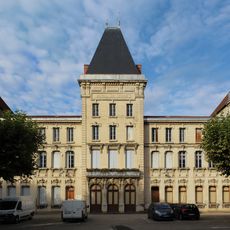
Établissements Bonnet, Silk mill and museum in Jujurieux, Ain, France
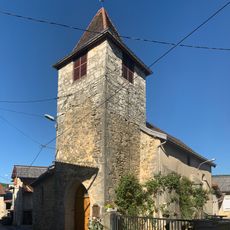
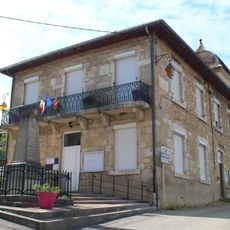
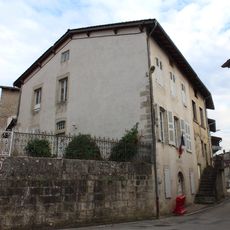
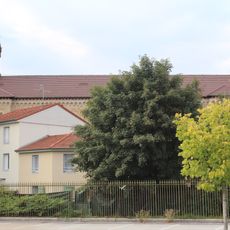
Établissements Bonnet is a silk production complex with manufacturing buildings, a chapel, an infirmary, and residential dormitories arranged across several structures in Jujurieux, Ain. The entire site was designed as a self-contained community where workers found housing and daily services in one location.
Claude-Joseph Bonnet, a Lyon silk manufacturer, founded the Jujurieux works in 1855; by his death in 1867 the firm employed 1,200 people here and 1,400 in Lyon. His grandsons Antoine Richard and Cyril Cottin continued the business, which wove by hand until the 1880s. Industrial activity ended in 2001, and the Ain departmental council later turned the site into the Musée des Soieries Bonnet.
This place was a distinctive working environment where young women resided while learning silk production under religious supervision. The shared life between labor, faith, and discipline shaped a community unlike typical factories of the time.
The site now operates as the Soieries Bonnet Museum, displaying collections that explain the industrial and craft history of silk production. Visitors can explore the different areas and buildings to understand how daily life and work functioned within the complex.
The site's functional layout also inspired Claude-Joseph Bonnet's descendants, the Roux family, when they organised the Établissements C. Roux et fils. The factory is said to have served as a model for the Tomioka silk mill, added to the UNESCO World Heritage list in June 2014.
The community of curious travelers
AroundUs brings together thousands of curated places, local tips, and hidden gems, enriched daily by 93,882 contributors worldwide.