Augustodurum, Roman archaeological site in Bayeux, France.
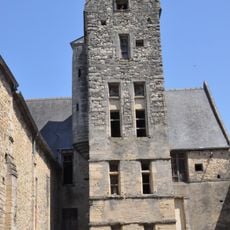
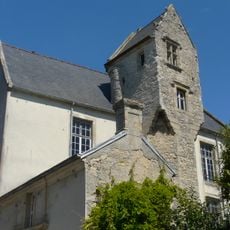
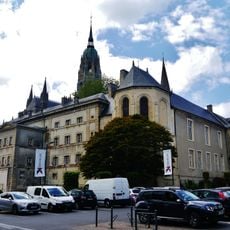
Augustodurum is the ancient name of Bayeux, whose Roman remains include a castra wall 450 by 350 metres, 8 metres high and 2 to 4 metres thick, visible in the courtyard of the hôtel du Gouverneur on rue Bourbesneur, on rue Tardif, at the remparts car park and at the chevet of the cathedral. Two bath buildings stood under the church of Saint-Laurent and under the former post office on rue Laitière, where a sculpted head of Minerva was found, now in the musée Baron Gérard.
The site was the capital of the Baiocasses, a Gallic people named by Pliny the Elder, with a druidic sanctuary on Mont Phaunus east of the town. In the 1st century BC, under Augustus, it took the name Augustodurum and became one of the twenty-three cities of Gallia Lugdunensis. A castra of 450 by 350 m was built in the late 3rd or early 4th century, its 8 m-high wall later covered by the medieval enceinte.
The name Augustodurum renders the Celtic duro-, "door", used to translate the Latin forum: the "forum of Augustus". The Bajocasses, whose name appears in Pliny the Elder, had their capital here, and the druids' sanctuary stood on Mount Phaunus east of the town. A sculpted head of Minerva, found in one of the two Roman bath buildings, is kept in the Musée Baron Gérard.
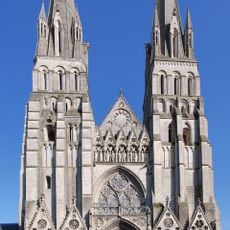
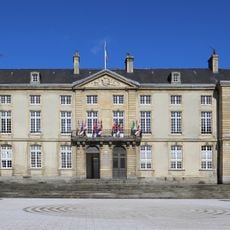
The Roman decumanus maximus corresponds to today's Grand-rue, the main axis to follow. Wall sections survive in the courtyard of the hôtel du Gouverneur, rue Bourbesneur (nos 6, 8 and 10), rue Tardif, the remparts car park and behind the cathedral chevet. A stretch of the V-shaped ditch, 4.80 m deep, was uncovered at no. 32 rue Saint-Malo.
The remains show how Roman fortification elements from the third century were later built into medieval structures. This layering makes it possible to see different periods in a single structure.
The community of curious travelers
AroundUs brings together thousands of curated places, local tips, and hidden gems, enriched daily by 94,382 contributors worldwide.