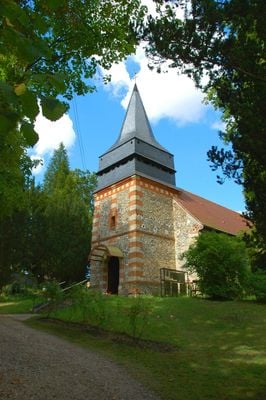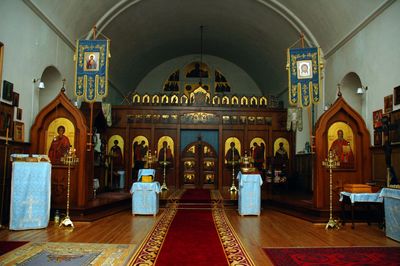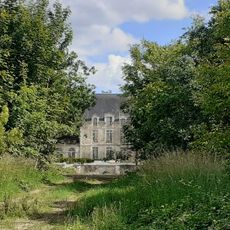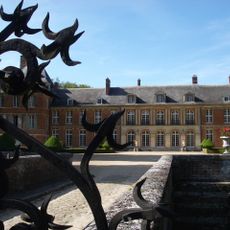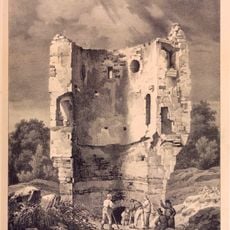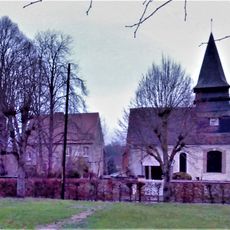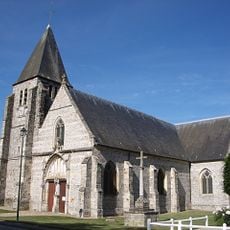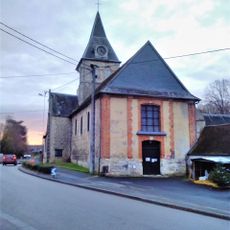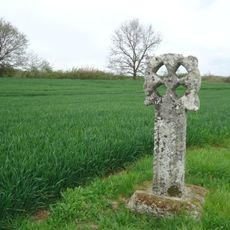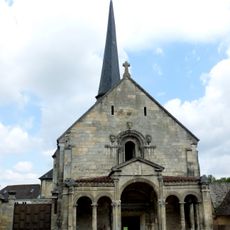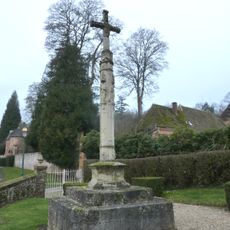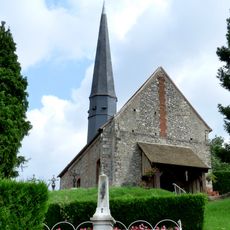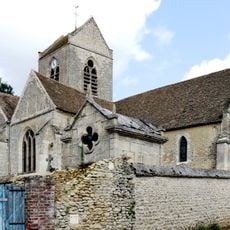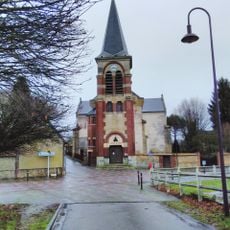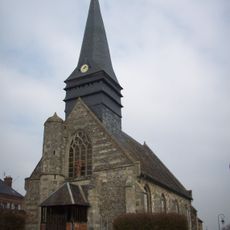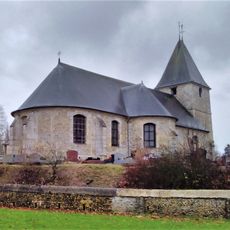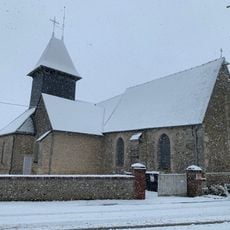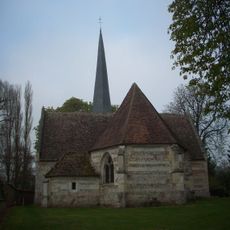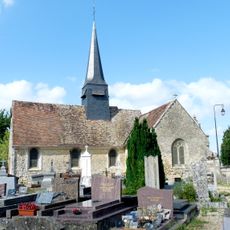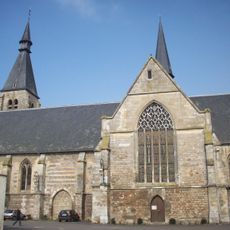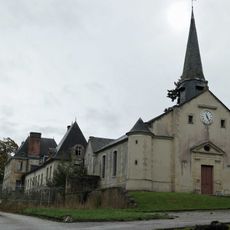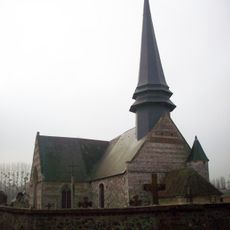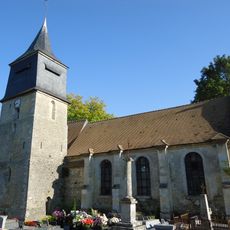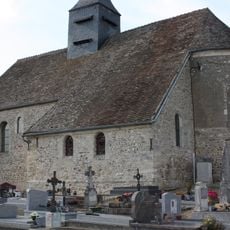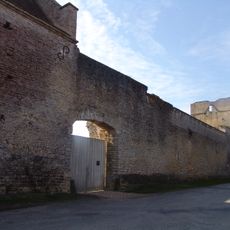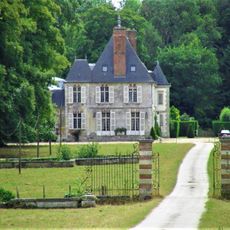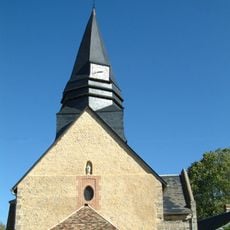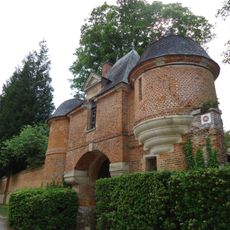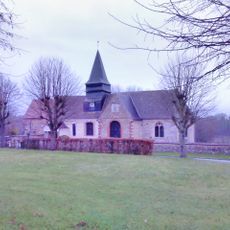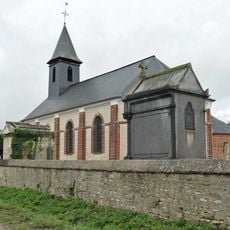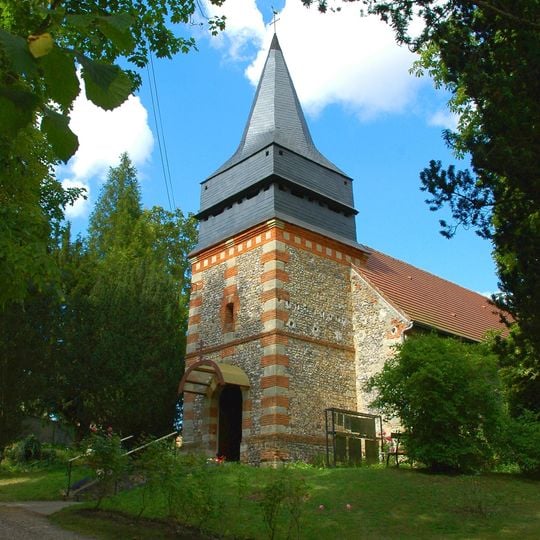
Lesna monastery, Orthodox monastery in Chauvincourt-Provemont, France.
Lesna monastery is an Orthodox monastery in Chauvincourt-Provemont, France. The property includes gardens, beehives, and chicken coops that support the daily needs of the monastic community.
The community began in 1885 as a women's monastic community in Lesna, then in the Siedlce Governorate of the Russian Empire, and was raised to first-class monastery status in 1889 under Abbess Catherine (Yefimovskaya). Displaced by the First World War, the sisters moved to Petrograd, then to the Zhabka monastery on the Dniester, and in 1920 to Serbia, settling at Novo Hopovo. After Novo Hopovo was destroyed in 1943 they went to Belgrade, left for France in 1950, and in 1967 bought an 18th-century estate at Provemont in Normandy.
The community is a women's monastery, not a male one; its nuns sing the services in Church Slavonic. It keeps the Leśnia Icon of the Mother of God, long its main object of pilgrimage, and until 1996 also held the relics of St Athanasius of Brest. The monastery was several times the seat of a bishops' council of the Russian Orthodox Church Abroad.
The monastery stands in the Normandy countryside at Provemont, in the commune of Chauvincourt-Provemont in the Eure department. Access is easiest by car; the community is cloistered nuns, not monks, so visits depend on their schedule. Contact the monastery in advance to arrange a visit.
The monastery keeps the Lesna Icon of the Mother of God, found on 14 September 1683, which drew pilgrims from the community's earliest years. Until 1996 it also held the relics of Saint Athanasius of Brest. The icon travelled with the nuns through Lesna, Petrograd, Bessarabia, Yugoslavia and France.
The community of curious travelers
AroundUs brings together thousands of curated places, local tips, and hidden gems, enriched daily by 93,850 contributors worldwide.