Saulnier mill, Watermill in Noisiel, France
The Saulnier mill is a long rectangular building on the Marne at Noisiel, its iron frame left exposed and filled with glazed brick in yellow, cream and green. The upper facade is divided into vertical bays with tall windows and geometric floral motifs, carried on thin cast-iron columns and beams above a recessed stone and concrete ground level. It covers 485 m2 and its metal structure weighs 460 tonnes.
The building was constructed in 1872 under architect Jules Saulnier and introduced new construction methods that were later copied. It marked a turning point in factory architecture by showing how iron and masonry could work together.
The mill takes its name from architect Jules Saulnier, who designed it with engineer Armand Moisant. Its brick facade borrows the canons of Maghrebi Arab-Andalusian architecture, the so-called Alhambra style. In 2026 La Poste issued a block of four stamps on Seine-et-Marne monuments, drawn by artist Ninon Lacoume, with the mill beside Meaux cathedral, Blandy-les-Tours castle and the Moulin Jaune; 5,000 copies were printed.
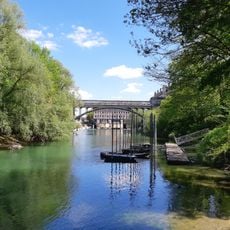
The mill stands on the Île de la Marne at Noisiel, east of Paris, and is not open to visitors; it is seen from the outside, from the banks of the Marne or the surrounding former Menier factory grounds. The long brick facade with its iron frame faces the river, so the patterned bays read best in daylight.
The facades display intricate patterns made from colored bricks that blend technical precision with decorative art. These ornaments were not purely aesthetic but also served to highlight the building's structure and stability.
The community of curious travelers
AroundUs brings together thousands of curated places, local tips, and hidden gems, enriched daily by 93,136 contributors worldwide.