Porte Pairolière, Classified historical monument and archaeological site in Nice, France
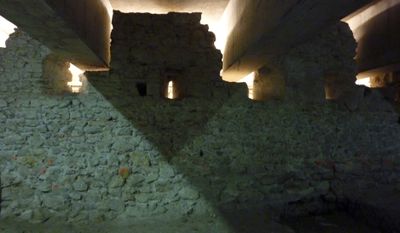
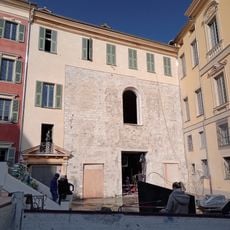
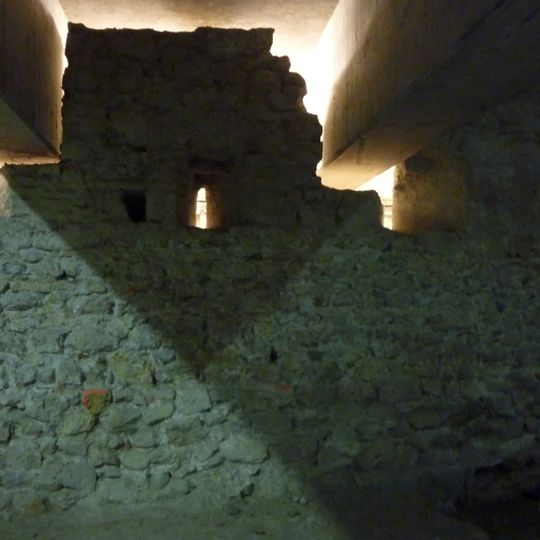
The Porte Pairolière fortifications survive as underground remains between Place Jacques Toja and Place Garibaldi in Nice. The visible masonry is built of irregular greyish-tan stone blocks, with a small dark rectangular opening and a larger rounded-top opening letting in light. Three walls about 3 metres high, probably the remnant of a square tower, are among the oldest elements.
The city walls of Nice were built during the medieval period to defend the town, and this gate served as one of the main controlled entry points. In 1706, Louis XIV ordered most of the fortifications to be demolished, which is why only scattered remains survive today.
The name Pairolière comes from the pairoliers, the coppersmiths who lived and worked in the street of the same name leading to the gate. The gate stood at the end of rue Pairolière, and the trade gave the street and the gate their name.
The remains lie underground between Place Jacques Toja and Place Garibaldi, so they are not visible from street level; access is through the basement level. The stone wall with its two openings is seen under artificial lighting from above. Plan the visit around the two squares rather than the old town lanes.
Even after the 1706 demolition order, some wall sections survived because they were absorbed into later buildings rather than torn down. This means parts of the old defenses are still hidden within the urban fabric of the old town, visible only if you know where to look.
The community of curious travelers
AroundUs brings together thousands of curated places, local tips, and hidden gems, enriched daily by 94,383 contributors worldwide.