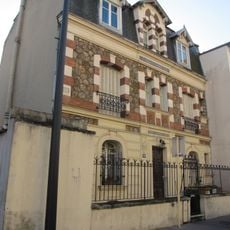
Pavillon des Indes, Courbevoie, Heritage building in Parc de Bécon, Courbevoie, France
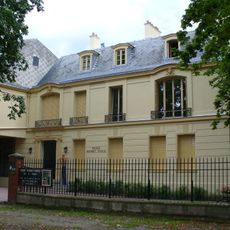
The Pavillon des Indes is a red-brown wooden pavilion with a brick villa attached, standing at the western edge of the Parc de Bécon in Courbevoie. Its wooden part, built for the 1878 exhibition, has a projecting upper bay framed by slim columns, dark lattice glazing below and gilded onion domes on the roof. The brick section was added in the 1880s as an artist's studio.
The building was originally designed for the 1878 Paris World Exhibition to represent British India and commissioned by the Prince of Wales. It was relocated to Courbevoie during the 1880s.
The pavilion serves as both a gallery space and a residence for contemporary artists, continuing to nurture creative work. Visitors experience how the building bridges its historical past with active artistic practice today.
The pavilion stands at the western edge of the Parc de Bécon, next to a brick villa built for the painter Georges Achille-Fould. The small exhibition on the building's history opens only on a few days each year, so check the town of Courbevoie's listings before travelling. The wooden section is the part moved from the 1878 exhibition.
The wooden half of the pavilion was built to last only six months for the 1878 exhibition. When it was re-erected at Courbevoie, the taller ground floor was turned into the first floor and the old first floor became the ground floor. The larch timber frame later sagged about 20 cm and had to be shored up in the 1990s.
The community of curious travelers
AroundUs brings together thousands of curated places, local tips, and hidden gems, enriched daily by 94,106 contributors worldwide.