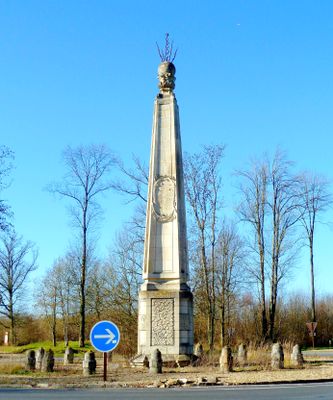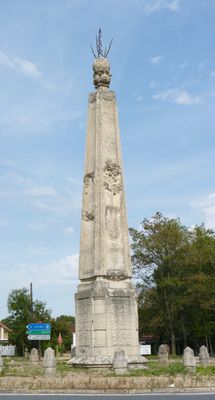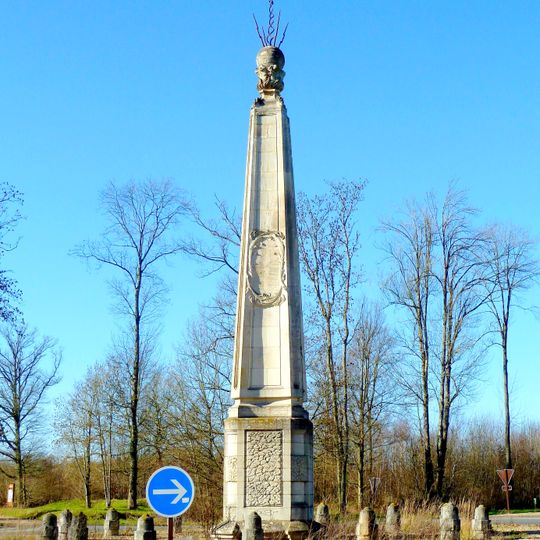
Villeneuve-le-Comte obelisk, Protected obelisk at Carrefour de l'Obélisque crossroads in Villeneuve-le-Comte, France.
The Villeneuve-le-Comte obelisk stands approximately 15 meters tall at the intersection of RD 231 and RN 36, crowned with a terrestrial globe decorated with waves and lightning patterns. The stone pillar features carefully carved symbols on multiple sides that convey different meanings.
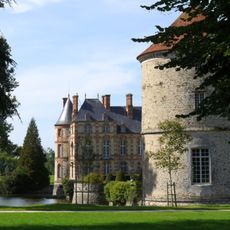
The obelisk was erected in 1735 to commemorate the meeting of Louis XV and the Duke of Brandenburg at a nearby hunting lodge. Its east and west faces originally bore royal symbols (sceptre, hand of justice), which were vandalised during the Revolution. The north face still shows a bow, quiver and axe, while the south face depicts an oak that once carried a Latin inscription referring to Diana, now lost. It was classified as a monument historique on 1 October 1921.
The stone marker displays hunting symbols on its northern face, including a bow, quiver, and axe, reflecting traditional forest activities that shaped this region. These carvings reveal how hunting was woven into daily life here.
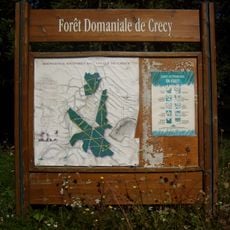
The obelisk sits at the highest point of Crecy forest at 134 meters elevation and serves as a clear reference point for visitors navigating the surrounding woodland. The elevated location makes it easy to spot from various directions through the forest.
The alchemist Fulcanelli, in Les Demeures philosophales (1930), read the obelisk as a monument to the world's destruction by water and fire, and had it drawn by Jean-Julien Champagne (plate XLII). The street artist Invader later placed one of his mosaics here (PA_1234, 30 points).
The community of curious travelers
AroundUs brings together thousands of curated places, local tips, and hidden gems, enriched daily by 94,017 contributors worldwide.