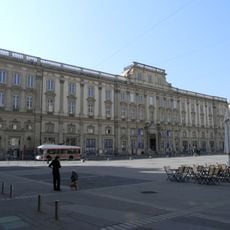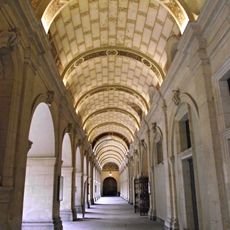
Jardin du palais Saint-Pierre, Inner courtyard garden at Museum of Fine Arts, Lyon, France
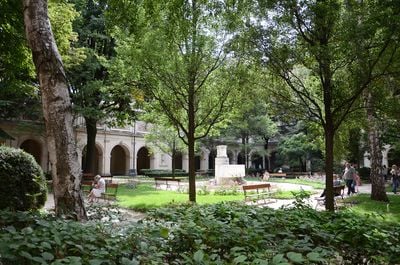
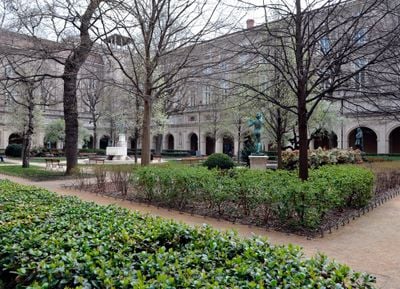
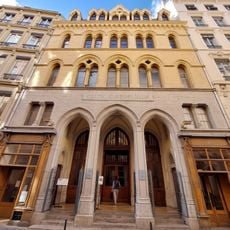
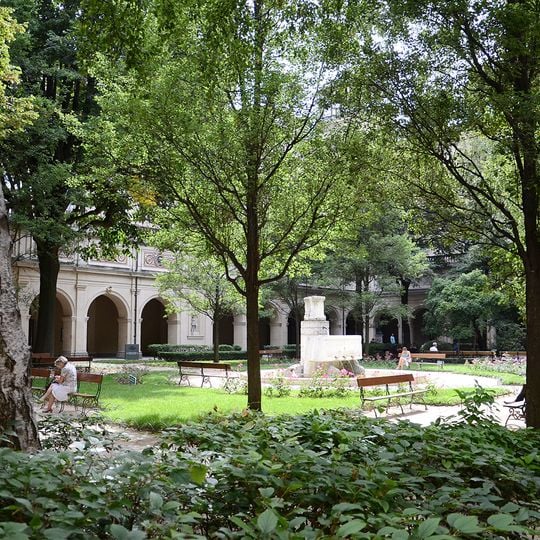
The jardin du palais Saint-Pierre is a rectangular public garden set inside the former Benedictine abbey cloister, now part of the Musée des Beaux-Arts. Its flat lawn beds, round-ended or rectangular, are crossed by pale gravel paths and enclosed by arcades; the cloister's present form dates from 1884, by architects René Dardel and Abraham Hirsch. In the centre, a fountain installed in 1828 carries a sarcophagus-turned-reservoir, two Roman urns and a copy of an antique Apollo carved by J.B. Vietty.
The garden originated as a private Benedictine abbey space and became public following the French Revolution. Major redesigns in the 1800s transformed it into a visitor-accessible space connected to the museum collections.
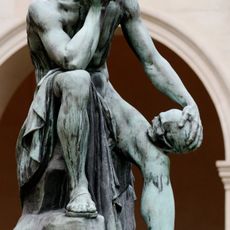
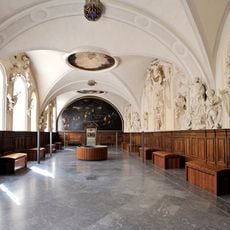
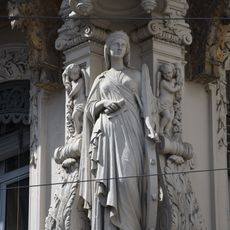
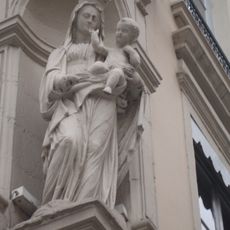
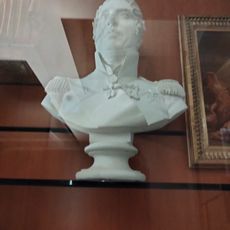
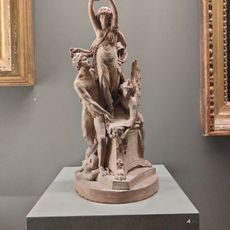
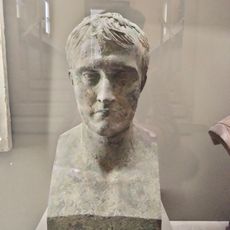
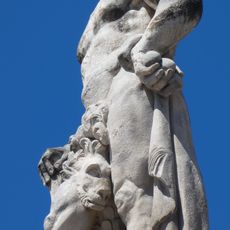
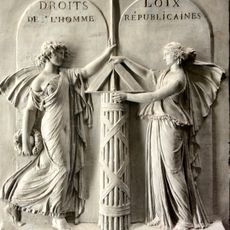
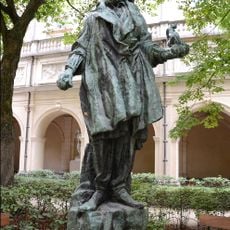
Since 1883 the cloister garden has served as an open-air sculpture museum, a layout typical of the French Third Republic. Each arcade was treated like a picture, framed by paintings, mosaics, bronze medallions and casts of antiquities. The garden also recalls the flower garden planted in 1822 for the drawing school, linked to Lyon's silk industry.
The garden lies on the Presqu'île, inside the walls of the Musée des Beaux-Arts, reached through the museum or from the surrounding streets. It is closed on Tuesdays and public holidays, opens at 10:00 and at 10:30 on Fridays, and closes at 18:00. The ground is level, with gravel paths and benches along the lawns.
The cloister's current form dates from 1884, built by architects René Dardel and Abraham Hirsch. From 1883 the courtyard was laid out as an open-air sculpture museum, and each arcade was composed like a picture, framed by paintings, mosaics, bronze medallions and casts of antiquities.
The community of curious travelers
AroundUs brings together thousands of curated places, local tips, and hidden gems, enriched daily by 93,111 contributors worldwide.