Parc des Capucins de Coulommiers, Public park in Coulommiers, France.
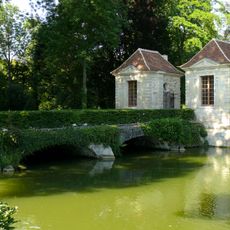
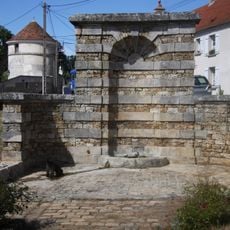
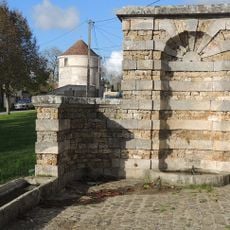
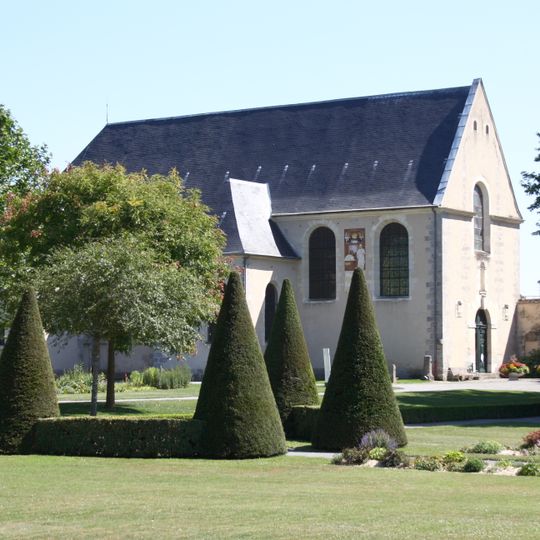
Parc des Capucins is a 4-hectare public garden on the island and forecourt of the former Coulommiers castle, split since 1945 into a French garden and an English garden. Only the guard pavilions built by Mansart and two concave porticoes survive of the castle; the convent church now houses the municipal Musée des Capucins. A giant sequoia, an American honey locust, a magnolia and red oaks grow in the grounds.
Catherine de Gonzague, widow of Henri I of Orléans-Longueville, acquired the prairie des Margats and from 1613 had a pleasure castle built there to plans by Salomon de Brosse, with work directed by the masons Charles and Mathurin Du Ry. After her death in 1629, her son Henri II entrusted completion to François Mansart in 1631. The castle was demolished from 1736 and the Capuchin convent abandoned during the French Revolution; the town inherited the estate in 1915 and turned it into a public garden.
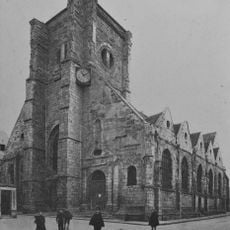
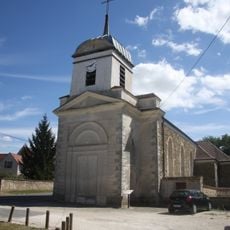
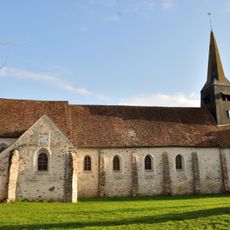
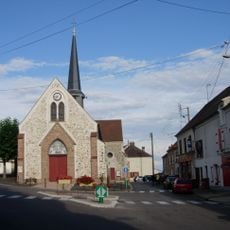
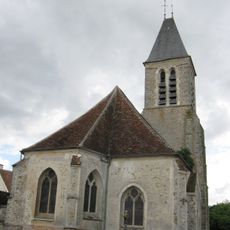
The name comes from the Capuchin convent that Catherine de Gonzague had built next to her château; the convent was abandoned during the French Revolution. Its church now houses the municipal Musée des Capucins, and the park keeps the name of the order.
The park lies on the former castle island and the forecourt, split since 1945 into a French garden and an English garden; sports facilities now occupy the site of Claude Mollet's 1624 gardens. The municipal museum of the Capuchins is housed in the convent church. Storms in 1999 damaged the grounds, where a giant sequoia, an American honey locust, a magnolia and red oaks grow.
The park's land was bought in 1865 by Abel Stanislas Leblanc, miller of the Grands Moulins de Pantin. His son Édouard Abel-Leblanc died in 1915, and the town inherited the estate and turned it into a public garden.
The community of curious travelers
AroundUs brings together thousands of curated places, local tips, and hidden gems, enriched daily by 94,406 contributors worldwide.