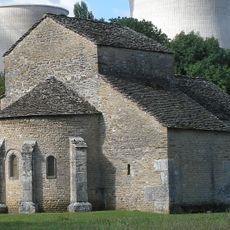
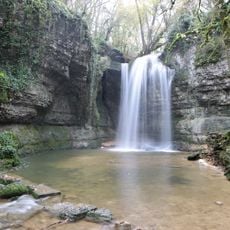
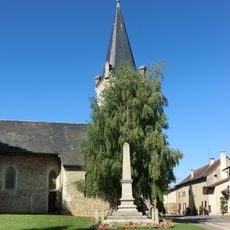
Larina oppidum, Archaeological site in Hières-sur-Amby, France.
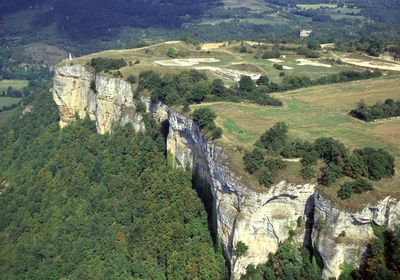
Larina oppidum is an archaeological site situated on a limestone ridge overlooking the upper Rhone valley, spanning about 21 hectares. The area is enclosed by a rampart approximately 950 meters in length, which defines and protects the ancient settlement's boundaries.
The settlement began in the Bronze Age and later became a fortified oppidum of the Allobroges, a Celtic tribe. During Roman times, a sanctuary dedicated to Mercury was built, and by the Merovingian period it had transformed into an administrative center.
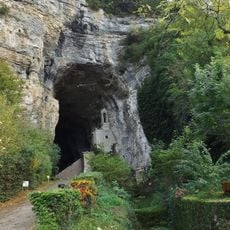
The name Larina is attached to a site the Allobroges used less as a permanent town than as a meeting place for periodic fairs and markets, tied to a large open-air Celtic sanctuary. Votive deposits, including folded weapons and metal objects, were placed in fissures of the cliff known as the Trou de la Chuire.
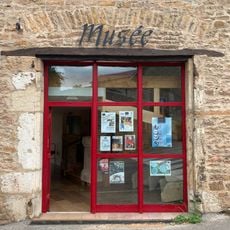
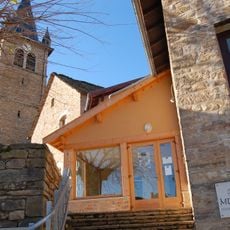
The site lies on the Isle-Crémieu plateau above the Rhône, not in the village of Hières-sur-Amby; the Maison du Patrimoine in the village presents the finds. The 21-hectare plateau is reached by paths on uneven ground, and the cliffs drop over 200 metres. The site is a public archaeological park, so check opening conditions before setting out.
Among the burials at La Motte 2, one grave was cut into an abandoned hut and used as a rubbish pit after the body was placed there. The person, whose feet were probably bound, was decapitated after death, the head set on a flat stone over the pelvis; archaeologists suggest someone feared.
The community of curious travelers
AroundUs brings together thousands of curated places, local tips, and hidden gems, enriched daily by 93,138 contributors worldwide.