Église Saint-Evre de Toul, Ancient Benedictine monastery in Toul, France
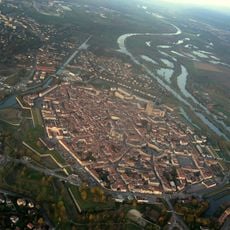
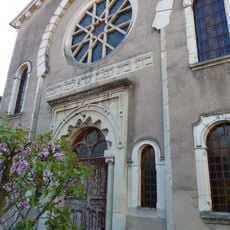
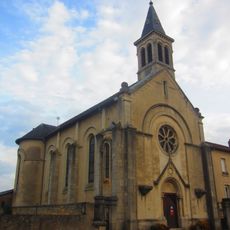
The Abbey of Saint-Èvre was a Benedictine monastery outside the southwest walls of Toul, in the suburb that still bears its name. Its grounds covered nearly five hectares and were enclosed by walls, with a church, monastic buildings, a hospital for the poor and pilgrims, farm buildings, a cemetery and a courtyard. Nothing of the monastery remains; a 16th-century Renaissance house with a Gothic entrance porch belonged to the abbey, and a neo-Romanesque parish church dedicated to Saint Èvre was built on rue Albert-Denis after the Revolution.
The monastery was founded in 507, making it the oldest religious institution in the Lorraine region. It was destroyed and rebuilt multiple times, particularly after wars and armed conflicts.
The abbey's name comes from Saint Èvre (Aprus), seventh bishop of Toul, buried here after his death in 507; his tomb drew pilgrims and he replaced Saint Maurice as patron. In 934 Bishop Gauzelin made it a school abbey charged with spreading the Benedictine reform, sending monks to Montier-en-Der and Saint-Mansuy. A monk here wrote the Latin verse fable Ecbasis around 1043.
The grounds are largely accessible for walking and display old foundations and burial sites discovered during excavations. It is best explored on foot to see all areas of the former monastery.
A monk from this monastery composed a Latin poem called Ecbasis around 1043 about a calf's adventurous escape. This work is among the oldest known animal stories in medieval literature.
The community of curious travelers
AroundUs brings together thousands of curated places, local tips, and hidden gems, enriched daily by 93,137 contributors worldwide.