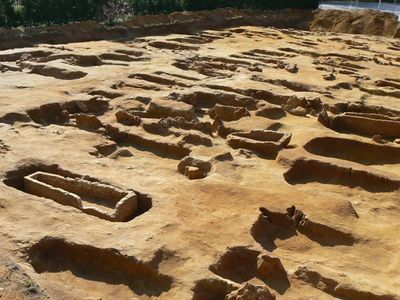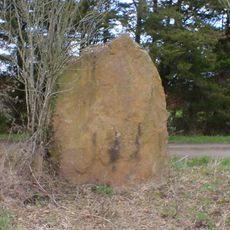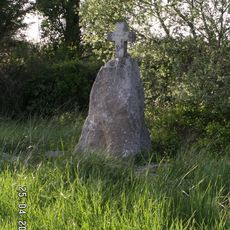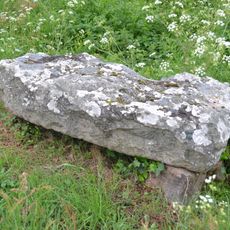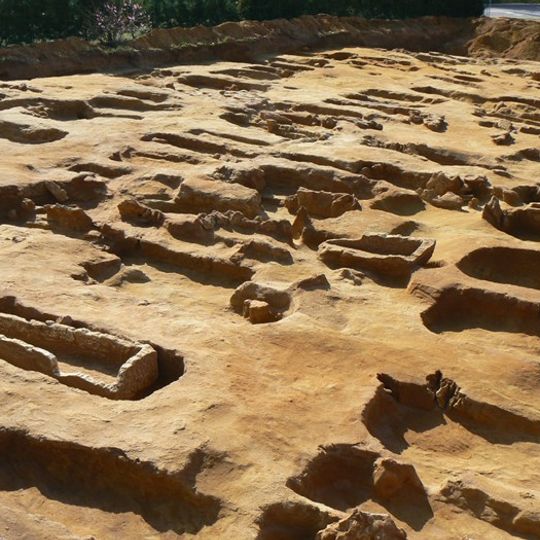
Nécropole mérovingienne du Brigandin, Merovingian necropolis in Chaumes-en-Retz, France.
The Nécropole mérovingienne du Brigandin is an early medieval burial ground in Chaumes-en-Retz with hundreds of systematically arranged graves. Excavations uncovered skeletons, jewelry, and everyday items from the 6th and 7th centuries.
The cemetery developed between the 6th and 7th centuries when Merovingian families settled in this region and buried their dead here. It provides researchers with a window into the lives of people who lived in this area over 1400 years ago.
The burials held personal ornaments like fibulas and belt fittings that show the dead held different positions in their community. Such objects reveal how people expressed their social rank through what they wore and owned.
The site lies in the Brigandin and La Motte Hiver hamlets near a 19th-century mill, on sandy limestone ground. It was never fully excavated: of roughly 7,700 m², about 1,500 m² have been dug, in partial campaigns before construction work. The hollows visible in the ground are the traces of those trenches.
Only about 10% of the graves across the whole necropolis held grave goods, a practice rarely seen in the far west of Merovingian Gaul but more common in Germanic regions. The richest and most plundered tombs cluster in one zone, likely a privileged family group.
The community of curious travelers
AroundUs brings together thousands of curated places, local tips, and hidden gems, enriched daily by 94,565 contributors worldwide.