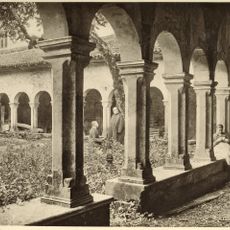
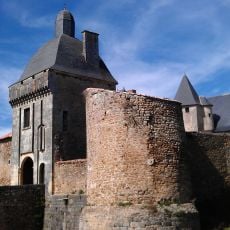
Ancient Roman sites in Sanxay, Archaeological site near Poitiers, France.
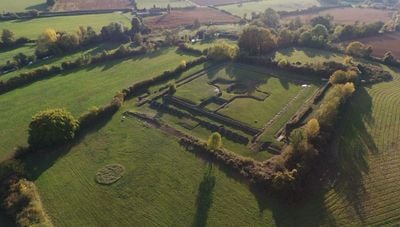
The ancient Roman sites in Sanxay form a complex near Poitiers featuring remains of thermal baths, religious buildings, and a theater spread across distinct excavated zones. The layout reveals how Roman engineers adapted construction methods to work with local geology and water resources in this provincial settlement.
The settlement emerged during Roman occupation of Gaul and expanded due to natural thermal springs that drew merchants and visitors seeking the healing waters. Over time the site was abandoned, and its structures were buried beneath layers of earth which protected them until modern excavations began.
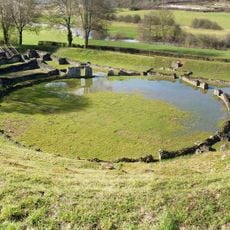
The theatre's cavea, a semicircle 89 m wide, held about 6,600 spectators on wooden bleachers, and its circular orchestra about 20 m across places it among Gaul's "rural" venues, between theatre and amphitheatre. Excavations in the 1880s found 143 inscription fragments, over a hundred now lost.
Visitors can explore the site year-round with clearly marked paths connecting the different excavated areas. Comfortable shoes are recommended as the ground is uneven, and information panels on site provide context about each structure and its original function.
A spring rises at the southeast foundations of the octagonal cella, which are built of large, non-joined blocks laid to capture the water. A subterranean passage runs diagonally from the temple to the southeast corner of the peribolos and continues outside to a basin, probably to drain the cella and gallery. The sources do not say the spring still flows today.
The community of curious travelers
AroundUs brings together thousands of curated places, local tips, and hidden gems, enriched daily by 94,420 contributors worldwide.