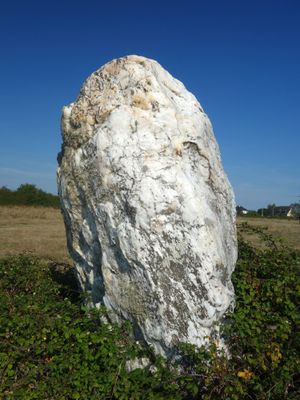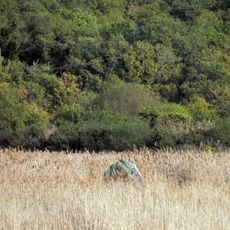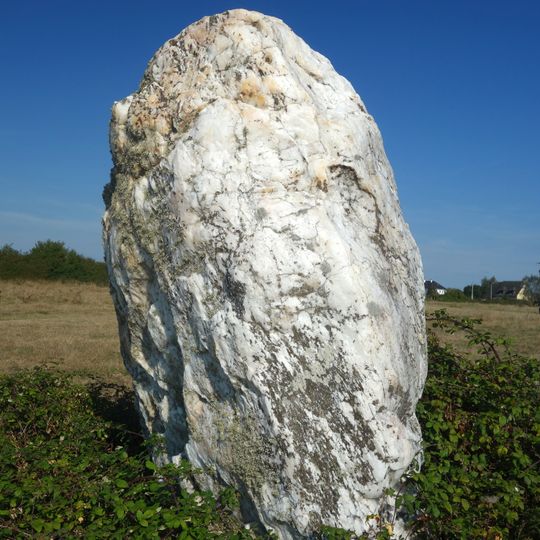
Kerbourg menhir, Prehistoric menhir in Saint-Lyphard, France.
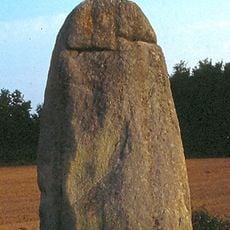
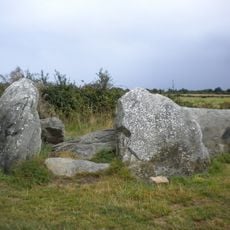
Kerbourg menhir is a white quartz stone standing about 2 meters tall, positioned in a field that also contains fragments from Roman times. The location reveals layers of human activity across different periods, all visible within the same landscape.
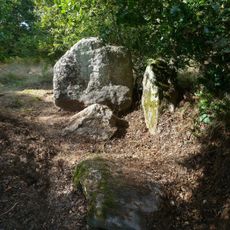
Archaeologist Henri Quilgars discovered flint fragments during excavations in 1896, revealing that the site held meaning across a longer timespan than first apparent. A nearby granite slab called Tombe-du-Loin suggested that this place served functions related to burials or rituals.
This standing stone sits within a broader landscape shaped by prehistoric monuments, reflecting how Neolithic communities used the land to mark important places. Such structures likely brought people together for gatherings or ritual purposes.
The site is reached via a marked path that guides you to the stone without difficulty. Information panels with QR codes offer details about the monument and its surroundings if you want to learn more during your visit.
The surface of the stone bears two different types of marks: some were made through grinding or rubbing, while others were deliberately carved with metal tools. These differences hint that the stone was worked on by different people over time, possibly using distinct techniques or serving different purposes.
The community of curious travelers
AroundUs brings together thousands of curated places, local tips, and hidden gems, enriched daily by 91,231 contributors worldwide.