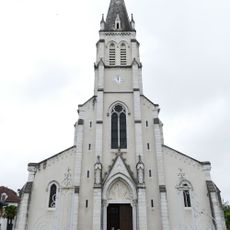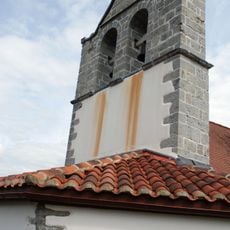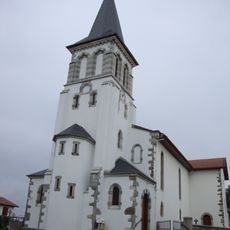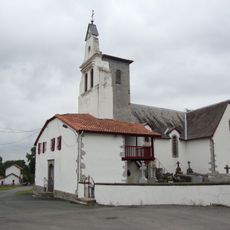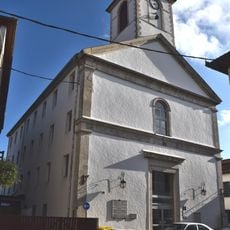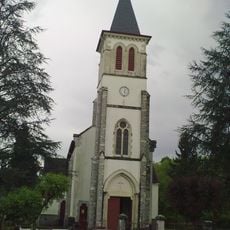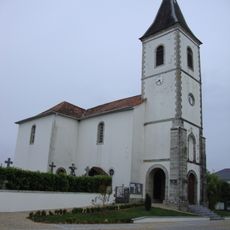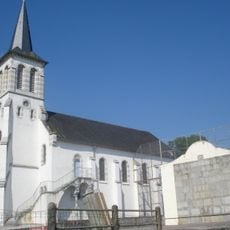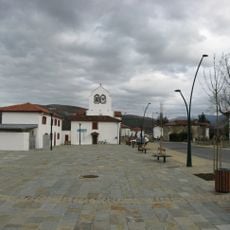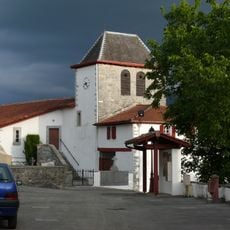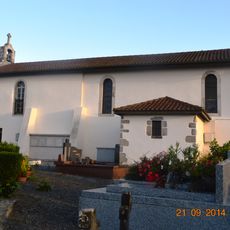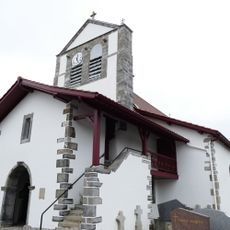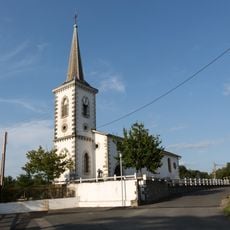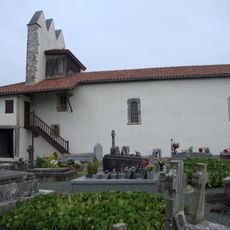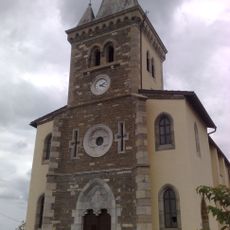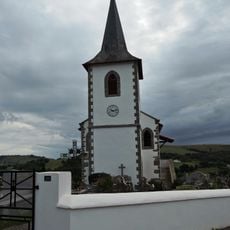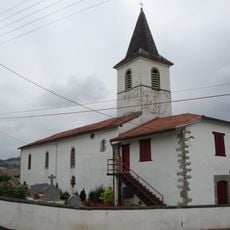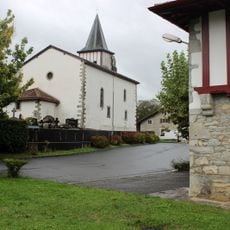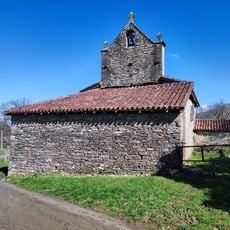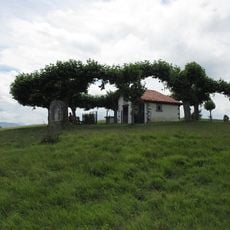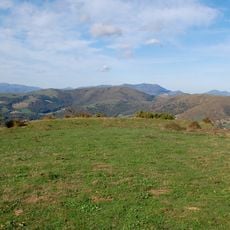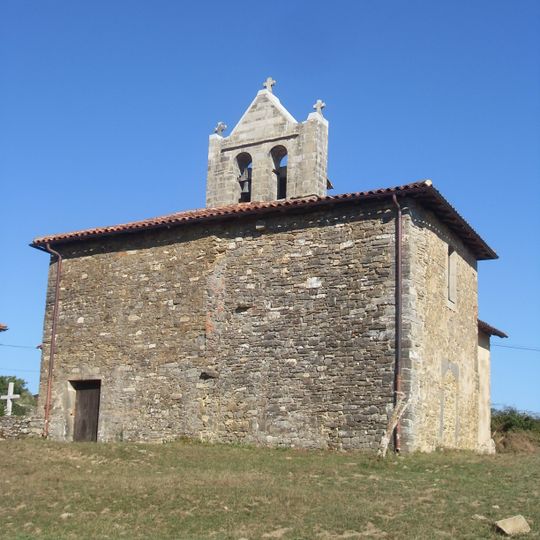
Chapelle Saint-Nicolas d'Harambels, Catholic chapel in Haranbeltz village, France.
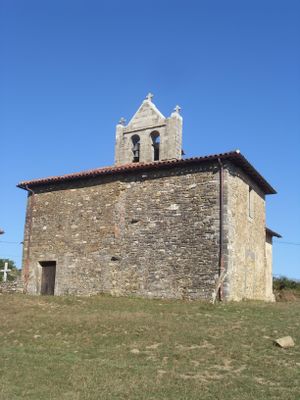
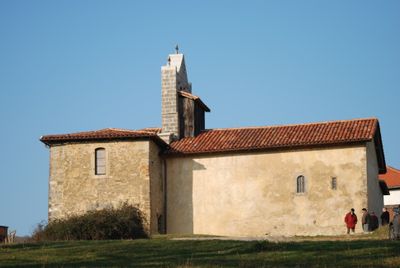
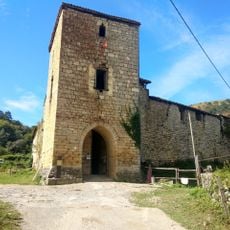
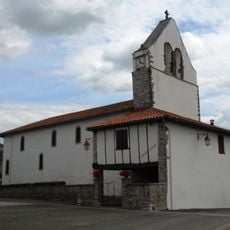
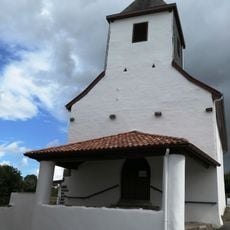
Chapelle Saint-Nicolas d'Harambels is a chapel in Ostabat-Asme built at the end of the 12th or in the 13th century against an 11th-century pilgrim hospital. Its single rectangular nave measures 13 by 8 metres, with 1.1-metre-thick walls and a flat chevet. A two-storey porch with a dwelling above stands to the north-west, and the bell gable holds two bells.
The hospital at Harambeltz is first mentioned in 1059, when Loup-Eneco left it a yearly rent of 100 sous in his will; his grandson Loup II-Eneco gave money in 1106. The chapel itself was built at the end of the 12th or in the 13th century, later than the hospital, since it is absent from the Dax cartulary. Four donats — Sala, Etxeberria, Borda and Etxeto — chose their prior. The institution survived until 1784, when Louis XVI suppressed such houses by letters patent.
The name Harambeltz comes from Basque and means "black valley", after the forest that once surrounded the site. The chapel is dedicated to Saint Nicholas of Bari, whose monumental altarpiece dominates the interior; it conceals a 16th-century wall painting of a cross. The flat tombstones of prior Jacques de Borda, who died in 1760, and his predecessor Jacques d'Uhart lie in the nave.
The chapel stands on the GR65 between Aroue and Ostabat, on the stretch inscribed by UNESCO as part of the Camino de Santiago. The roof was redone in 1960 and the whole building, interior decoration included, restored between 2008 and 2010. The entrance is reached by four limestone steps, and the door is framed by a Romanesque tympanum.
The entrance tympanum features carved symbols including a Christogram, a Maltese cross, and a five-pointed star arranged on the stone face. These uncommon decorative elements reveal how medieval travelers used such signs to identify sacred places along their route.
The community of curious travelers
AroundUs brings together thousands of curated places, local tips, and hidden gems, enriched daily by 94,357 contributors worldwide.