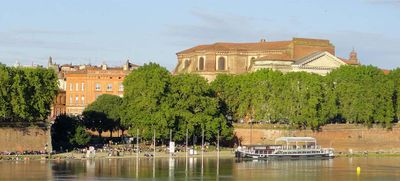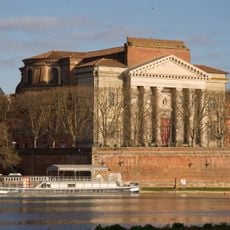
Monastère Notre-Dame de la Daurade, Monastery in Toulouse, France
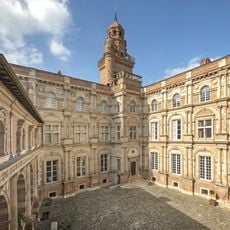
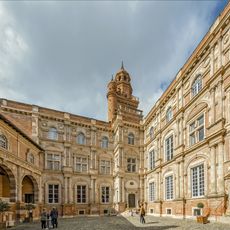
The Monastère Notre-Dame de la Daurade is a former Benedictine priory in central Toulouse, not a basilica. Its monastic buildings, rebuilt in the 18th century, form an irregular courtyard with a cloister and an arcaded lower gallery around a small parterre. A walled garden with geometric flower beds lies in front of the lower wing, and an arched passage cuts through the corner building.
A monastic community formed here in the 9th century, and in 1077 it became the priory of Sainte-Marie la Daurade, attached to the Benedictine abbey of Moissac and through it to Cluny. A papal bull of 29 May 1240 from Gregory IX gave the monks the right to elect their own prior. Two fires, in 1429 and 1464, weakened the house, and the first commendatory abbot in 1480 diverted its revenues; the church was demolished in the second half of the 18th century.
The basilica centers on devotion to the Black Madonna, a revered statue that draws many visitors. The figure is dressed in robes by renowned designers for special occasions and represents protection for women and expectant mothers.
The building is located near Esquirol metro station and is accessible by buses that stop nearby. It is open most days and can be visited free of charge, with informational materials available for visitors interested in learning more about its history.
After each service, the priest distributes blessed belts to women as symbols of the Virgin Mary's protection for mothers and unborn children. This tradition shows the strong local faith and connection to the site that has endured for centuries.
The community of curious travelers
AroundUs brings together thousands of curated places, local tips, and hidden gems, enriched daily by 94,355 contributors worldwide.