Château fort de Conflans, Medieval fortress in Conflans, France.
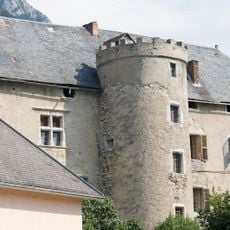
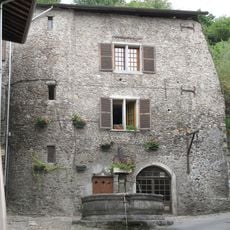
Château fort de Conflans is a castle ruin in the Savoie region that stands on a rocky outcrop where the Arly and Isère rivers meet. The site displays remaining walls, connected fortified gates, and a substantial central tower from the 12th century.
Conflans is first mentioned in a 1015 charter, and the castrum was built as Germanic incursions made the region unsafe. In 1142 the castle hosted a meeting of regional bishops arbitrating between Count Amadeus III of Savoy and the Bishop of Sion. The Counts of Savoy gradually took control, and in 1600 French troops seized the castle during the Franco-Savoyard war. The last remains disappeared when batteries were installed in 1875–1876 under the Séré de Rivières system.
Conflans was a fortified town whose two gates, including the Porte de Savoie (or Porte de France), were linked by the Grande-Rue. The castle was the seat of a châtellenie from the mid-13th century, administering La Bâthie, Cevins, Saint-Paul and other places in Basse Tarentaise. The name Conflans comes from the Latin for confluence, referring to the meeting of the Arly and Isère rivers.
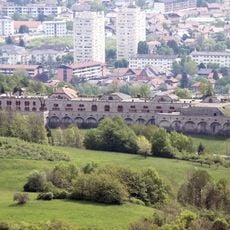
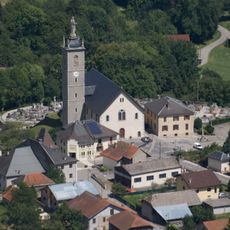
The castle stands above the old town of Conflans, in the heights of Albertville; the fortified town below is reached by only two roads. The ruins are seen from outside, along the streets and viewpoints of the bourg. The site was partly built over by batteries installed in 1875-1876 and by a water tower, so the medieval remains are fragmentary.
The site reveals layers of construction from different periods, with medieval stone work sitting alongside later military additions from the 19th century. Walking around reveals how defensive architecture evolved over centuries in this single location.
The community of curious travelers
AroundUs brings together thousands of curated places, local tips, and hidden gems, enriched daily by 93,898 contributors worldwide.