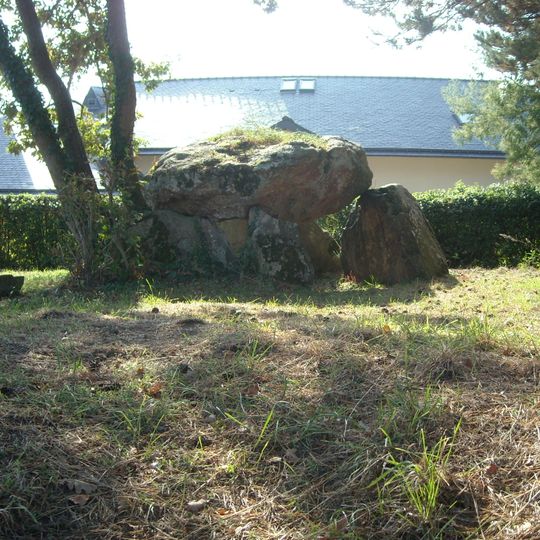
Dolmen du Gornevèze, Dolmen in Séné, France
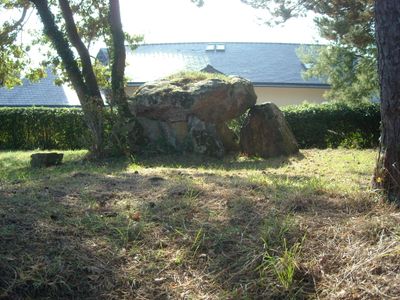
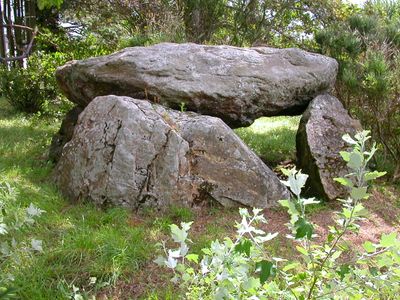
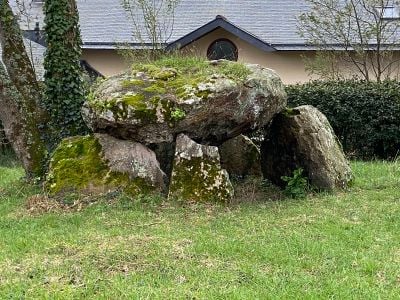
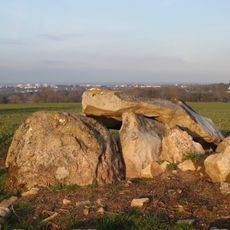
The dolmen de Gornevèse is a Neolithic megalithic tomb in Séné, in the Morbihan department of France, protected as a classified historical monument. It consists of upright stone blocks supporting a chamber covered by a large horizontal capstone.
The dolmen was examined in 1878 by M. Prulhierre, whose excavation produced no finds. It was classified as a monument historique by decree on 8 January 1968. The three supporting orthostats and the roughly 3 × 1 m capstone are the elements that remain.
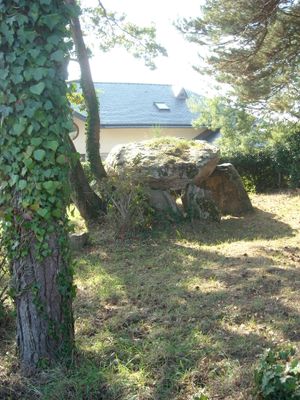
The dolmen stands in a small public garden on the Route du Gornevèze in the hamlet of Le Gornevez, part of Séné south of Vannes. It is one of the megalithic monuments scattered around the Gulf of Morbihan, and the Breton name Taol-vaen ar Gornevez is still used for it alongside the French form.
The monument is located in the town of Séné and is freely accessible to visitors, allowing them to walk around it and observe the stones up close. There is no particular season that works better than another, though dry weather makes it easier to move around the site comfortably.
The 1878 excavation by M. Prulhierre produced no finds, so the chamber's original contents remain unknown. The dolmen was classified as a monument historique by decree on 8 January 1968. It stands in a small public garden on the Route du Gornevèze, in the hamlet of Le Gornevez.
The community of curious travelers
AroundUs brings together thousands of curated places, local tips, and hidden gems, enriched daily by 92,785 contributors worldwide.