Couvent des Dames Bénédictines du Saint-Sacrement, Former convent in the 5th arrondissement, Paris, France
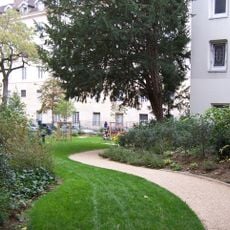
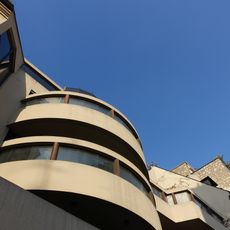
The Couvent des Dames Bénédictines du Saint-Sacrement is a former monastic building in the 5th arrondissement of Paris built in classical style. The complex originally covered a large property and included residential spaces, teaching areas, and an inner garden, with today only some original structures such as the 1760 house and preserved facades remaining visible.
The parish priest of Saint-Étienne-du-Mont founded a house for poor girls in 1687 on rue des Poules; Abbé Lefevre moved it in 1700 to rue Neuve-Sainte-Geneviève, where a chapel was built. In 1753 the Dauphin Louis imposed the rule of Saint Augustine and granted the sisters 1500 livres a year. Closed during the Revolution and sold in 1796, the buildings served as a paper factory before Benedictine nuns of the Perpetual Adoration of the Holy Sacrament bought them back in 1808. The community sold the site in 1975; the developer demolished the 1707 chapel and the Christ-Roi church built 1936–1939 by Jules-Godefroy Astruc.
The convent's name honours the Benedictine nuns of Perpetual Adoration of the Holy Sacrament, who bought the former Sainte-Aure buildings in 1808. The community kept a mystic, Sister Marie du Christ-Roi (Olive Danzé, 1906–1968), and its church of Christ the King was funded largely by donors in Ireland, linked to Éamon de Valera and Archbishop John Charles McQuaid of Dublin.
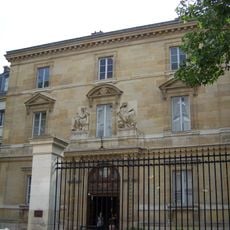
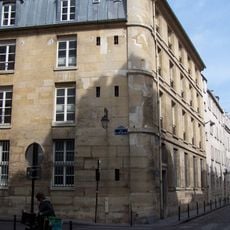
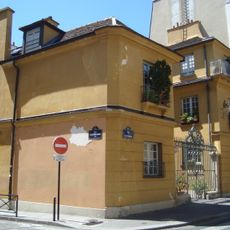
The former convent is now the Résidence du Panthéon, a private housing complex, so the inner garden and courtyard are not open to visitors. From the street you can still see the 17th- and 18th-century facades and portals at 16 and 18 rue Tournefort, the 1760 building by Claude-Martin Goupy at no. 20, and the 17th-century house on rue Lhomond. The blue plaque at the corner marks rue Tournefort in the 5th arrondissement.
Victor Hugo used this convent as a model for his famous novel Les Misérables, imagining scenes of women's lives in Paris set within this community. The literary connection makes the place a subtle anchor point in French literary history.
The community of curious travelers
AroundUs brings together thousands of curated places, local tips, and hidden gems, enriched daily by 94,056 contributors worldwide.