Our Lady of Lebanon of Paris Cathedral, Maronite cathedral in 5th arrondissement, France
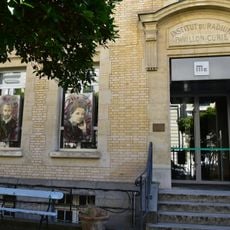
Our Lady of Lebanon of Paris is a Gothic Revival church built in 1893–94 by architect Jules-Godefroy Astruc, set at 15-17 rue d'Ulm inside the Institut Curie enclosure. Its light beige stone facade has a tall pointed-arch window with stone tracery, a circular window above, and two smaller grille-covered pointed windows below. Inside, clustered columns with carved capitals line the nave toward an apse with a triple lancet and rose window.
Built around 1893 to plans by architect Jules-Godefroy Astruc, the church was inaugurated on 13 May 1894 for the Jesuit Fathers of the Sainte-Geneviève school. After the 1905 law separating Churches and State the Jesuits had to leave, and in 1915 the building was assigned to Maronite worship. The Franco-Lebanese home was established around the parish in 1937.
The cathedral serves as a spiritual center for the Maronite community in France, hosting religious services and celebrations according to Eastern Catholic traditions. It maintains connections to Lebanese heritage through its daily worship practices and community gatherings.
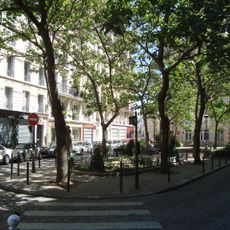
The building is located on rue d'Ulm near the Sorbonne and Luxembourg Gardens, making it easily accessible by foot from nearby metro stations. The setting is quiet despite its central position in the university district.
For over thirty years the classical label Erato made most of its recordings in this church, cutting more than 1,200 discs with flautist Jean-Pierre Rampal, trumpeter Maurice André and the Jean-François Paillard chamber orchestra. In 1984, at the suggestion of Robert Calle, director of the adjoining Curie Institute, the Spanish painter Miquel Barceló set up a temporary studio here for six months and painted his Louvre series, shown the next year in Bordeaux.
The community of curious travelers
AroundUs brings together thousands of curated places, local tips, and hidden gems, enriched daily by 94,359 contributors worldwide.