Institut Océanographique de Paris, Scientific organization and historical monument in Latin Quarter, France.
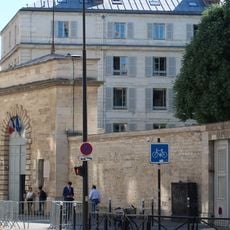
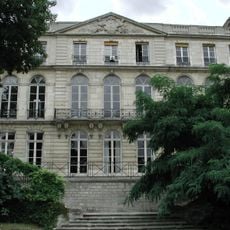
The Institut Océanographique de Paris is a Renaissance Revival research building at the intersection of Rue Saint-Jacques and Rue Gay-Lussac, clad in brick and stone. Inside, it houses specialized laboratories and two lecture halls for scientific work and teaching.
The building was founded by Prince Albert I of Monaco in 1906 and completed in 1911, underscoring its importance for European ocean research. It emerged during a period when oceanography was growing as a scientific field.
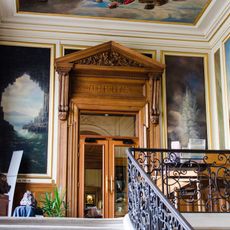
The facade carvings show crabs, jellyfish, seahorses and an octopus on the wrought-iron door, spelling out the institute's mission of spreading scientific knowledge about the sea. Since 2011 the building has been nicknamed Maison de l'Océan, and evening lectures by scientists and explorers are held there on Wednesdays.
The entrance with its sculpted stone surround faces the corner of Rue Saint-Jacques and Rue Gay-Lussac, marked by a sign panel reading "INSTITUT OCEANOGRAPHIQUE". The building is not a museum: the former Centre de la mer et des eaux in the basement closed in 2010, so visits depend on the public evening lectures and events held in the amphitheatres.
A double arch connects the building to the Institute of Geography, symbolizing the relationship between Earth and ocean. This architectural link is unknown to many visitors and gives the place a special connection to neighboring scientific spaces.
The community of curious travelers
AroundUs brings together thousands of curated places, local tips, and hidden gems, enriched daily by 92,840 contributors worldwide.