Château Saint-Jean de Nogent-le-Rotrou, Medieval castle and museum in Nogent-le-Rotrou, France
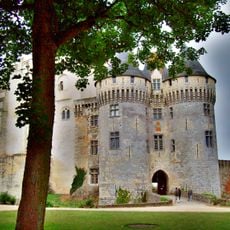
Château Saint-Jean de Nogent-le-Rotrou is a medieval castle on a plateau above the Huisne valley. Its rectangular stone keep, 17 by 24 metres and 35 metres high, was built in the 1040s. The circular enclosure and round towers with conical roofs date from the late 12th and early 13th centuries. A dry moat and drawbridge completed the defences.
Around 980 Rotrou, lord of Nogent, fortified the spur above the Huisne with a wooden keep on a motte, and in the 1040s Rotrou II raised the stone keep that still stands. In 1122 a chapel dedicated to Saint Stephen was built within the walls, and from the late 12th century the keep was reinforced and the circular towers and enclosure added. The castle was taken by the English in 1359 and returned under the Treaty of Brétigny in 1360.
The castle has housed the town's municipal museum since 1959. Its collections cover the history of Nogent-le-Rotrou and the Perche region, and the building was bought by the town in 1950 and partly restored between 2000 and 2004. The name Saint-Jean recalls Rotrou IV, killed before the walls of Saint-Jean-d'Acre in 1191 during the Third Crusade.
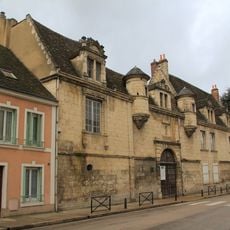
The castle stands on a 60-metre rocky spur; the 155 Saint-Jean steps link it to the Paty district and its Renaissance mansions. The dry moat is 8 metres deep and was crossed by a drawbridge. The town bought the site in 1950 and restored it partly between 2000 and 2004.
The keep's walls taper from 3.5 metres thick at the base to 1.5 metres at the top, and only the three round-arched openings of its top floor are original. Rotrou IV gave the castle its name: he died beneath the walls of Saint-Jean-d'Acre in 1191 during the Third Crusade.
The community of curious travelers
AroundUs brings together thousands of curated places, local tips, and hidden gems, enriched daily by 94,583 contributors worldwide.