Oppidum de Mauressip, Ancient hilltop ruins in Saint-Côme-et-Maruéjols, France
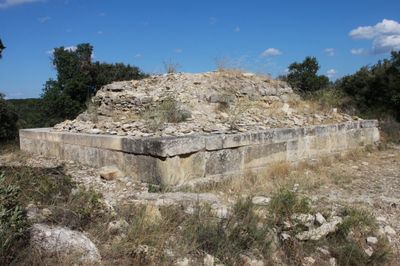
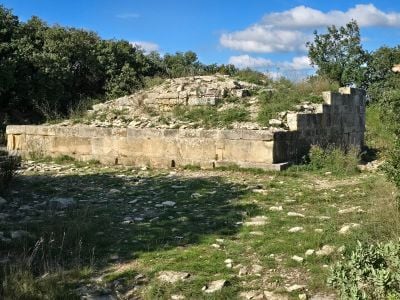
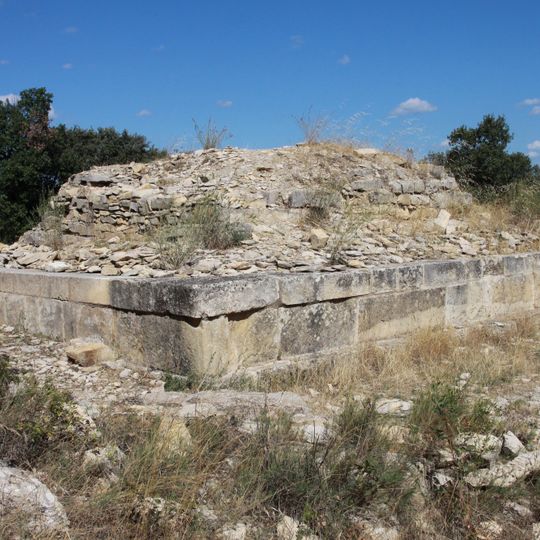
The oppidum de Mauressip is an archaeological site on the Serre Mouressipe hill at 171 m altitude, west of Saint-Côme-et-Maruéjols in the Gard, between Nîmes and Sommières. Its visible remains are a low base of large pale ashlar blocks topped by a mound of loose limestone rubble, with dry grass growing between the stones. The Hellenistic tower and adjoining dwelling ruins were classified as monuments historiques in 1978, the oppidum itself inscribed in 1982.
The site was first occupied during the late Iron Age and continued to be used into the Roman period, pointing to several centuries of activity. In 1978, the Hellenistic tower was listed as a historical monument, followed in 1982 by the protection of the whole site.
The name Mauressip, also written Mouressipe, comes from the hill Serre Mouressipe, 171 m high, west of Saint-Côme-et-Maruéjols between Nîmes and Sommières. The site is a protected archaeological zone: the Hellenistic tower and adjoining house ruins were classified as monuments historiques on 8 September 1978, and the oppidum itself was inscribed on 14 June 1982.
The site is reached by a small local road followed by a short walk up the hill, so sturdy footwear is a good idea. Information boards on-site help visitors find their way among the ruins and understand what they are looking at.
The hilltop is called Serre Mouressipe and rises to 171 metres, west of Saint-Côme-et-Maruéjols between Nîmes and Sommières. The Hellenistic tower and the house ruins beside it were classified as monuments historiques on 8 September 1978; the wider oppidum, plots A 776 to 860, was inscribed on 14 June 1982.
The community of curious travelers
AroundUs brings together thousands of curated places, local tips, and hidden gems, enriched daily by 94,461 contributors worldwide.