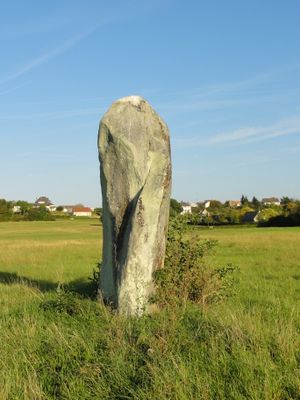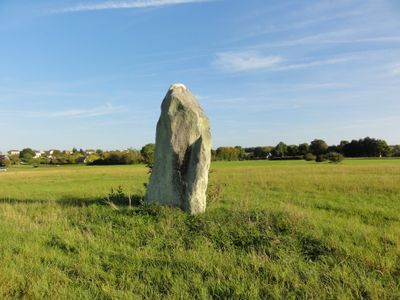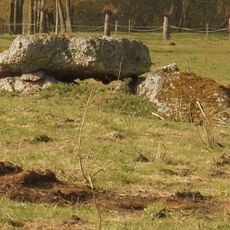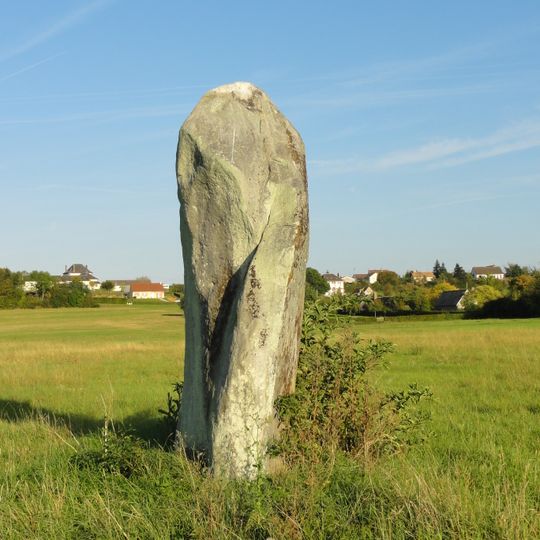
Pierre de Gargantua, Prehistoric menhir in Neaufles-Auvergny, France.
Pierre de Gargantua is a sandstone menhir standing on private land in the Norman village of Neaufles-Auvergny in the Eure department. The upright stone rises from an open field and looks today like a solitary guardian over the surrounding landscape.
The stone was first mentioned in written records in 1298 under the name 'longa petra', meaning long stone, and dates back to the Neolithic period. It gained official protected monument status in 1934, securing its preservation for future generations.
The stone takes its name from Gargantua, a figure from French folklore whose stories have shaped how locals understand this place. The naming reflects how deeply this menhir is woven into the region's storytelling traditions.
The stone sits on private property, so visitors should view it from the field's edge rather than trespassing onto the land. Local walking routes pass nearby, making it easy to see the menhir as part of a broader countryside walk.
The name Gargantua comes from local legend claiming that the giant folklore character used the stone for sharpening tools. This playful tradition links the Neolithic monument to the region's storytelling in a way that blurs the line between myth and archaeology.
The community of curious travelers
AroundUs brings together thousands of curated places, local tips, and hidden gems, enriched daily by 91,125 contributors worldwide.