See the monuments around you in AROpen chests in the app
Around Us is built for your phone — point your camera at the streets and discover the monuments and places around you in augmented reality.Around Us is built for your phone — chests unlock when you walk, explore and capture nearby places.
France of standing stones: journey through menhirs, dolmens, and alignments
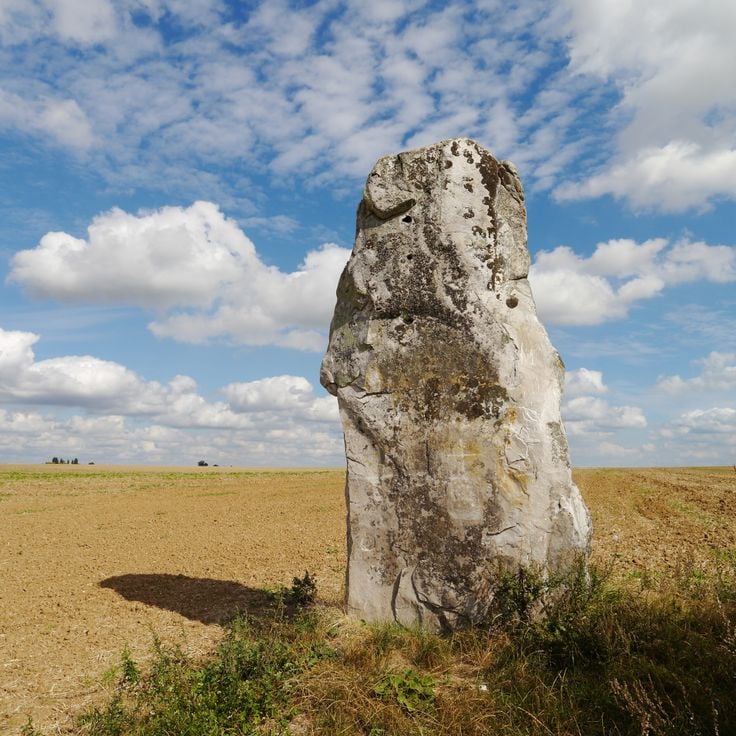
Throughout France, stone silhouettes still stand in fields, forests, or by the sea. They existed long before villages and roads, witnesses to a world that believed in the sky and hidden forces of the earth. These menhirs, erected over five thousand years ago, in their own way narrate the dawn of civilizations. Some are solitary, others are arranged in rows of hundreds. Some bear engraved faces, others remain silent, smoothed by Breton winds or the rain of the Central Massif. From Carnac to Corsica, from Poitou to the Côtes-d’Armor, these upright stones maintain a strong presence, almost human. Approaching them, one senses the ancient connection between human hands and the memory of the land.
France of standing stones: journey through menhirs, dolmens, and alignments
Throughout France, stone silhouettes still stand in fields, forests, or by the sea. They existed long before villages and roads, witnesses to a world that believed in the sky and hidden forces of the earth. These menhirs, erected over five thousand years ago, in their own way narrate the dawn of civilizations. Some are solitary, others are arranged in rows of hundreds. Some bear engraved faces, others remain silent, smoothed by Breton winds or the rain of the Central Massif. From Carnac to Corsica, from Poitou to the Côtes-d’Armor, these upright stones maintain a strong presence, almost human. Approaching them, one senses the ancient connection between human hands and the memory of the land.
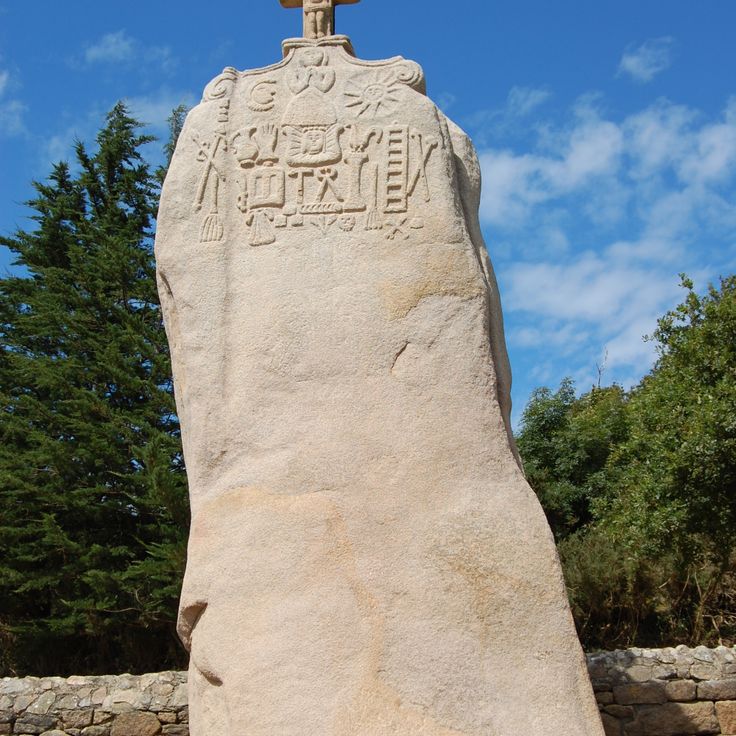
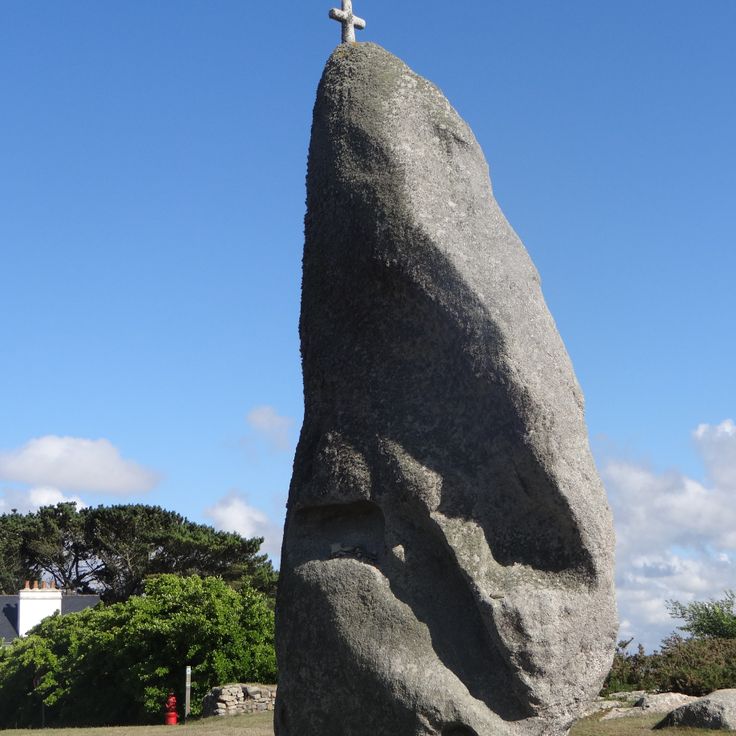
This granite menhir in Pleumeur-Bodou rises over 23 feet (7 meters) into the sky and still carries traces of its Neolithic origins. In the 17th century, Christian symbols were carved into the stone, including a crucifixion scene and liturgical tools. The menhir stands on a hill near the coast, surrounded by pastures and scattered farmhouses. Wind and weather have smoothed the surface over thousands of years, yet the carved figures remain visible. Those who come here see how two beliefs used the same stone, each in its own time, and how this place has served as a sacred marker in the landscape for more than five thousand years.
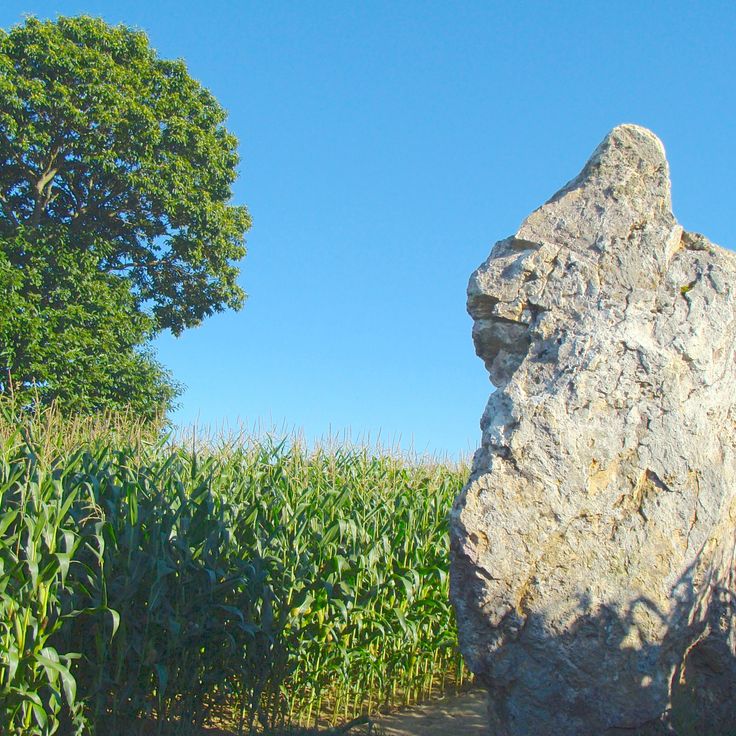
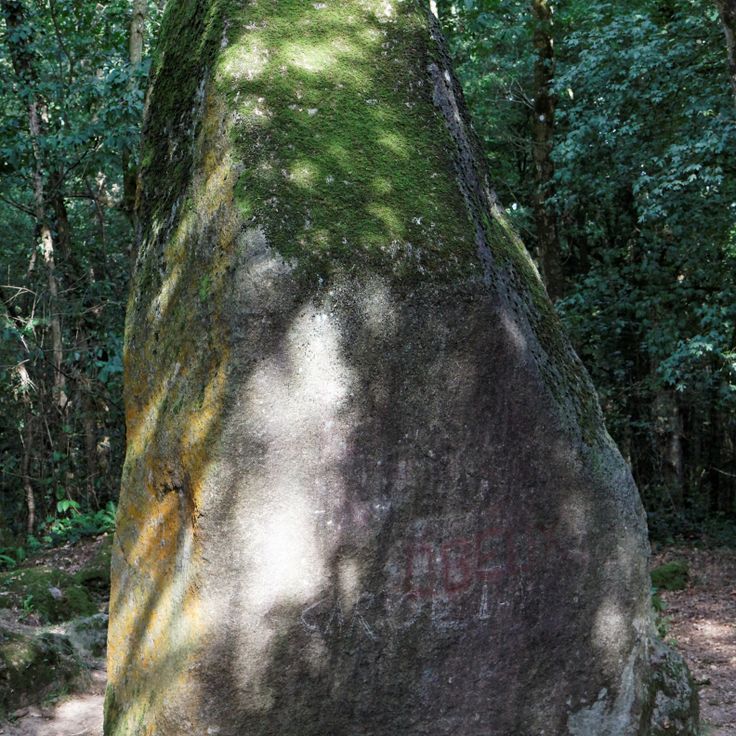
This 13-foot-tall (4-meter) Neolithic stone with a flat top stands at the forest edge among oaks and beech trees. The menhir has risen in this Maine-et-Loire landscape for more than five thousand years, joining the line of upright stones that have shaped the face of France since the dawn of civilizations. Its presence feels calm and enduring, a witness from a time when people expressed their connection to the ground and the hidden forces of the earth through these elevations.
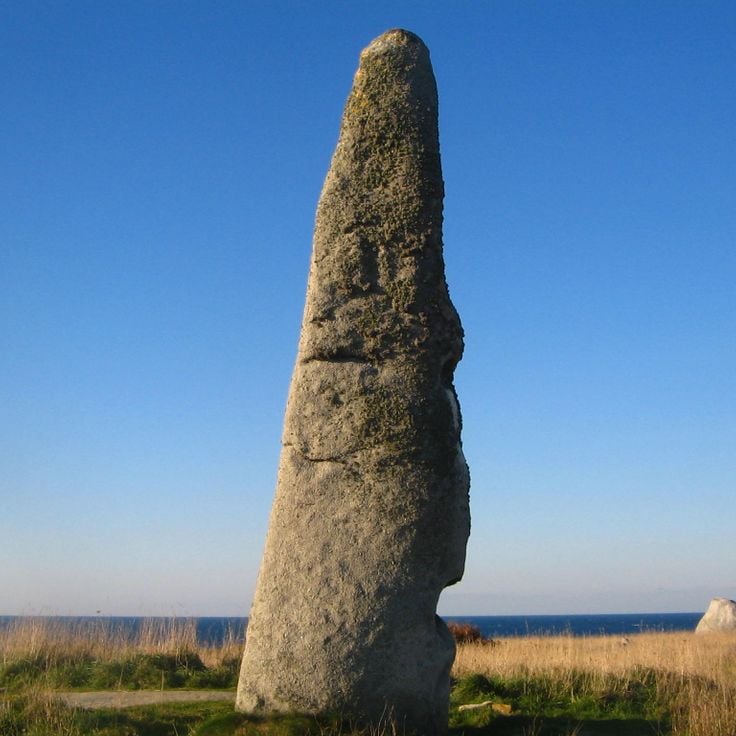
This granite block stands on a cliff above the Morlaix bay and has watched the sea for thousands of years. The Kergadiou standing stone rises in a landscape of wind and salt where sky and water meet. The stone carries marks of ancient times when people began to erect such monuments and saw in them a connection between earth and cosmos. From here the view sweeps far across the coast, and you feel how the elements have shaped this place for millennia. This stone belongs to the many witnesses of that early culture that left its marks across Brittany.
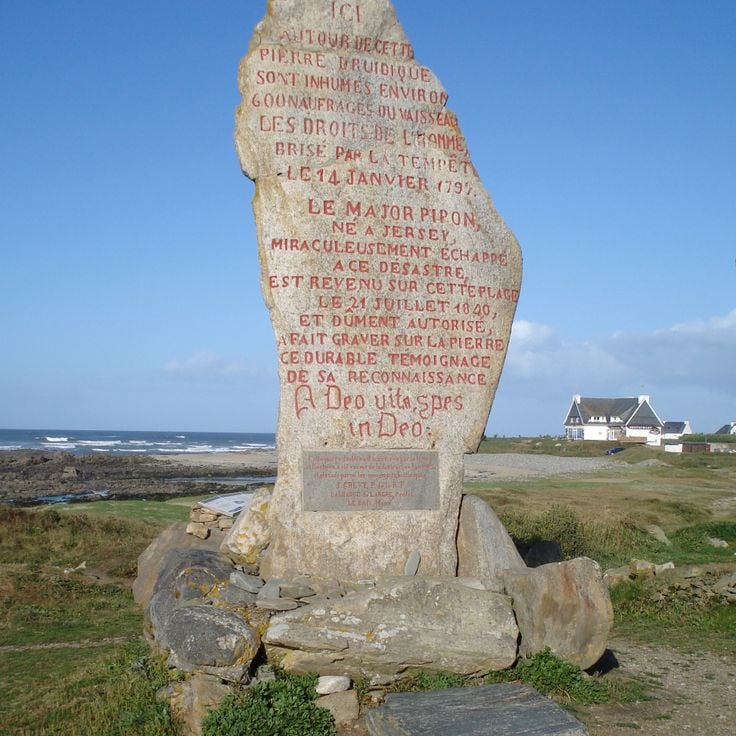
This modern commemorative stone from 1989 celebrates the 200th anniversary of the French Declaration of the Rights of Man. In Plozèvet, it stands as a contemporary echo to the older menhirs of Finistère, which have shaped the Breton landscape for thousands of years. The stone connects the ancient tradition of erecting stones with a modern message: liberty, equality, fraternity. It shows how raising stones continues to play a role when people want to mark important moments. In a region where granite and menhirs are deeply rooted in memory, this commemorative stone joins a long history in which stones speak and remember.
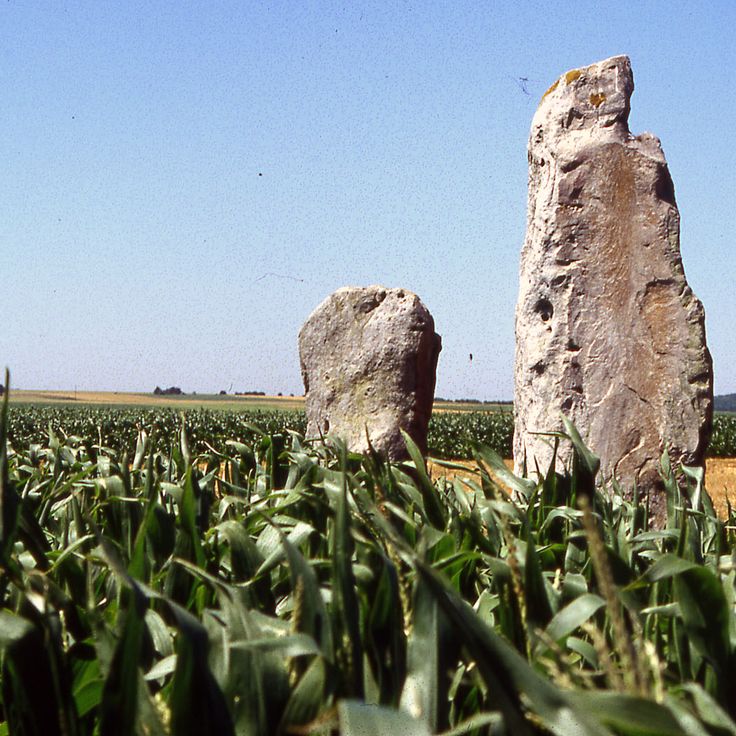
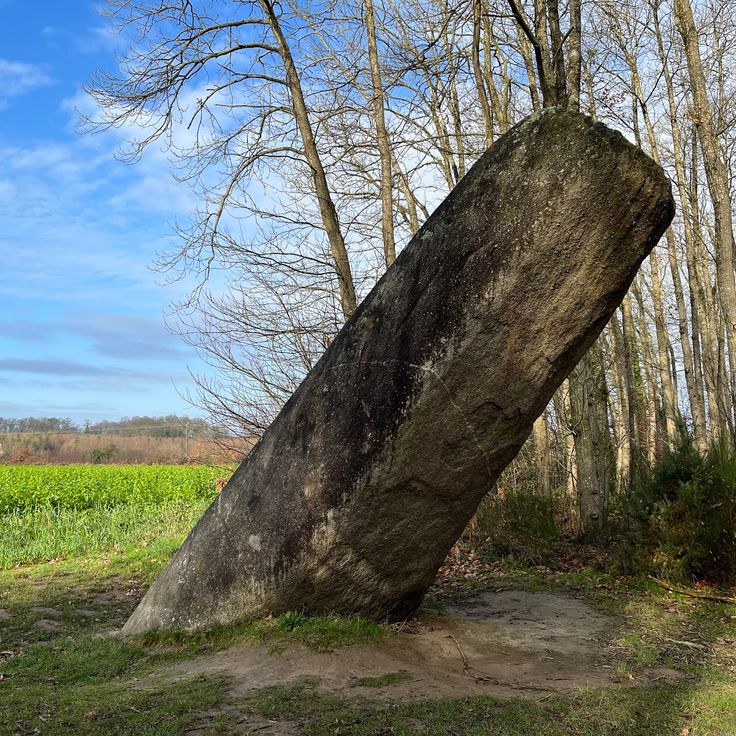
These two blocks of granite rise on a hill in Mont-Saint-Éloi, angled at 45 degrees to each other and reaching about 13 feet (four meters) in height. Their shape and orientation set them apart from most standing stones in France. They belong to a landscape between Pas-de-Calais and the Flemish plains, where large megaliths are rare. The stones mark a rise that has served as a landmark for centuries.
This gray granite menhir reaches five meters tall (around 16 feet) and carries engraved spirals and linear patterns on its northeastern face. It was restored during the 18th century after it likely fell. The engravings belong to the few visible marks that remained on these stones in Normandy. It stands in a farming area where only scattered upright stones from the Neolithic period survive. The surface of the stone shows the traces of centuries and weather.
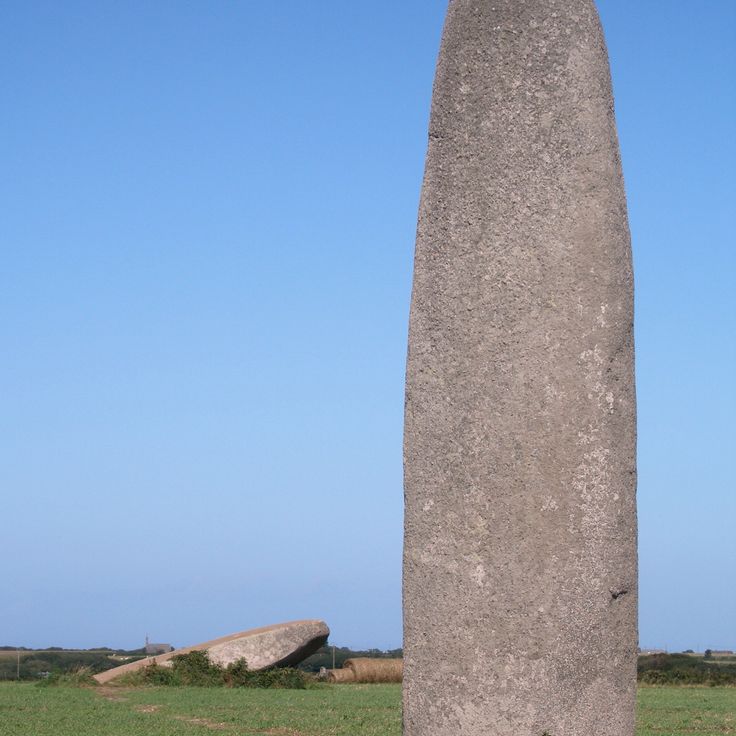
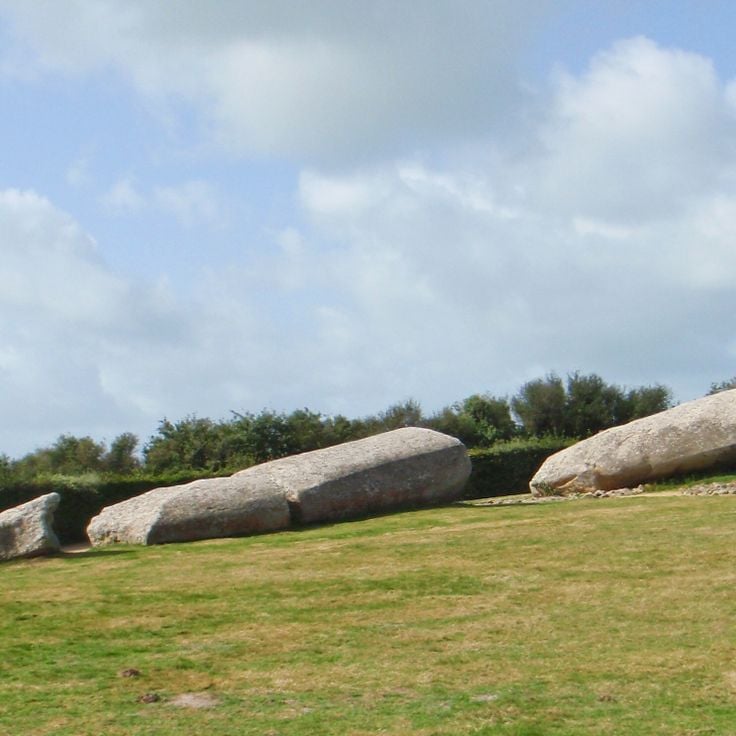
This broken monolith once stood upright on low ground overlooking the Gulf of Morbihan, its summit visible from far across water and fields. The granite was brought here from a quarry three miles away over six thousand years ago, an extraordinary feat for that time. Today, four large fragments rest on the earth, their rough surface covered in lichen and worn edges shaped by weather. Visitors walk between the fallen blocks, whose size and weight remain impressive even when lying down. Around this place stand other upright stones and dolmens, testifying to the richness of the Locmariaquer area and its concentration of ancient monuments that reveal the importance of this coast in early human memory.
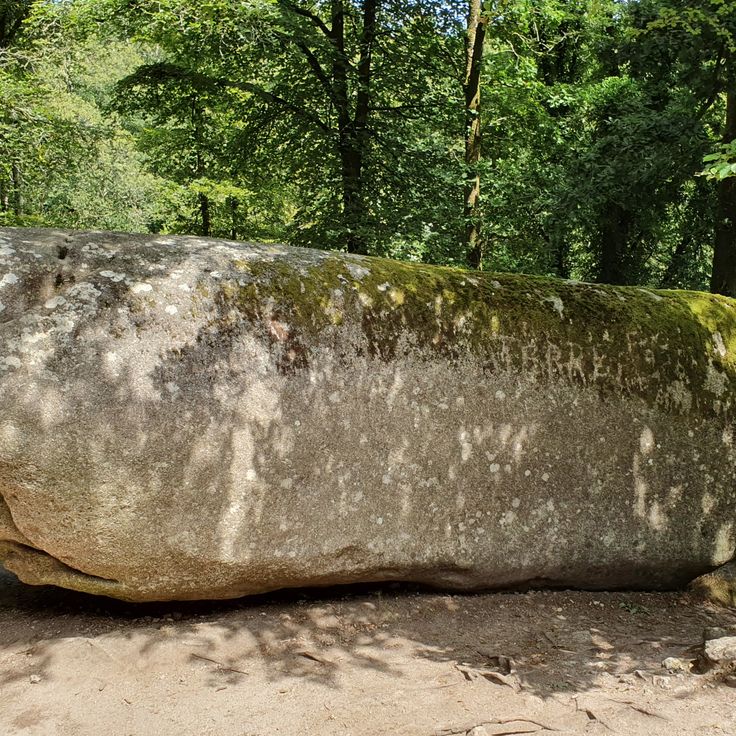
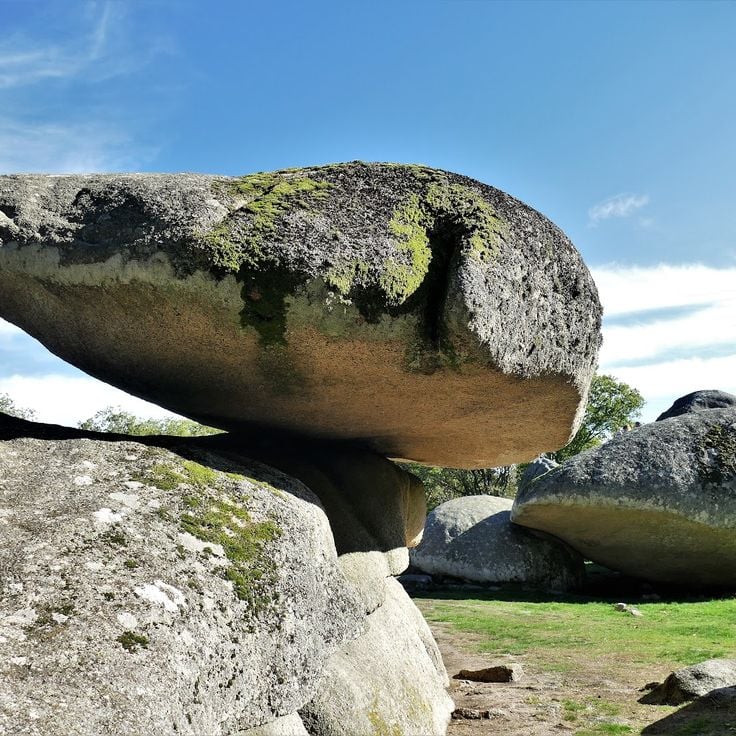
This balanced rock has stood in the Huelgoat forest for thousands of years and moves with a gentle touch despite weighing 137 tons. The shape came about through natural weathering, but early inhabitants of this region likely saw it as a sign of hidden forces. The stone rests on a tiny granite base and appears almost to float. Visiting it, you face a play of nature that recalls the time when standing stones carried meaning and people sought connections between earth and sky.
This sixteen-meter stone rises above the valleys near Saint-Micaud, drawing the attention of people for centuries. Older residents told that fairies brought it here using supernatural strength, and this name remained anchored in the memory of the region. The monument stands as a witness to a time when people attributed special meaning to upright stones and wove stories to explain their presence. Those who stand before it today sense the connection between ancient beliefs in hidden forces and the silent permanence of the material.
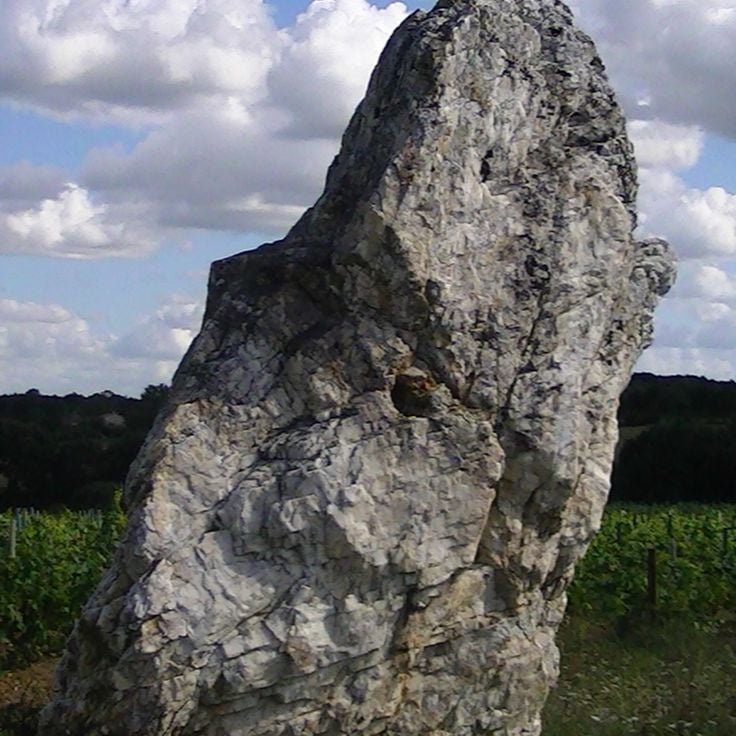
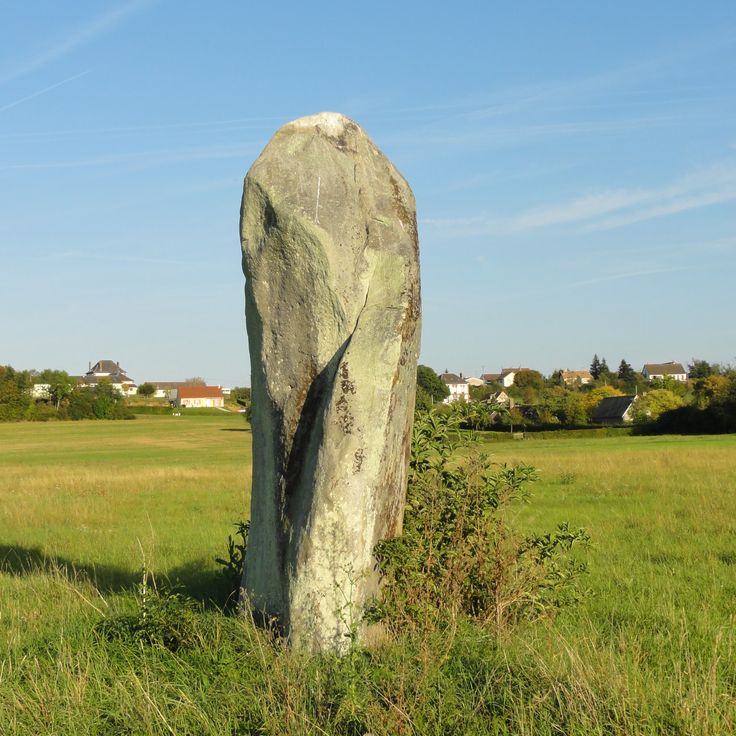
This menhir rises on a hillside above the Loire River, standing roughly four meters tall. It is made of white quartz, a material uncommon in the area, setting it apart from the usual granite and schist found nearby. It has stood in this landscape for thousands of years, visible from a distance, a marker left by people who raised stones to mark places or point toward the sky. The surface shows the wear of weather, and the material catches light when it rains. Around it stretch fields and woods, quiet now but still holding traces of a distant past.
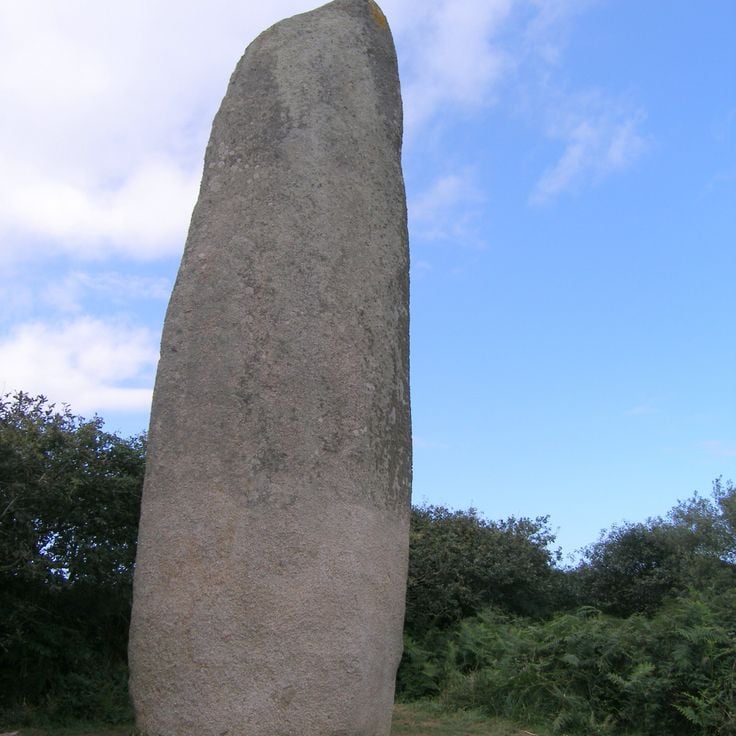
This menhir rises more than 25 feet (over eight meters) above open heathland. It dates from the Neolithic period and is made of grey granite. The stone shapes the flat landscape in northern Finistère, close to the coast. Ferns and low shrubs grow all around it. Those who approach notice the traces of wind and rain that have shaped its surface over thousands of years. The Menhir de Men Marz is among the tallest standing stones in Brittany.
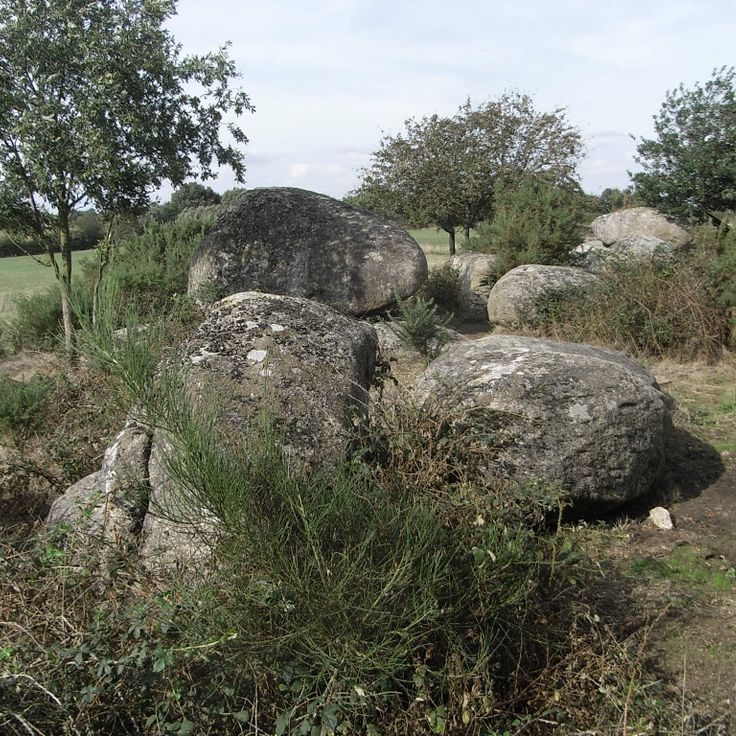
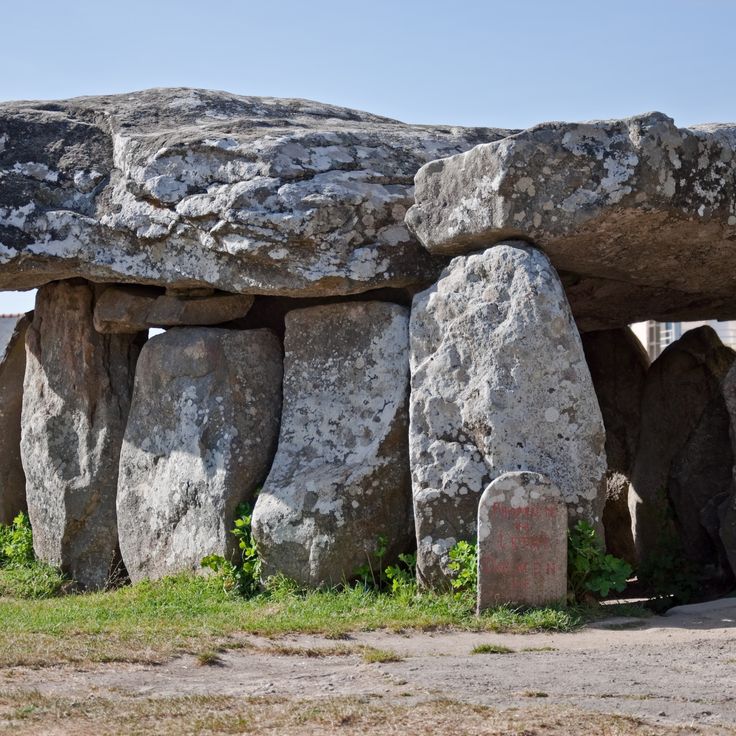
This neolithic burial chamber stands in Plouharnel, south of the great stone rows of Carnac. Built during the fourth millennium BC, it consists of several upright stone pillars supporting a large horizontal slab. The rectangular structure once sat beneath an earth mound, which has disappeared over time. You can see the joints between the stones, fitted together without mortar. The location on a slight rise makes the dolmen visible from afar. It belongs to the oldest evidence of human burial practice in Brittany, and its weathered surface shows how rain and wind have shaped the granite for thousands of years.
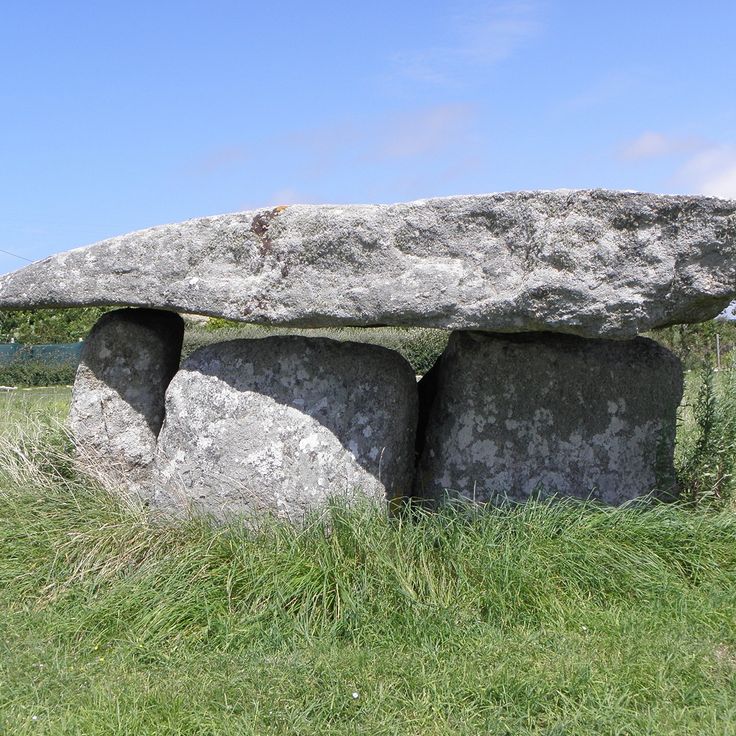
This neolithic burial chamber stands in fields near the Breton coast, where large stone slabs form a rectangular chamber. Earth layers sit above the chamber, worn away only partly by time and weather. Around it spreads farmland that people have worked for centuries. The stones date from a time when communities buried their dead directly in the earth. Those who approach the tomb see traces of ancient building skill that used no mortar or metal tools. Kerivoret holds within itself that connection between human hands and the memory of the land, still felt everywhere in Brittany.
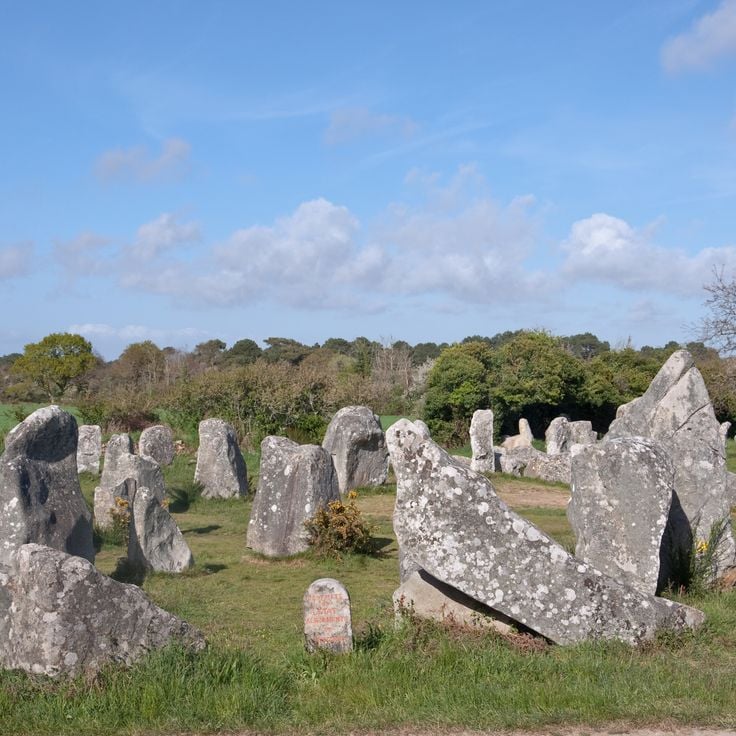
These neolithic alignments stretch over more than a kilometer through the fields of Erdeven. About one hundred granite blocks stand in several rows, some barely taller than a person, others rising higher. The stones date from a time when the land was not yet crossed by roads. You walk between them and follow their arrangement, which no one today can fully explain.
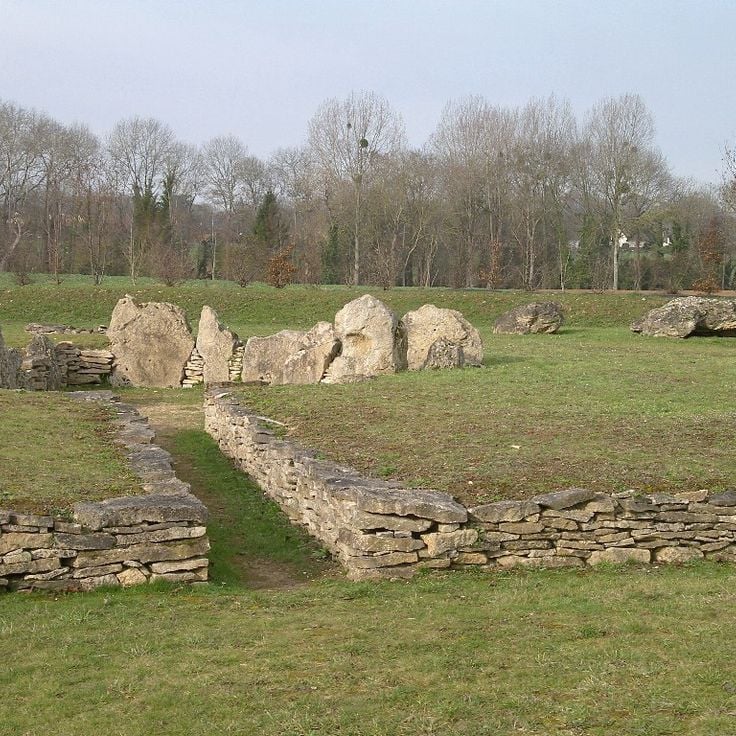
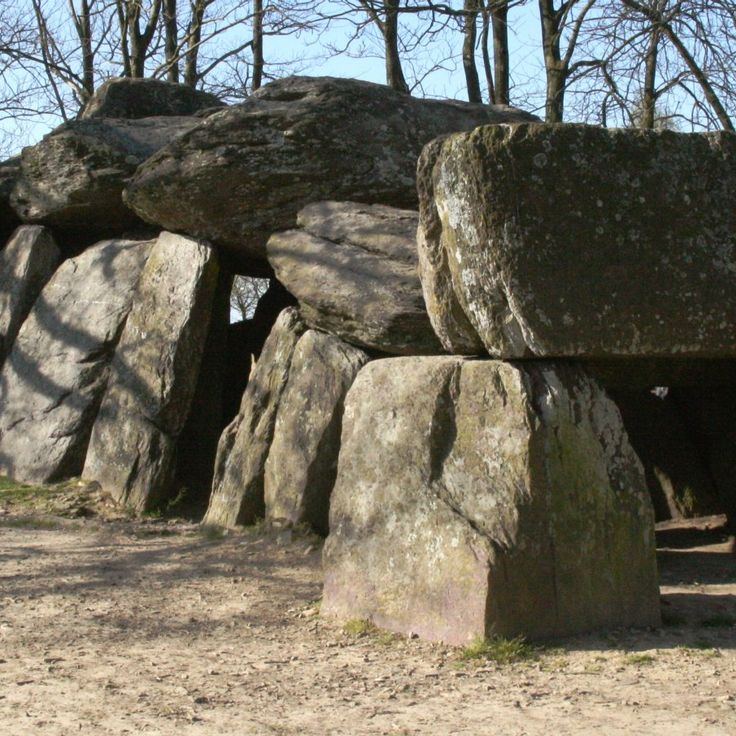
This neolithic gallery grave lies near Rennes and was built using forty stone blocks, some of which stand 13 feet (4 m) tall. The gallery extends over 65 feet (20 m) in length and consists of schist transported from several miles away. The monument is among the largest megalithic tombs in Brittany. Local tradition named it the Fairies' Rock, as legend says fairies dance around the stones at night.
This menhir stands upright in an open field not far from the Brittany coast, erected more than five thousand years ago. The granite stone rises from the flat farmland of Plouescat, a solitary witness to the time before villages appeared, when people raised such monuments according to the cycles of the sky and the hidden forces of the earth. Wind and rain have smoothed its surface over the millennia, but the shape of the stone remains clear. Today, fields surround the Menhir of Cam Louis, and its presence gives the landscape a quiet, almost human dimension, as though it were an old companion watching over the passage of centuries.
This granite menhir reaches a height of 23 feet (7 meters) and was erected during the Neolithic period. La Pierre Longue rises from a natural stone base in the countryside near Guitté, where it has stood for thousands of years surrounded by fields and woods, accompanying people along their paths.
This sandstone monolith rises over five meters into the sky and dates from the time of Normandy's megalithic cultures. It belongs to those upright stones that show the bond between prehistoric people and the natural forms of the earth. Local tradition ties this menhir to the figure of the giant Gargantua from French literature and folk belief. For centuries, this story has endured and given the stone an aura that goes beyond its purely archaeological meaning. It stands in the Eure countryside like a last witness of a forgotten time that left no writing or traces except these tall stones reaching toward the sky.
These fifteen granite blocks stand on a hill in the Limousin, shaped by thousands of years of erosion. Unlike the other standing stones that human hands raised toward the sky, these were carved by nature itself. Their silhouettes suggest figures or animals, and local imagination has long given them names. Weather has polished them, wind has marked them. You walk among them as if in a landscape suspended between geology and imagination, between visible form and imagined meaning.
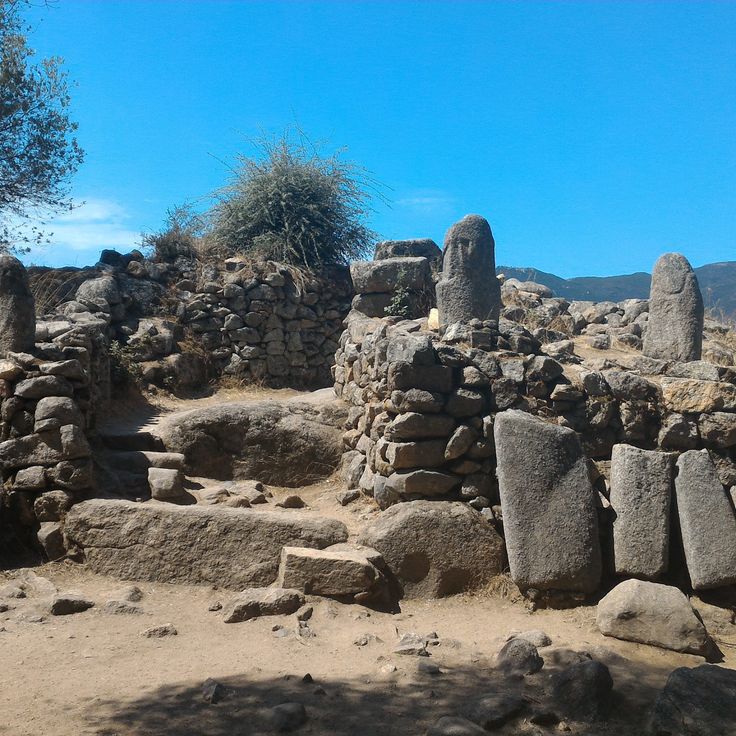
These Bronze Age granite figures carry faces carved in stone, appearing with uncommon clarity. Many stones also display swords, daggers, and pieces of armor engraved into the surface. The representations feel powerful and seem to capture warriors who may have lived around thirty-five hundred years ago. These menhirs are among the few in France where human features emerge so clearly. Walking around them, new details appear: weapons, belts, sometimes even ribs. They stand in a valley surrounded by cork oaks, at a place inhabited since the Stone Age. The site brings together granite blocks from different periods, yet these statue-menhirs remain the most compelling witnesses of this early island culture.
This four-meter granite stands in the Aveyron countryside, raised by hands that lived thousands of years ago. It connects to the old world when people believed stones could speak to the sky and the rhythms beneath the ground. Local stories still speak of fertility rites, and the menhir remains a quiet witness to those distant times when early communities shaped the land.
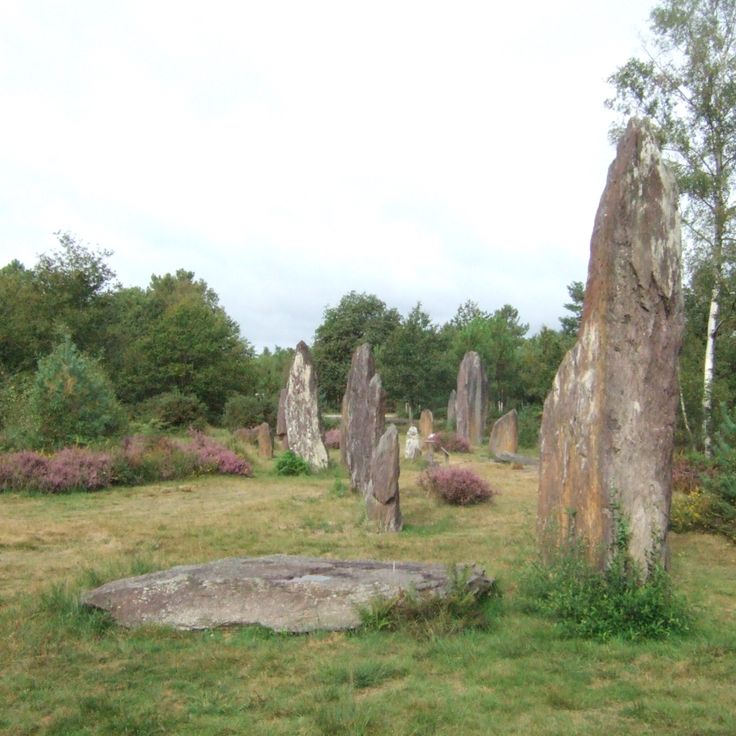
These menhir rows stretch across open ground near the Breton border. More than four hundred granite blocks stand in several parallel lines, forming a monument raised about six thousand years ago. The stones were toppled during medieval times and re-erected in the 20th century, so today one can trace the original layout. The site lies quietly in the landscape, surrounded by forest and meadow, and offers a sense of the early bond between human hands and earth.
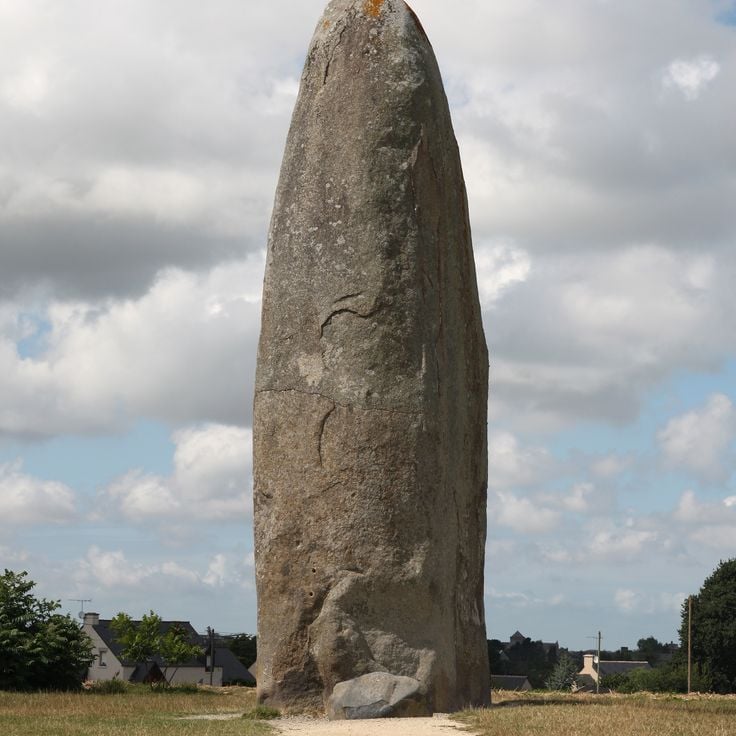
The Champ-Dolent menhir rises from Breton pastureland like a dark sentinel against the sky. This granite stone has stood upright since Neolithic times, measuring roughly 9 meters (30 feet) above ground with another 3 meters (10 feet) anchored below. Its rough surface bears the marks of centuries of rain and wind. Flat fields stretch around it, making the stone appear even taller. Standing before it, you sense the force required to move and raise such a weight—a testament to human determination in an age without machines.
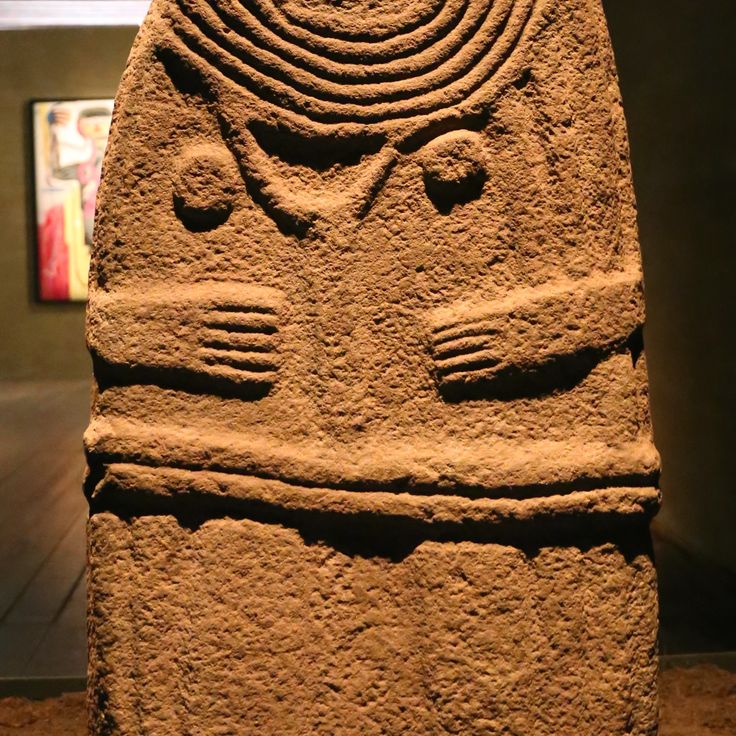
This menhir carries engravings more than five thousand years old, dating back to around 3000 BCE. The signs and patterns carved into the stone are traces of a world that cut its messages into hard granite long before any village appeared here. The upright stone stands in the Breton countryside near Lamballe-Armor and is part of that silent series of monuments preserving the thought and rituals of early communities. Those who approach can see the lines made by human hands when the bond between earth and sky was still expressed through such marks.
This granite monolith stands high above the landscape near Plouarzel and belongs to the tallest upright stones in France. The Menhir de Kerloas was raised about six thousand years ago and rises almost 33 feet (10 meters) into the air. The surface bears the marks of wind, rain, and salty air from the nearby Atlantic. Walking around the stone, you feel its massive presence and the effort it must have taken to raise it. It used to be taller, but a lightning strike in the 18th century split off the top. Today the menhir stands quietly in a wide, green setting, surrounded by low walls and fields that stretch toward the coast.
This 4-meter (13-foot) granite stone from 3500 BCE stands in the landscape of Côtes-d'Armor, a region rich in Neolithic remains. The patterns and symbols carved into its surface are among the oldest traces of human craftsmanship in Brittany. The engravings form geometric shapes whose meaning remains unknown. The stone was raised by people who lived in this area long before written records existed. It stands upright near Saint-Samson-sur-Rance, a place by the Rance river, and belongs to the large family of Breton menhirs.
This menhir rises five meters high on a ridge in Calvados, thirty meters above sea level. For thousands of years, it has stood at a point visible from the Atlantic coast. Across the open fields, this stone remains a landmark that carries the memory of ancient gatherings and rituals. Visitors sense the connection between the hands that raised it and the wide view over the land.
This sandstone block stands 11.5 feet (3.5 meters) tall and was raised about four thousand years ago. The Menhir du Paly rises on Mont Auxois and belongs to the era when people began placing stones in the landscape. The local rock was shaped and erected during the Bronze Age, long before villages and roads appeared. The stone remains silent, yet its presence alone connects the present to a distant past.
This granite slab has stood upright in the Sèvremoine countryside for more than five thousand years. The stone weighs about 37 tons (33,600 kilograms) and was raised during the Neolithic era. It belongs to those menhirs that can be made to move slightly when pressed at the right spot. The phenomenon occurs because of the shape of the base and the way the stone rests on the ground. Those who touch it feel how the granite, weighing tons, tilts almost imperceptibly and returns. These stones belong to the great family of French megaliths, telling of a time when people began to shape the land in lasting ways.
This granite menhir in Pleumeur-Bodou rises over 23 feet (7 meters) into the sky and still carries traces of its Neolithic origins. In the 17th century, Christian symbols were carved into the stone, including a crucifixion scene and liturgical tools. The menhir stands on a hill near the coast, surrounded by pastures and scattered farmhouses. Wind and weather have smoothed the surface over thousands of years, yet the carved figures remain visible. Those who come here see how two beliefs used the same stone, each in its own time, and how this place has served as a sacred marker in the landscape for more than five thousand years.
This 13-foot-tall (4-meter) Neolithic stone with a flat top stands at the forest edge among oaks and beech trees. The menhir has risen in this Maine-et-Loire landscape for more than five thousand years, joining the line of upright stones that have shaped the face of France since the dawn of civilizations. Its presence feels calm and enduring, a witness from a time when people expressed their connection to the ground and the hidden forces of the earth through these elevations.
This granite block stands on a cliff above the Morlaix bay and has watched the sea for thousands of years. The Kergadiou standing stone rises in a landscape of wind and salt where sky and water meet. The stone carries marks of ancient times when people began to erect such monuments and saw in them a connection between earth and cosmos. From here the view sweeps far across the coast, and you feel how the elements have shaped this place for millennia. This stone belongs to the many witnesses of that early culture that left its marks across Brittany.
This modern commemorative stone from 1989 celebrates the 200th anniversary of the French Declaration of the Rights of Man. In Plozèvet, it stands as a contemporary echo to the older menhirs of Finistère, which have shaped the Breton landscape for thousands of years. The stone connects the ancient tradition of erecting stones with a modern message: liberty, equality, fraternity. It shows how raising stones continues to play a role when people want to mark important moments. In a region where granite and menhirs are deeply rooted in memory, this commemorative stone joins a long history in which stones speak and remember.
These two blocks of granite rise on a hill in Mont-Saint-Éloi, angled at 45 degrees to each other and reaching about 13 feet (four meters) in height. Their shape and orientation set them apart from most standing stones in France. They belong to a landscape between Pas-de-Calais and the Flemish plains, where large megaliths are rare. The stones mark a rise that has served as a landmark for centuries.
This gray granite menhir reaches five meters tall (around 16 feet) and carries engraved spirals and linear patterns on its northeastern face. It was restored during the 18th century after it likely fell. The engravings belong to the few visible marks that remained on these stones in Normandy. It stands in a farming area where only scattered upright stones from the Neolithic period survive. The surface of the stone shows the traces of centuries and weather.
This broken monolith once stood upright on low ground overlooking the Gulf of Morbihan, its summit visible from far across water and fields. The granite was brought here from a quarry three miles away over six thousand years ago, an extraordinary feat for that time. Today, four large fragments rest on the earth, their rough surface covered in lichen and worn edges shaped by weather. Visitors walk between the fallen blocks, whose size and weight remain impressive even when lying down. Around this place stand other upright stones and dolmens, testifying to the richness of the Locmariaquer area and its concentration of ancient monuments that reveal the importance of this coast in early human memory.
This balanced rock has stood in the Huelgoat forest for thousands of years and moves with a gentle touch despite weighing 137 tons. The shape came about through natural weathering, but early inhabitants of this region likely saw it as a sign of hidden forces. The stone rests on a tiny granite base and appears almost to float. Visiting it, you face a play of nature that recalls the time when standing stones carried meaning and people sought connections between earth and sky.
This sixteen-meter stone rises above the valleys near Saint-Micaud, drawing the attention of people for centuries. Older residents told that fairies brought it here using supernatural strength, and this name remained anchored in the memory of the region. The monument stands as a witness to a time when people attributed special meaning to upright stones and wove stories to explain their presence. Those who stand before it today sense the connection between ancient beliefs in hidden forces and the silent permanence of the material.
This menhir rises on a hillside above the Loire River, standing roughly four meters tall. It is made of white quartz, a material uncommon in the area, setting it apart from the usual granite and schist found nearby. It has stood in this landscape for thousands of years, visible from a distance, a marker left by people who raised stones to mark places or point toward the sky. The surface shows the wear of weather, and the material catches light when it rains. Around it stretch fields and woods, quiet now but still holding traces of a distant past.
This menhir rises more than 25 feet (over eight meters) above open heathland. It dates from the Neolithic period and is made of grey granite. The stone shapes the flat landscape in northern Finistère, close to the coast. Ferns and low shrubs grow all around it. Those who approach notice the traces of wind and rain that have shaped its surface over thousands of years. The Menhir de Men Marz is among the tallest standing stones in Brittany.
This neolithic burial chamber stands in Plouharnel, south of the great stone rows of Carnac. Built during the fourth millennium BC, it consists of several upright stone pillars supporting a large horizontal slab. The rectangular structure once sat beneath an earth mound, which has disappeared over time. You can see the joints between the stones, fitted together without mortar. The location on a slight rise makes the dolmen visible from afar. It belongs to the oldest evidence of human burial practice in Brittany, and its weathered surface shows how rain and wind have shaped the granite for thousands of years.
This neolithic burial chamber stands in fields near the Breton coast, where large stone slabs form a rectangular chamber. Earth layers sit above the chamber, worn away only partly by time and weather. Around it spreads farmland that people have worked for centuries. The stones date from a time when communities buried their dead directly in the earth. Those who approach the tomb see traces of ancient building skill that used no mortar or metal tools. Kerivoret holds within itself that connection between human hands and the memory of the land, still felt everywhere in Brittany.
These neolithic alignments stretch over more than a kilometer through the fields of Erdeven. About one hundred granite blocks stand in several rows, some barely taller than a person, others rising higher. The stones date from a time when the land was not yet crossed by roads. You walk between them and follow their arrangement, which no one today can fully explain.
This neolithic gallery grave lies near Rennes and was built using forty stone blocks, some of which stand 13 feet (4 m) tall. The gallery extends over 65 feet (20 m) in length and consists of schist transported from several miles away. The monument is among the largest megalithic tombs in Brittany. Local tradition named it the Fairies' Rock, as legend says fairies dance around the stones at night.
This menhir stands upright in an open field not far from the Brittany coast, erected more than five thousand years ago. The granite stone rises from the flat farmland of Plouescat, a solitary witness to the time before villages appeared, when people raised such monuments according to the cycles of the sky and the hidden forces of the earth. Wind and rain have smoothed its surface over the millennia, but the shape of the stone remains clear. Today, fields surround the Menhir of Cam Louis, and its presence gives the landscape a quiet, almost human dimension, as though it were an old companion watching over the passage of centuries.
This granite menhir reaches a height of 23 feet (7 meters) and was erected during the Neolithic period. La Pierre Longue rises from a natural stone base in the countryside near Guitté, where it has stood for thousands of years surrounded by fields and woods, accompanying people along their paths.
This sandstone monolith rises over five meters into the sky and dates from the time of Normandy's megalithic cultures. It belongs to those upright stones that show the bond between prehistoric people and the natural forms of the earth. Local tradition ties this menhir to the figure of the giant Gargantua from French literature and folk belief. For centuries, this story has endured and given the stone an aura that goes beyond its purely archaeological meaning. It stands in the Eure countryside like a last witness of a forgotten time that left no writing or traces except these tall stones reaching toward the sky.
These fifteen granite blocks stand on a hill in the Limousin, shaped by thousands of years of erosion. Unlike the other standing stones that human hands raised toward the sky, these were carved by nature itself. Their silhouettes suggest figures or animals, and local imagination has long given them names. Weather has polished them, wind has marked them. You walk among them as if in a landscape suspended between geology and imagination, between visible form and imagined meaning.
These Bronze Age granite figures carry faces carved in stone, appearing with uncommon clarity. Many stones also display swords, daggers, and pieces of armor engraved into the surface. The representations feel powerful and seem to capture warriors who may have lived around thirty-five hundred years ago. These menhirs are among the few in France where human features emerge so clearly. Walking around them, new details appear: weapons, belts, sometimes even ribs. They stand in a valley surrounded by cork oaks, at a place inhabited since the Stone Age. The site brings together granite blocks from different periods, yet these statue-menhirs remain the most compelling witnesses of this early island culture.
This four-meter granite stands in the Aveyron countryside, raised by hands that lived thousands of years ago. It connects to the old world when people believed stones could speak to the sky and the rhythms beneath the ground. Local stories still speak of fertility rites, and the menhir remains a quiet witness to those distant times when early communities shaped the land.
These menhir rows stretch across open ground near the Breton border. More than four hundred granite blocks stand in several parallel lines, forming a monument raised about six thousand years ago. The stones were toppled during medieval times and re-erected in the 20th century, so today one can trace the original layout. The site lies quietly in the landscape, surrounded by forest and meadow, and offers a sense of the early bond between human hands and earth.
The Champ-Dolent menhir rises from Breton pastureland like a dark sentinel against the sky. This granite stone has stood upright since Neolithic times, measuring roughly 9 meters (30 feet) above ground with another 3 meters (10 feet) anchored below. Its rough surface bears the marks of centuries of rain and wind. Flat fields stretch around it, making the stone appear even taller. Standing before it, you sense the force required to move and raise such a weight—a testament to human determination in an age without machines.
This menhir carries engravings more than five thousand years old, dating back to around 3000 BCE. The signs and patterns carved into the stone are traces of a world that cut its messages into hard granite long before any village appeared here. The upright stone stands in the Breton countryside near Lamballe-Armor and is part of that silent series of monuments preserving the thought and rituals of early communities. Those who approach can see the lines made by human hands when the bond between earth and sky was still expressed through such marks.
This granite monolith stands high above the landscape near Plouarzel and belongs to the tallest upright stones in France. The Menhir de Kerloas was raised about six thousand years ago and rises almost 33 feet (10 meters) into the air. The surface bears the marks of wind, rain, and salty air from the nearby Atlantic. Walking around the stone, you feel its massive presence and the effort it must have taken to raise it. It used to be taller, but a lightning strike in the 18th century split off the top. Today the menhir stands quietly in a wide, green setting, surrounded by low walls and fields that stretch toward the coast.
This 4-meter (13-foot) granite stone from 3500 BCE stands in the landscape of Côtes-d'Armor, a region rich in Neolithic remains. The patterns and symbols carved into its surface are among the oldest traces of human craftsmanship in Brittany. The engravings form geometric shapes whose meaning remains unknown. The stone was raised by people who lived in this area long before written records existed. It stands upright near Saint-Samson-sur-Rance, a place by the Rance river, and belongs to the large family of Breton menhirs.
This menhir rises five meters high on a ridge in Calvados, thirty meters above sea level. For thousands of years, it has stood at a point visible from the Atlantic coast. Across the open fields, this stone remains a landmark that carries the memory of ancient gatherings and rituals. Visitors sense the connection between the hands that raised it and the wide view over the land.
This sandstone block stands 11.5 feet (3.5 meters) tall and was raised about four thousand years ago. The Menhir du Paly rises on Mont Auxois and belongs to the era when people began placing stones in the landscape. The local rock was shaped and erected during the Bronze Age, long before villages and roads appeared. The stone remains silent, yet its presence alone connects the present to a distant past.
This granite slab has stood upright in the Sèvremoine countryside for more than five thousand years. The stone weighs about 37 tons (33,600 kilograms) and was raised during the Neolithic era. It belongs to those menhirs that can be made to move slightly when pressed at the right spot. The phenomenon occurs because of the shape of the base and the way the stone rests on the ground. Those who touch it feel how the granite, weighing tons, tilts almost imperceptibly and returns. These stones belong to the great family of French megaliths, telling of a time when people began to shape the land in lasting ways.
This granite menhir in Pleumeur-Bodou rises over 23 feet (7 meters) into the sky and still carries traces of its Neolithic origins. In the 17th century, Christian symbols were carved into the stone, including a crucifixion scene and liturgical tools. The menhir stands on a hill near the coast, surrounded by pastures and scattered farmhouses. Wind and weather have smoothed the surface over thousands of years, yet the carved figures remain visible. Those who come here see how two beliefs used the same stone, each in its own time, and how this place has served as a sacred marker in the landscape for more than five thousand years.
This 13-foot-tall (4-meter) Neolithic stone with a flat top stands at the forest edge among oaks and beech trees. The menhir has risen in this Maine-et-Loire landscape for more than five thousand years, joining the line of upright stones that have shaped the face of France since the dawn of civilizations. Its presence feels calm and enduring, a witness from a time when people expressed their connection to the ground and the hidden forces of the earth through these elevations.
This granite block stands on a cliff above the Morlaix bay and has watched the sea for thousands of years. The Kergadiou standing stone rises in a landscape of wind and salt where sky and water meet. The stone carries marks of ancient times when people began to erect such monuments and saw in them a connection between earth and cosmos. From here the view sweeps far across the coast, and you feel how the elements have shaped this place for millennia. This stone belongs to the many witnesses of that early culture that left its marks across Brittany.
This modern commemorative stone from 1989 celebrates the 200th anniversary of the French Declaration of the Rights of Man. In Plozèvet, it stands as a contemporary echo to the older menhirs of Finistère, which have shaped the Breton landscape for thousands of years. The stone connects the ancient tradition of erecting stones with a modern message: liberty, equality, fraternity. It shows how raising stones continues to play a role when people want to mark important moments. In a region where granite and menhirs are deeply rooted in memory, this commemorative stone joins a long history in which stones speak and remember.
These two blocks of granite rise on a hill in Mont-Saint-Éloi, angled at 45 degrees to each other and reaching about 13 feet (four meters) in height. Their shape and orientation set them apart from most standing stones in France. They belong to a landscape between Pas-de-Calais and the Flemish plains, where large megaliths are rare. The stones mark a rise that has served as a landmark for centuries.
This gray granite menhir reaches five meters tall (around 16 feet) and carries engraved spirals and linear patterns on its northeastern face. It was restored during the 18th century after it likely fell. The engravings belong to the few visible marks that remained on these stones in Normandy. It stands in a farming area where only scattered upright stones from the Neolithic period survive. The surface of the stone shows the traces of centuries and weather.
This broken monolith once stood upright on low ground overlooking the Gulf of Morbihan, its summit visible from far across water and fields. The granite was brought here from a quarry three miles away over six thousand years ago, an extraordinary feat for that time. Today, four large fragments rest on the earth, their rough surface covered in lichen and worn edges shaped by weather. Visitors walk between the fallen blocks, whose size and weight remain impressive even when lying down. Around this place stand other upright stones and dolmens, testifying to the richness of the Locmariaquer area and its concentration of ancient monuments that reveal the importance of this coast in early human memory.
This balanced rock has stood in the Huelgoat forest for thousands of years and moves with a gentle touch despite weighing 137 tons. The shape came about through natural weathering, but early inhabitants of this region likely saw it as a sign of hidden forces. The stone rests on a tiny granite base and appears almost to float. Visiting it, you face a play of nature that recalls the time when standing stones carried meaning and people sought connections between earth and sky.
This sixteen-meter stone rises above the valleys near Saint-Micaud, drawing the attention of people for centuries. Older residents told that fairies brought it here using supernatural strength, and this name remained anchored in the memory of the region. The monument stands as a witness to a time when people attributed special meaning to upright stones and wove stories to explain their presence. Those who stand before it today sense the connection between ancient beliefs in hidden forces and the silent permanence of the material.
This menhir rises on a hillside above the Loire River, standing roughly four meters tall. It is made of white quartz, a material uncommon in the area, setting it apart from the usual granite and schist found nearby. It has stood in this landscape for thousands of years, visible from a distance, a marker left by people who raised stones to mark places or point toward the sky. The surface shows the wear of weather, and the material catches light when it rains. Around it stretch fields and woods, quiet now but still holding traces of a distant past.
This menhir rises more than 25 feet (over eight meters) above open heathland. It dates from the Neolithic period and is made of grey granite. The stone shapes the flat landscape in northern Finistère, close to the coast. Ferns and low shrubs grow all around it. Those who approach notice the traces of wind and rain that have shaped its surface over thousands of years. The Menhir de Men Marz is among the tallest standing stones in Brittany.
This neolithic burial chamber stands in Plouharnel, south of the great stone rows of Carnac. Built during the fourth millennium BC, it consists of several upright stone pillars supporting a large horizontal slab. The rectangular structure once sat beneath an earth mound, which has disappeared over time. You can see the joints between the stones, fitted together without mortar. The location on a slight rise makes the dolmen visible from afar. It belongs to the oldest evidence of human burial practice in Brittany, and its weathered surface shows how rain and wind have shaped the granite for thousands of years.
This neolithic burial chamber stands in fields near the Breton coast, where large stone slabs form a rectangular chamber. Earth layers sit above the chamber, worn away only partly by time and weather. Around it spreads farmland that people have worked for centuries. The stones date from a time when communities buried their dead directly in the earth. Those who approach the tomb see traces of ancient building skill that used no mortar or metal tools. Kerivoret holds within itself that connection between human hands and the memory of the land, still felt everywhere in Brittany.
These neolithic alignments stretch over more than a kilometer through the fields of Erdeven. About one hundred granite blocks stand in several rows, some barely taller than a person, others rising higher. The stones date from a time when the land was not yet crossed by roads. You walk between them and follow their arrangement, which no one today can fully explain.
This neolithic gallery grave lies near Rennes and was built using forty stone blocks, some of which stand 13 feet (4 m) tall. The gallery extends over 65 feet (20 m) in length and consists of schist transported from several miles away. The monument is among the largest megalithic tombs in Brittany. Local tradition named it the Fairies' Rock, as legend says fairies dance around the stones at night.
This menhir stands upright in an open field not far from the Brittany coast, erected more than five thousand years ago. The granite stone rises from the flat farmland of Plouescat, a solitary witness to the time before villages appeared, when people raised such monuments according to the cycles of the sky and the hidden forces of the earth. Wind and rain have smoothed its surface over the millennia, but the shape of the stone remains clear. Today, fields surround the Menhir of Cam Louis, and its presence gives the landscape a quiet, almost human dimension, as though it were an old companion watching over the passage of centuries.
This granite menhir reaches a height of 23 feet (7 meters) and was erected during the Neolithic period. La Pierre Longue rises from a natural stone base in the countryside near Guitté, where it has stood for thousands of years surrounded by fields and woods, accompanying people along their paths.
This sandstone monolith rises over five meters into the sky and dates from the time of Normandy's megalithic cultures. It belongs to those upright stones that show the bond between prehistoric people and the natural forms of the earth. Local tradition ties this menhir to the figure of the giant Gargantua from French literature and folk belief. For centuries, this story has endured and given the stone an aura that goes beyond its purely archaeological meaning. It stands in the Eure countryside like a last witness of a forgotten time that left no writing or traces except these tall stones reaching toward the sky.
These fifteen granite blocks stand on a hill in the Limousin, shaped by thousands of years of erosion. Unlike the other standing stones that human hands raised toward the sky, these were carved by nature itself. Their silhouettes suggest figures or animals, and local imagination has long given them names. Weather has polished them, wind has marked them. You walk among them as if in a landscape suspended between geology and imagination, between visible form and imagined meaning.
These Bronze Age granite figures carry faces carved in stone, appearing with uncommon clarity. Many stones also display swords, daggers, and pieces of armor engraved into the surface. The representations feel powerful and seem to capture warriors who may have lived around thirty-five hundred years ago. These menhirs are among the few in France where human features emerge so clearly. Walking around them, new details appear: weapons, belts, sometimes even ribs. They stand in a valley surrounded by cork oaks, at a place inhabited since the Stone Age. The site brings together granite blocks from different periods, yet these statue-menhirs remain the most compelling witnesses of this early island culture.
This four-meter granite stands in the Aveyron countryside, raised by hands that lived thousands of years ago. It connects to the old world when people believed stones could speak to the sky and the rhythms beneath the ground. Local stories still speak of fertility rites, and the menhir remains a quiet witness to those distant times when early communities shaped the land.
These menhir rows stretch across open ground near the Breton border. More than four hundred granite blocks stand in several parallel lines, forming a monument raised about six thousand years ago. The stones were toppled during medieval times and re-erected in the 20th century, so today one can trace the original layout. The site lies quietly in the landscape, surrounded by forest and meadow, and offers a sense of the early bond between human hands and earth.
The Champ-Dolent menhir rises from Breton pastureland like a dark sentinel against the sky. This granite stone has stood upright since Neolithic times, measuring roughly 9 meters (30 feet) above ground with another 3 meters (10 feet) anchored below. Its rough surface bears the marks of centuries of rain and wind. Flat fields stretch around it, making the stone appear even taller. Standing before it, you sense the force required to move and raise such a weight—a testament to human determination in an age without machines.
This menhir carries engravings more than five thousand years old, dating back to around 3000 BCE. The signs and patterns carved into the stone are traces of a world that cut its messages into hard granite long before any village appeared here. The upright stone stands in the Breton countryside near Lamballe-Armor and is part of that silent series of monuments preserving the thought and rituals of early communities. Those who approach can see the lines made by human hands when the bond between earth and sky was still expressed through such marks.
This granite monolith stands high above the landscape near Plouarzel and belongs to the tallest upright stones in France. The Menhir de Kerloas was raised about six thousand years ago and rises almost 33 feet (10 meters) into the air. The surface bears the marks of wind, rain, and salty air from the nearby Atlantic. Walking around the stone, you feel its massive presence and the effort it must have taken to raise it. It used to be taller, but a lightning strike in the 18th century split off the top. Today the menhir stands quietly in a wide, green setting, surrounded by low walls and fields that stretch toward the coast.
This 4-meter (13-foot) granite stone from 3500 BCE stands in the landscape of Côtes-d'Armor, a region rich in Neolithic remains. The patterns and symbols carved into its surface are among the oldest traces of human craftsmanship in Brittany. The engravings form geometric shapes whose meaning remains unknown. The stone was raised by people who lived in this area long before written records existed. It stands upright near Saint-Samson-sur-Rance, a place by the Rance river, and belongs to the large family of Breton menhirs.
This menhir rises five meters high on a ridge in Calvados, thirty meters above sea level. For thousands of years, it has stood at a point visible from the Atlantic coast. Across the open fields, this stone remains a landmark that carries the memory of ancient gatherings and rituals. Visitors sense the connection between the hands that raised it and the wide view over the land.
This sandstone block stands 11.5 feet (3.5 meters) tall and was raised about four thousand years ago. The Menhir du Paly rises on Mont Auxois and belongs to the era when people began placing stones in the landscape. The local rock was shaped and erected during the Bronze Age, long before villages and roads appeared. The stone remains silent, yet its presence alone connects the present to a distant past.
This granite slab has stood upright in the Sèvremoine countryside for more than five thousand years. The stone weighs about 37 tons (33,600 kilograms) and was raised during the Neolithic era. It belongs to those menhirs that can be made to move slightly when pressed at the right spot. The phenomenon occurs because of the shape of the base and the way the stone rests on the ground. Those who touch it feel how the granite, weighing tons, tilts almost imperceptibly and returns. These stones belong to the great family of French megaliths, telling of a time when people began to shape the land in lasting ways.