Megaliths of the Jaumâtres stones, Megalithic monument in Toulx-Sainte-Croix, France
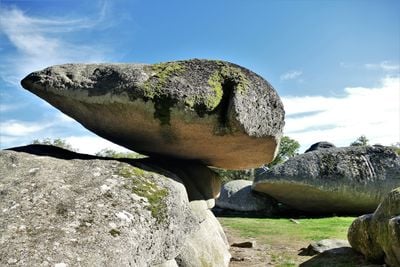
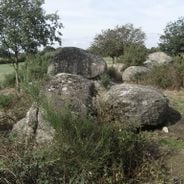
The Megaliths of Jaumâtres comprise around forty large granite blocks scattered irregularly across the summit of Mount Barlot in the Creuse region. This stone formation creates a natural landscape where paths lead among the rocks, offering views across the surrounding terrain.
The granite blocks are natural tors shaped by erosion during the cold Quaternary, between 100,000 and 10,000 years ago. In the early 19th century, Jean-François Barailon claimed they had been carved by Gallic druids for bloody cults; Prosper Mérimée and Pierre de Cessac later refuted this. The site was classified as a natural site in 1927.
Local people have long connected these stone formations to folklore involving fairies and natural spirits. Rock names reflect local observations, with some referring to weather patterns or familiar shapes from daily life.
The site is accessible year-round with marked trails starting from designated parking areas. Information boards along the paths explain the stones and help visitors understand what they are seeing.
The granite here is Saint-Silvain-Bas-le-Roc leucogranite, formed 294 to 300 million years ago at the end of the Variscan orogeny. The blocks were exposed when decomposed rock was cleared away by rain, frost and wind during the cold Quaternary, between 100,000 and 10,000 years ago.
The community of curious travelers
AroundUs brings together thousands of curated places, local tips, and hidden gems, enriched daily by 94,498 contributors worldwide.