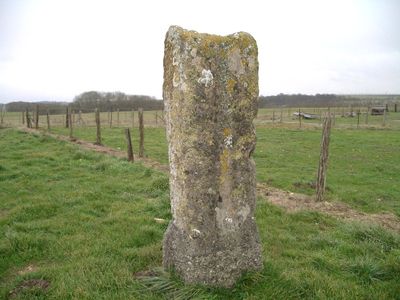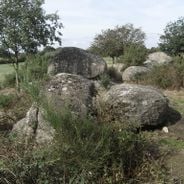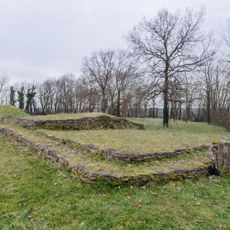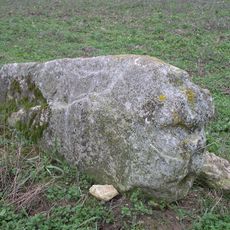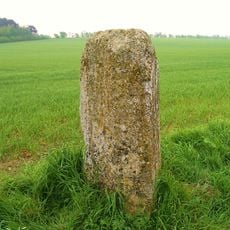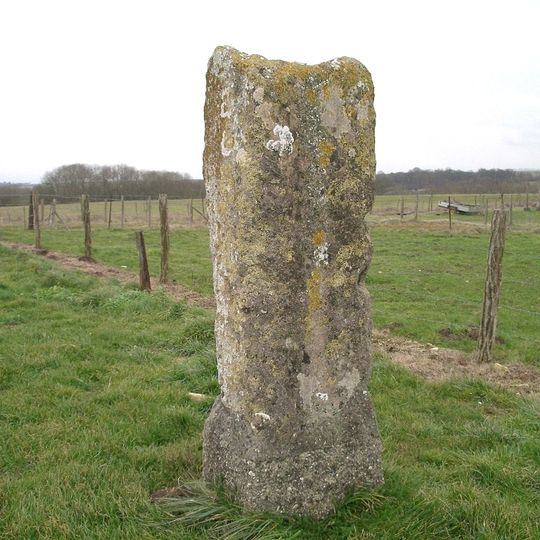
Pierre debout, Prehistoric menhir in Colombiers-sur-Seulles, France.
Pierre debout is a limestone block standing about 2.2 meters tall near a Roman road connecting Reviers to Bayeux, with a cavity at its summit. The monument rests on a concrete base that anchored it during an earlier restoration.
The monument toppled in 1845 from too many pilgrims climbing it, then underwent restoration and anchoring to concrete in 1872. Archaeological evidence suggests the stone may have served as both a prehistoric menhir and a Roman milestone along an ancient route.
Young women placed coins at the top during pilgrimages to Notre-Dame de la Délivrande, believing this would help them find husbands. The practice reveals how a prehistoric monument gained religious meaning in later centuries.
The stone sits near a road and is easily accessible for visitors exploring the local area on foot. There is minimal built infrastructure on site, so plan to walk the surroundings and allow time to take in the location.
The stone may have served dual purposes as both a prehistoric menhir and a Roman milestone, giving it multiple layers of history that are rarely found together. This dual role makes it especially interesting to archaeologists studying the region.
The community of curious travelers
AroundUs brings together thousands of curated places, local tips, and hidden gems, enriched daily by 90,902 contributors worldwide.