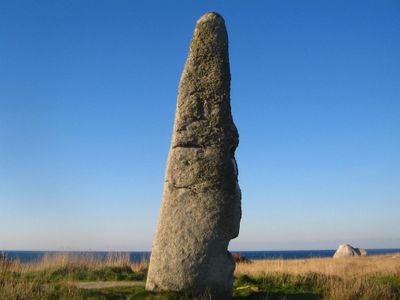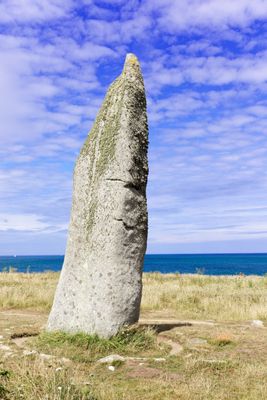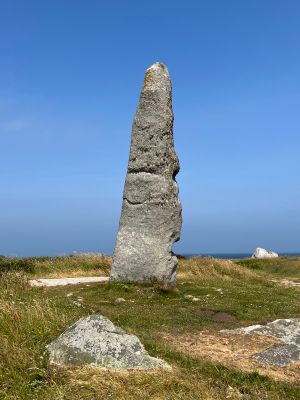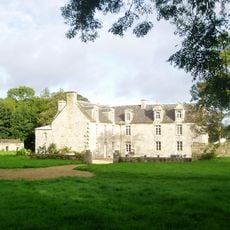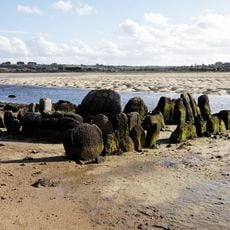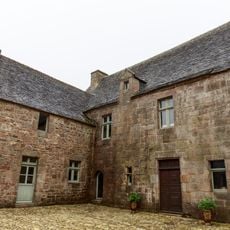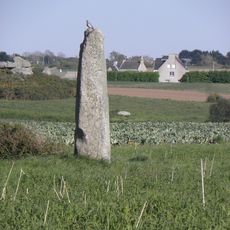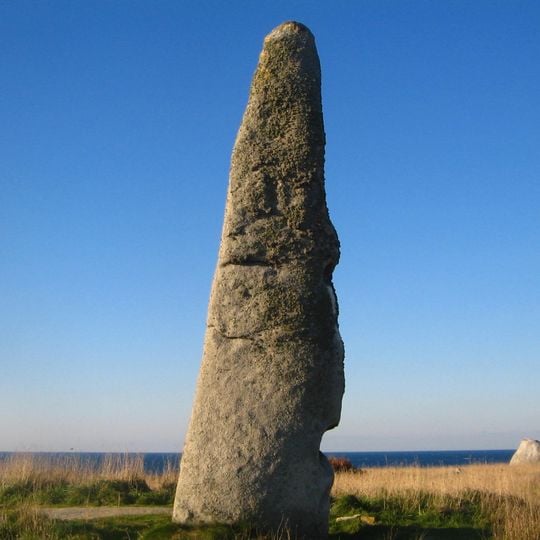
Cam Louis menhir, Neolithic menhir in Plouescat, France
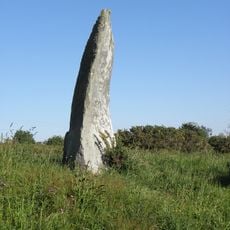
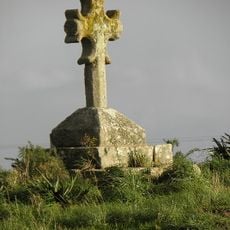
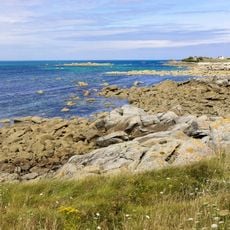
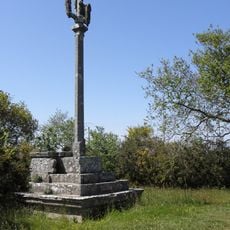
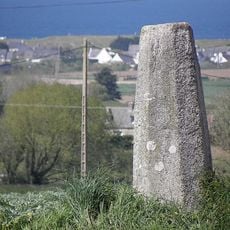
The Cam Louis menhir is an upright granite block standing on rocky coastal terrain near Plouescat that reaches approximately 7 meters (23 feet) in height. Its western face shows natural cavities and features several small carved bowls across its lower section.
This stone was erected during the Neolithic period when megalithic traditions were widespread across the region. It received official protection status as a classified historical monument in 1909.
For generations, local people have woven stories around this stone, mixing folklore with spiritual meaning. The menhir became part of the region's oral traditions and community identity.
The site can be reached via the GR34 long-distance hiking trail that runs along the Breton coast, making it easy to locate. Visitors should note that parts of the approach cross private land and the rocky setting has uneven ground to navigate.
The lower western face bears around thirty small carved bowls whose purpose remains unclear to this day. In the past, seafarers used this prominent granite landmark as a navigation reference point along the coast.
The community of curious travelers
AroundUs brings together thousands of curated places, local tips, and hidden gems, enriched daily by 91,084 contributors worldwide.