Tour carrée, Classified historical monument in Loudun, France.
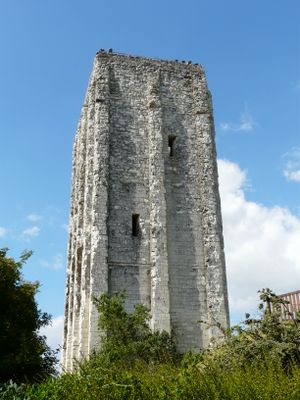
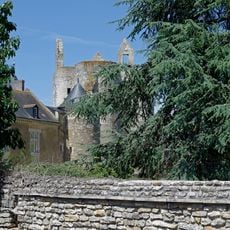
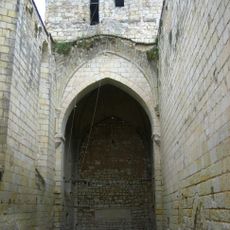
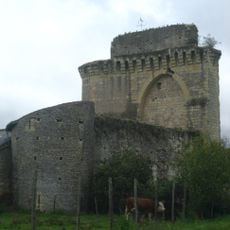
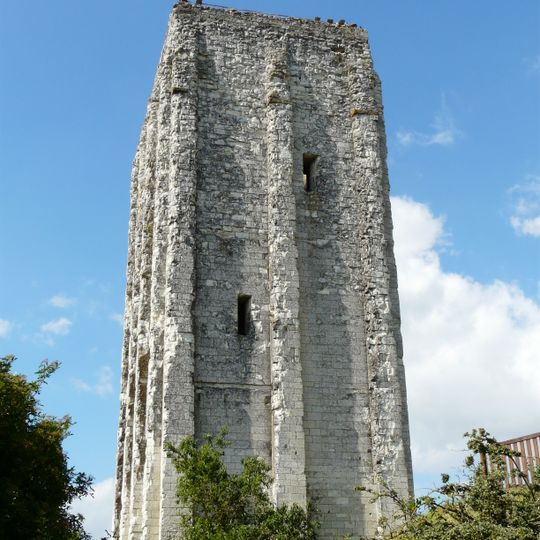
The Tour carrée is the last standing building of the château de Loudun, a stone keep about 30 m high. Its footprint is not a true square: the outer faces measure between 9.50 m and 10.40 m, the inner space between 5.95 m and 6.30 m, and the walls are roughly 1.80 m thick. Three vertical buttresses run up the faces, which have few openings.
The square tower is the last standing building of the castle of Loudun. Its construction was long attributed to Foulques Nerra in the 10th century, but a 2018 report on preventive excavations questioned this and suggested Henry II Plantagenet or his brother as possible patrons; beams in place during the restoration were dated to 1152-1179. In 1628 Louis XIII had the castle dismantled to prevent Protestant revolts, and only the tower was spared.
The tower has no interior rooms to visit: its walls are about 1.80 m thick and it originally had four floors, with a platform arranged at the top. Its name, Tour carrée, comes from its near-square plan, whose outer faces measure between 9.50 m and 10.40 m. The absence of windows and of a well points to its role as an observation post.
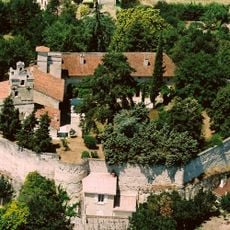
The tower stands in the town of Loudun and is seen from the outside; there is no interior visit. The remains of the circular keep lie under protective cover just after the Second World War excavations, with a sign marking the spot, and a section of the ramparts survives to the south near it.
The tower has no windows and no well, and its walls are about 1.80 m thick, with a platform arranged at the top. These features point to its likely role as an observation post. Its exterior faces measure between 9.50 m and 10.40 m, while the interior measures only 5.95 m to 6.30 m.
The community of curious travelers
AroundUs brings together thousands of curated places, local tips, and hidden gems, enriched daily by 94,585 contributors worldwide.