Château de Valognes, Medieval castle ruins in Valognes, France.
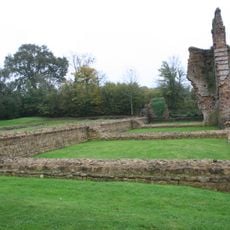
Château de Valognes no longer stands: the fortress was razed in 1771, its ditches filled to create the central Place du Château. The only visible remnant is a tall, narrow stone ruin of rough light-coloured blocks, with a rectangular window opening near the top and a smaller window on the left, its lower part covered by climbing plants, beside a building with a pointed roof and carved stone balustrade.
A ducal residence with an aula, chapel and private apartments stood here in the 11th–12th centuries; the future William the Conqueror took refuge in it from 1035 to 1040. Rebuilt as a castle in the 14th century, it was taken by Bertrand du Guesclin in 1364, held by the English from 1418 to 1449, and dismantled on Louvois's orders in 1688. In 1771 the ruins were levelled and the moats filled to create the central Place du Château.
The castle gave its name to Valognes's central square, the place du Château, which covers the filled-in moats. The site is also tied to the 1355 Treaty of Valognes, by which Charles the Bad gained the Cotentin. Nothing of the fortress stands today; the square is now the town's main open space.
The castle no longer stands: it was razed in 1771 and its moats filled to create the Place du Château in the town centre, so there is no ruin to explore. Look for the square itself, beneath which the fortress lies buried.
The castle no longer exists: Louis XIV ordered its dismantling in 1688, Louvois overseeing it, and in 1771 the ruins were destroyed and the moats filled to create the Place du Château. The English Wikipedia dates the royal destruction to 1689 and mentions a small tower that survived until 1944 bombing.
The community of curious travelers
AroundUs brings together thousands of curated places, local tips, and hidden gems, enriched daily by 94,004 contributors worldwide.