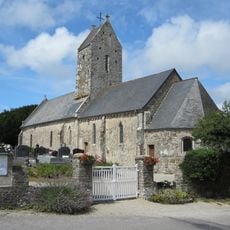
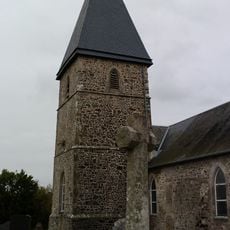
Château d'Olonde, Historical castle in Canville-la-Rocque, France.
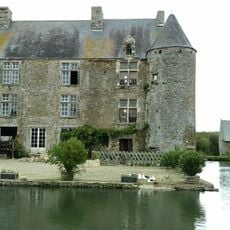
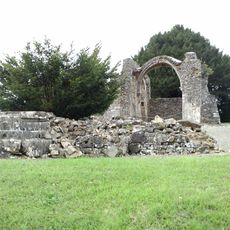
Château d'Olonde is a castle in Canville-la-Rocque containing remnants from the 12th century, including two square towers rebuilt in the early 16th century and a main building from the 18th century. The property shows these different building periods layered across the site, revealing how the castle evolved over time.
The castle was built in the 11th century but was destroyed by King Philip II of France in the early 1200s during his conquest of Normandy. This destruction marked the end of its role as a regional fortress.
Jules Barbey d'Aurevilly set part of his 1882 short novel 'Une histoire sans nom' at the château; the essayist Jacques Petit considered it certain that the writer knew the place. Michel Houellebecq later used Olonde in 'Sérotonine' as a symbol of an old world facing modernity. The claim that Marie de France was born or raised here has never been proven.
Only the courtyard may be visited; the buildings themselves are not open. The site lies 1.1 km west of the Saint-Malo church in Canville-la-Rocque, on the road between Portbail and Saint-Sauveur-le-Vicomte, near the Barneville-Carteret to La Haye-du-Puits route. Look for the ivy-covered stone facade, the white picket gate and the two round turrets at the rear.
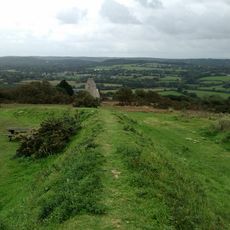
About ten metres from the present house stand two earthen mounds: an oval motte roughly four metres high and ten metres long, and, across a path, a curved rise about twenty metres long and two metres high. The two were probably once a single motte. The circular line of the moats still traces the medieval castle platform.
The community of curious travelers
AroundUs brings together thousands of curated places, local tips, and hidden gems, enriched daily by 92,801 contributors worldwide.