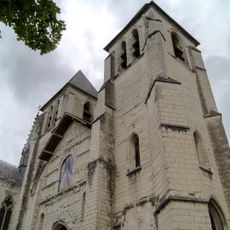
Église Notre-Dame de Rivière, Medieval church in Rivière, France
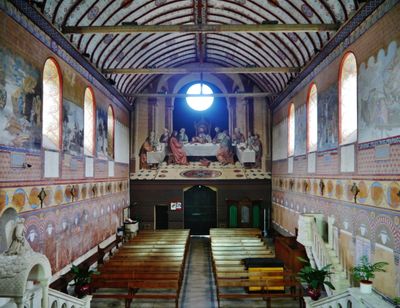
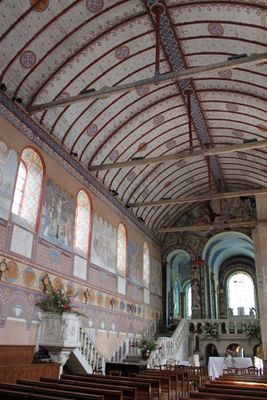
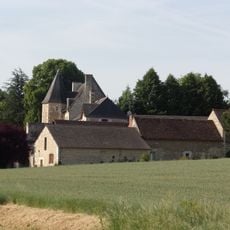
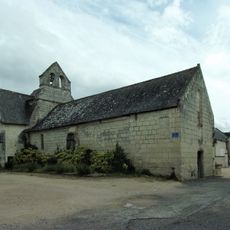
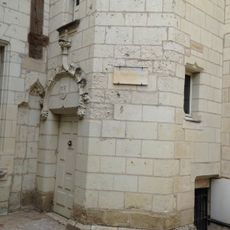
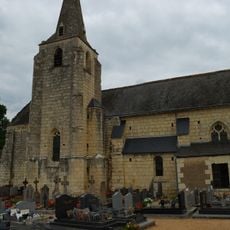
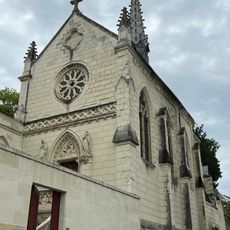
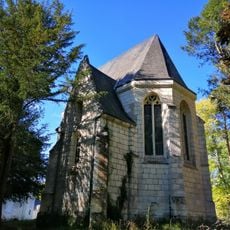
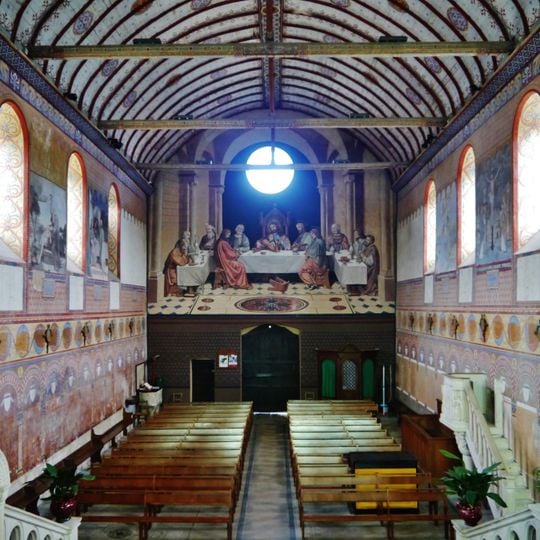
Notre-Dame de Rivière is a church from the late 11th century featuring a wooden barrel-vaulted nave and a ribbed-vault choir that show medieval construction methods. The building has a flat chevet at the end of the choir, and beneath it lies a crypt containing fragments of older painted decoration.
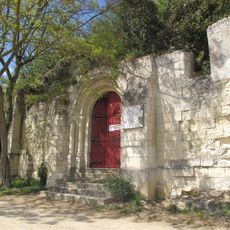
The church is first documented at the end of the 11th century, though chronicles claim Saint Martin and Saint Radegonde prayed on the site. In 1070–1071 Bouchard II gave it to Marmoutier Abbey as compensation for damage to Tavant priory; monks only regained full possession around 1115–1120. Protestants sacked it in 1562, and in the 17th century two western bays of the nave were removed and a new portal with a lean-to porch built. It was restored in the 19th century and classified as a monument historique in 1862.
Around 1864 the Count of Galembert painted a cycle covering the nave walls, visible today as bands of haloed figures in red and blue beneath narrative scenes, and as the Last Supper mural behind the altar. Older wall paintings from the church's construction survive at the west corner of the south wall and on the north wall under the lean-to.
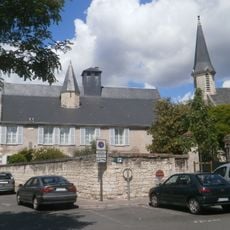
The church is located in Rivière in the Indre-et-Loire area and sits on the Place de l'Église, making it easy to find and approach from the town. Regular religious services are held here, so visitors should check ahead before entering to ensure they won't disturb any ceremonies.
The baptismal fonts sit inside an ancient sarcophagus, showing how medieval builders reused older stone materials they found or possessed. This practical approach to incorporating earlier objects is something visitors often overlook when examining the interior.
The community of curious travelers
AroundUs brings together thousands of curated places, local tips, and hidden gems, enriched daily by 92,917 contributors worldwide.