Château de Beaucamps-le-Jeune, Historic castle in Beaucamps-le-Jeune, France
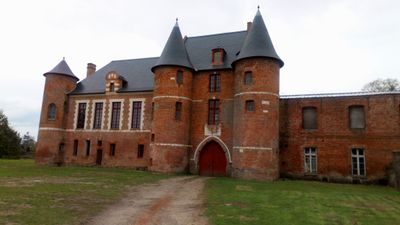
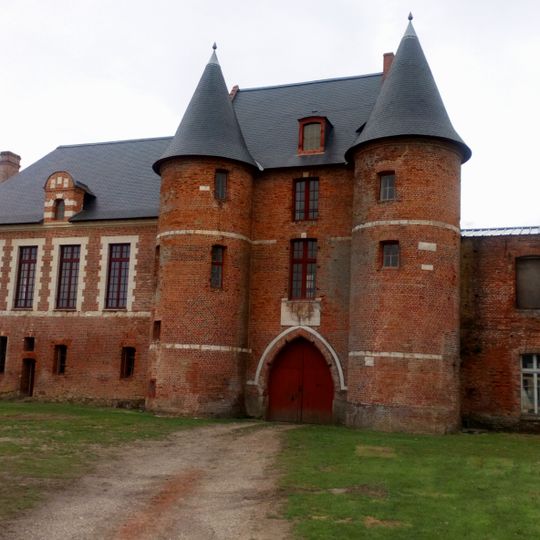
Château de Beaucamps-le-Jeune is a castle built around a square courtyard surrounded by residential wings with corner towers and a main gate dating to the 16th century. The layout follows this classic arrangement, forming the structure of a fortified residence from that period.
A manor held as a fief of the county of Aumale existed here in the 12th century; the fief of Beaucamps-le-Jeune is documented from the 14th century and was held in 1481 by Guillaume de Pisseleu, lord of Heilly. Construction of the present castle began in 1537, possibly at the wish of his daughter Anne de Pisseleu, favorite of Francis I. After her disgrace it was bought in 1553 by Charles de Runes, who carried on the works until his death.
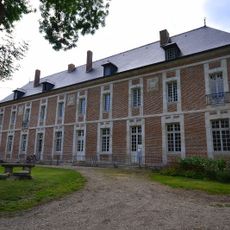
The castle's name comes from the village of Beaucamps-le-Jeune in the Somme, and the building is a maison forte, a fortified residence rather than a true fortress. Its round towers have pepper-pot roofs but no machicolations, arrow slits or walkway, so the defensive look is largely appearance. The brickwork is laid in a diamond pattern, a Norman influence visible on the facades.
The castle stands in the village of Beaucamps-le-Jeune, in the Somme department southwest of Amiens. It is a private residence whose owners have carried out restoration since 2005, so visits depend on their arrangement; contact the owners before travelling. The brick facades and the two gatehouses have been listed as monuments historiques since 3 July 2003.
The round towers have conical roofs but no defensive features such as machicolations, arrow slits or a walkway. The brickwork is laid in a diamond pattern, a Norman influence. The entrance gatehouse with its two towers was fully restored at the start of the 21st century.
The community of curious travelers
AroundUs brings together thousands of curated places, local tips, and hidden gems, enriched daily by 94,660 contributors worldwide.