Oppidum de Châteaumeillant
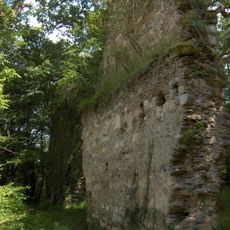
The oppidum of Châteaumeillant, ancient Mediolanum Biturigum, is a low, quadrangular enclosure of about 25 hectares bordered by two parallel rivers. Its dwellings were encircled by a murus gallicus, a Gaulish timber-laced rampart, and the site preserves traces of two ramparts, the older being that murus gallicus. Pits found at the edges of the settlement suggest the location of a necropolis.
The settlement was founded around 250 BC by Celtic Bituriges Cubès and initially served as a flourishing trading center. A major fire in the 2nd century BC destroyed the city, after which it was rebuilt and retained its importance as a junction between the roads from Poitiers to Lyon.
The name Mediolanum means "middle of the plain" and reflects its strategic position between two parallel rivers. The settlement was an important trading hub where Italian wines were sold through large storage jars, leaving traces of intense economic exchange between regions.
The oppidum lies within the town of Châteaumeillant, in the Cher department; the excavated area covers about 25 hectares on a low, quadrangular plateau bordered by two parallel rivers. The oldest of the two ramparts is a murus gallicus, a Gallic timber-laced wall, and pits at the edge of the settlement suggest a necropolis.
The oppidum had two ramparts, the older of which is a murus gallicus, a Gallic timber-laced wall. Excavations also uncovered pits on the edge of the settlement, which suggest the location of a necropolis. The site lies on a low, quadrangular plateau of about 25 hectares bordered by two parallel rivers.
The community of curious travelers
AroundUs brings together thousands of curated places, local tips, and hidden gems, enriched daily by 94,659 contributors worldwide.