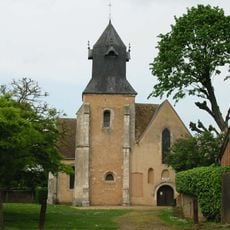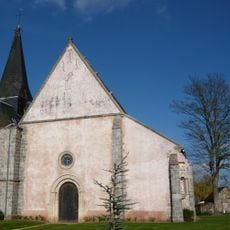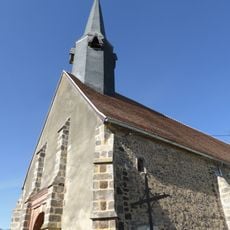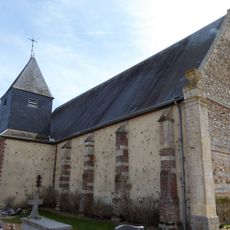
Château de Crécy, Classical château in Crécy-Couvé, France
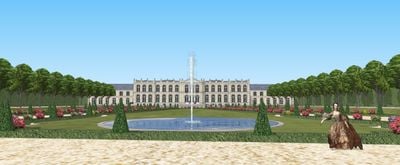
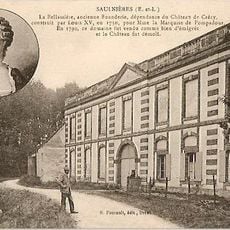
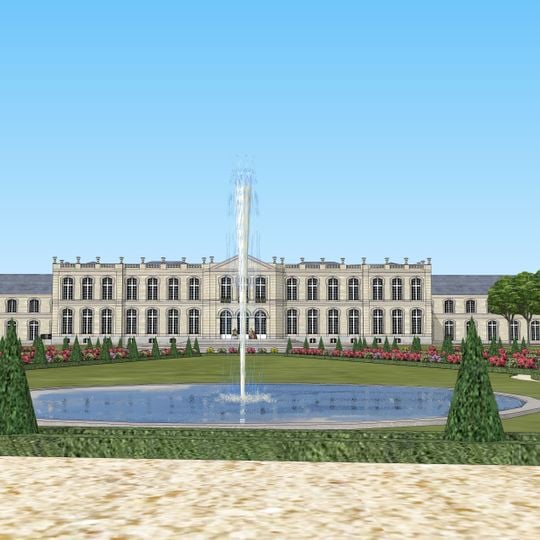
Château de Crécy was a classical French château rebuilt from about 1726 by architect Nicolas-Antoine Perrard for Louis-Alexandre Verjus, replacing an older feudal house with a thick keep above the Blaise valley. Its terrace overlooked the valley; the building was destroyed after the Revolution, so nothing of it stands today.
Around 1726 Louis-Alexandre Verjus had the old family castle demolished and architect Nicolas-Antoine Perrard built a new château whose terrace overlooked the Blaise valley. Its cost forced Verjus to sell the estate to Madame de Pompadour on 21 May 1746. She resold it on 21 September 1757 to the Duke of Penthièvre for 1,750,000 livres. The château was destroyed after the Revolution.
Madame de Pompadour commissioned four panels after cartoons by François Boucher, and between 1761 and 1769 the Duke of Penthièvre ordered eight more from Alexis Peyrotte and his son. The château was also a meeting place for artists the marquise favoured. The name Crécy-Couvé only appeared in 1782, joining the château's name with that of the valley parish of Couvé.
The château no longer exists: it was destroyed after the Revolution, so there is no building to visit at the site, 11 km south-west of Dreux in Eure-et-Loir. The village, the parish of Couvé until the name Crécy-Couvé appeared in 1782, lies in the Blaise valley below the former terrace.
The château was demolished after the Revolution; the sources do not confirm that La Rôtisserie survives. What remains documented is the terrace overlooking the Blaise valley, said to have cost 100,000 écus, and the wooden partitions the Duke of Penthièvre added to multiply guest rooms for his hunting parties.
The community of curious travelers
AroundUs brings together thousands of curated places, local tips, and hidden gems, enriched daily by 93,389 contributors worldwide.