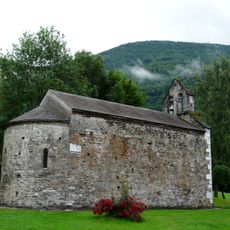
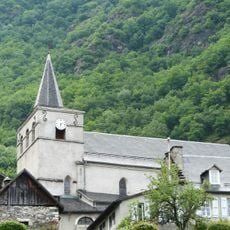
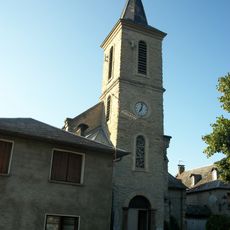
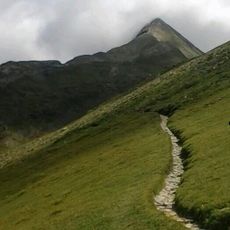
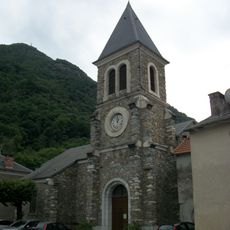
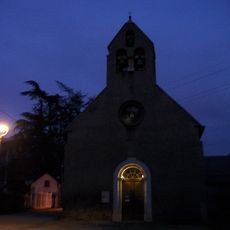
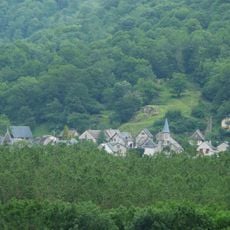
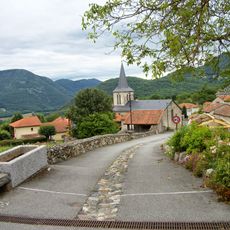
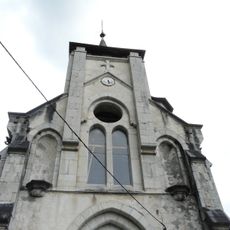
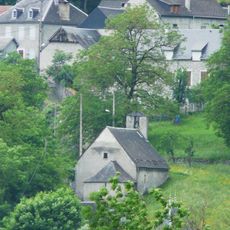
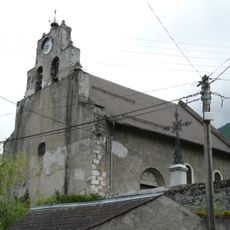
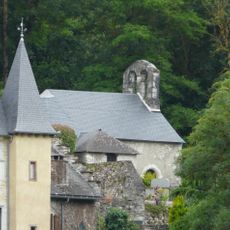
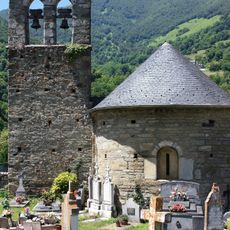
Château de Saint-Béat, Medieval castle ruins in Saint-Béat-Lez, France
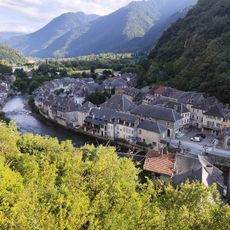
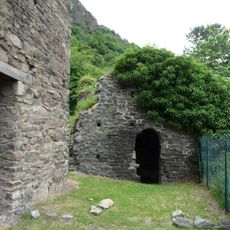
Château de Saint-Béat is a medieval castle ruin in Saint-Béat-Lez with a square keep about 5 meters on each side, two interior levels, and two defensive walls surrounding it. The remaining structure shows how this fortification was built to watch over the valley below.
Built in the 12th century, the castle was enlarged by Henri IV (1553–1610). Rulers rarely lived at Saint-Béat; captains held it until the 16th century. In 1588 the Parlement of Toulouse required the inhabitants of Melles, Argut and Arlos to guard it in turn, on pain of a 500-écu fine. It never had to repel an invasion.
This fortress earned its nickname as 'the key to France' because of its location near the Spanish border, where it controlled movement through the Garonne valley. The strategic position shaped how people understood the importance of this place in protecting their region.
The site is accessible on foot from the center of Saint-Béat-Lez and sits near Rue de l'Anglade. A walk here lets you explore the remaining fortification walls and appreciate how the location overlooks the valley.
The castle never had to repel an invasion, yet its position near the Spanish border earned it the name "la clef de France" (the key to France). The 1588 guard duty imposed on Melles, Argut and Arlos, with a 500-écu fine, was a precaution that was never tested by an attack.
The community of curious travelers
AroundUs brings together thousands of curated places, local tips, and hidden gems, enriched daily by 92,922 contributors worldwide.