Bruniquel rock shelters, Archaeological rock shelters in Bruniquel, France
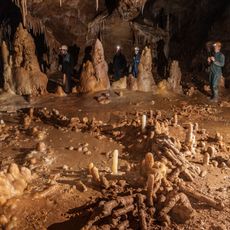
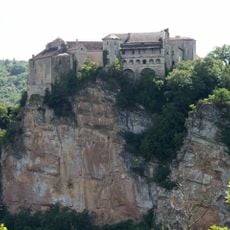
The Bruniquel rock shelters are natural stone cavities built into cliffs above the Aveyron River that provided dwelling space for prehistoric people. The shelters contain different-sized chambers arranged along the rock face where inhabitants left traces of their presence.
The shelters came to light during construction of the railway line between 1854 and 1858. Victor Brun excavated Plantade and Lafaye from 1864, Peccadeau de Lisle worked at Montastruc in 1867, and Edmée Ladier dug Gandil from 1987 to 1996. The site was inscribed as a monument historique in 1996.
The discovery of stone tools and portable artwork within the shelters shows how early humans developed their craftsmanship and creativity. These objects tell us about their daily life and ability to create and decorate.
A guided tour is the best way to explore this location since guides explain the archaeological findings and geological features of the site. Visitors should wear sturdy shoes because the paths to the shelters can be uneven and slippery.
The site's best-known piece is a reindeer-antler spear-thrower carved as a leaping horse, found in the Montastruc shelter in the 19th century and dated to about 12,000 BC. It is now kept at the Musée d'Archéologie nationale in Saint-Germain-en-Laye.
The community of curious travelers
AroundUs brings together thousands of curated places, local tips, and hidden gems, enriched daily by 94,661 contributors worldwide.