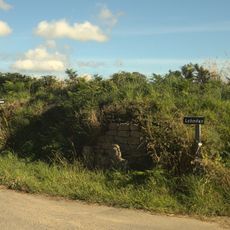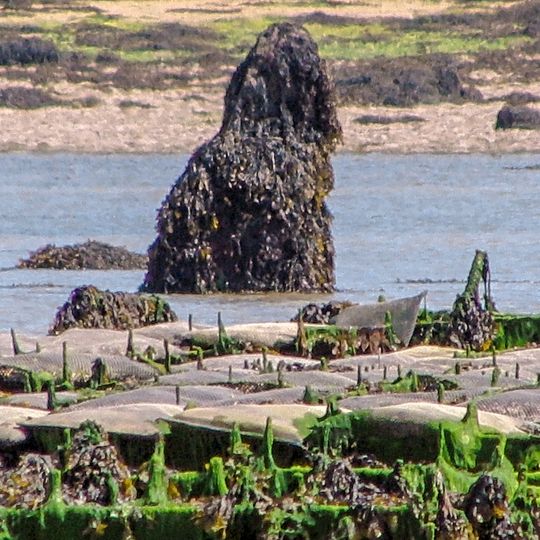
Menhir of Menozac'h, Menhir in Plouguerneau, Brittany, France
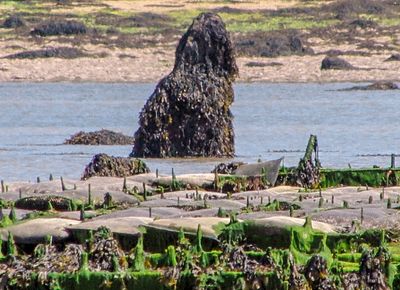
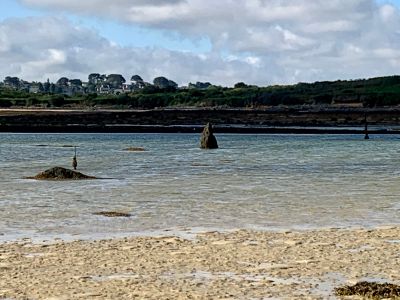
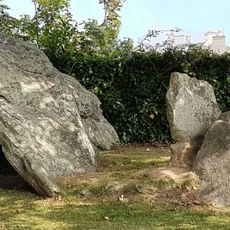
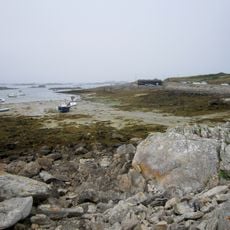
The Menhir de Saint Cava, also known as Men Ozac'h, is a standing granite stone on the foreshore of the cove of Saint-Cava in Plouguerneau, Brittany. The stone stands about 5 feet 7 inches (1.70 meters) tall and has a roughly human-shaped outline, with its base submerged at high tide.
The menhir was erected during the Neolithic period, when sea levels were much lower and the site was dry land. Over thousands of years, the sea rose and the stone ended up standing in the tidal zone. In the early 20th century it was first documented by Alfred Devoir, who called it the 'menhir de Lilia.' In the 1980s it was temporarily removed but later returned to near its original position by the local municipality.
The menhir also goes by the name Men Ozac'h, which roughly translates as 'the patriarch's stone.' Its dark, algae-covered surface has earned it the local nickname 'la bonne sœur,' meaning 'the good sister.'
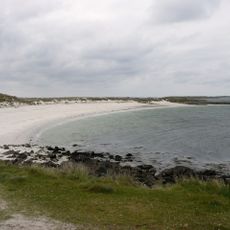
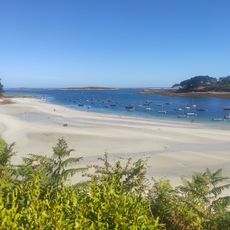
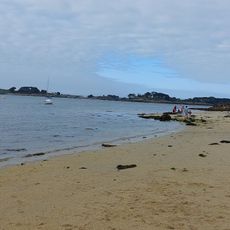
The menhir is easy to reach on foot from Saint-Cava beach at low tide, when it stands on exposed sand. At high tide the base goes fully underwater, so checking the tide schedule before visiting is a good idea.
Researchers believe that concentric stone circles may once have surrounded the menhir, but these formations remain hidden under water at almost every tide. Since sea levels have risen since it was first placed here, the stone now sits about 21 feet (6.5 meters) below the highest water level.
The community of curious travelers
AroundUs brings together thousands of curated places, local tips, and hidden gems, enriched daily by 92,375 contributors worldwide.