La Chaussée-Tirancourt oppidum, Iron Age hillfort in La Chaussée-Tirancourt, France
La Chaussée-Tirancourt oppidum is a 35-hectare fortified spur between the Somme valley, the Acon valley and the man-dug Fossé Sarrazin. Its chalk-cut ditch is 457 m long and 12 m wide, backed by an earth rampart 27 m thick at the base. Excavations found a 5 m-wide gate with a 20 m fortified corridor, nine nails from a door leaf and traces of a wooden watchtower.
The site was long read as a Celtic oppidum, but its dating is debated. Jean-Louis Brunaux places the rampart at 40–25 BC, after the Gallic Wars, making it a Roman camp built with Gallic techniques. Excavations in 2014–2015 argued for 60 BC, during the conquest, and finds date to the second half of the 1st century BC. A Gallic murus gallicus rests on a Neolithic enclosure of about 5000–2000 BC.
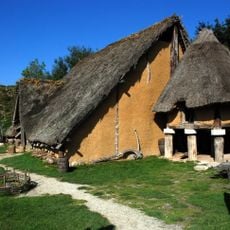
Locally the earthwork is called "camp César", a name tied to the Roman camp interpretation. The entrance gate stood where the present path crosses the rampart, and excavations found nine nails in a quincunx marking a door leaf. The site lies beside the Samara archaeological park.
The grounds are expansive and require time to explore properly, so wear comfortable shoes and bring adequate water. This location sits in a hilly region with damp conditions, and some paths become slippery after rain.
Beneath the soil lie several hidden structures detectable only with specialized equipment, making the ancient settlement even more mysterious. These invisible traces suggest people occupied this location long before the fortification was built.
The community of curious travelers
AroundUs brings together thousands of curated places, local tips, and hidden gems, enriched daily by 94,384 contributors worldwide.