Satsurblia Cave, Archaeological cave in Imereti region, Georgia.
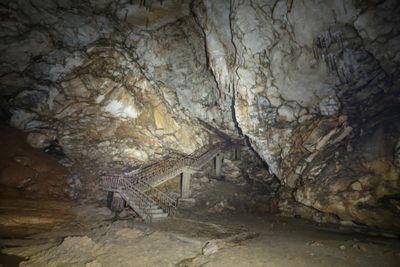
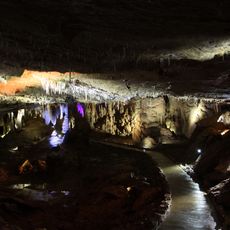
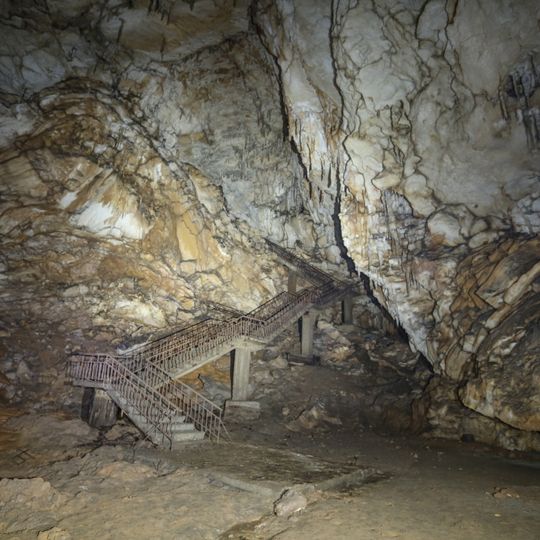
Satsurblia is a cave in the Imereti region with an entrance about 6 meters wide that opens into an 80-meter tunnel. Inside you find stalactites and stalagmites alongside archaeological remains that show people once lived here.
A. N. Kalandadze first excavated the cave in 1976. Occupation began around 25,500–24,400 BP, paused during the Last Glacial Maximum, and resumed around 17,000–16,200 BP. In the Middle Ages the cave served as a refuge, and since 2011 it has been a Natural Monument under IUCN category III.
The cave displays evidence of human activity through stone tools, bone remains, and pottery from different periods. These artifacts tell the story of how people hunted and lived their daily lives thousands of years ago.
The entrance is 1.2 km from Kumistavi village in Tsqaltubo Municipality. The first tunnel runs 80 m with a 12 to 15 percent slope, then rises in steps of 1 to 1.5 m, so sturdy shoes help. At 125 m from the entrance a hall 30 by 25 m opens up.
A bone fragment from a human skull was dated to about 13,300 years ago and provided rare genetic information about early inhabitants. This find is one of the oldest direct biological records of human presence in this region.
The community of curious travelers
AroundUs brings together thousands of curated places, local tips, and hidden gems, enriched daily by 93,183 contributors worldwide.