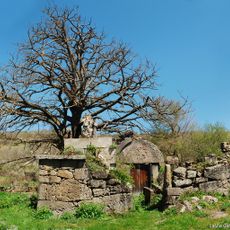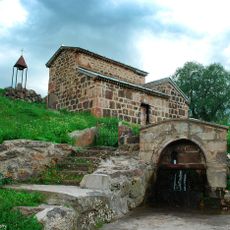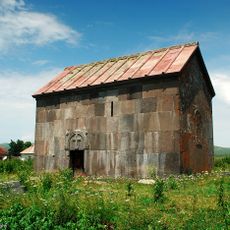
Trialeti petroglyphs, Prehistoric rock art site in Kvemo Kartli, Georgia.
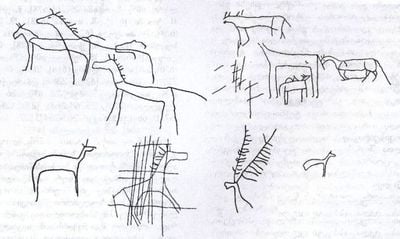
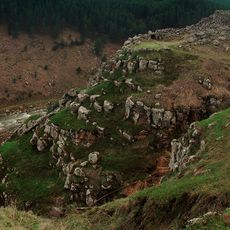
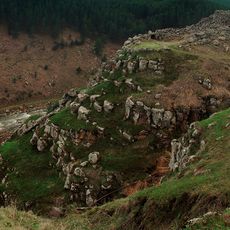
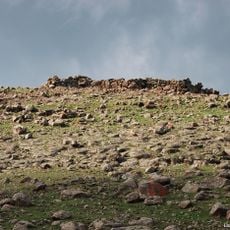
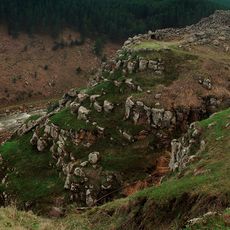
The Trialeti petroglyphs are about 100 carvings grouped into six panels on a flat basalt surface in the Avdris-Tsqali gorge, near Gantiadi village in Tsalka Municipality. The panels run along roughly 50 m of the fourth terrace, about 30 m above the river. Figures measure 2.5–20 cm and are cut 1–2 mm deep.
The carvings were first reported in the 1880s by the amateur archaeologist A. Ioakimov, whose letter to historian Evgeny Veidenbaum described a gallery of drawings in caves near the village of Tak-Kilisa. The archaeologist Boris Kuftin doubted the claim, and later searches by N. Berdze-Nishvili and Al. Javakhishvili failed. In 1974 Manana Gabunia, leading an expedition on the Georgian Stone Age, found the letter and reached the site in 1976, locating the engravings on exposed rock between the caves.
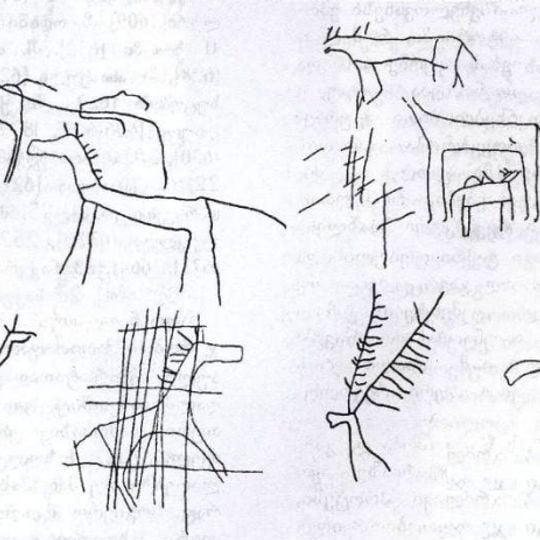
The panels combine three image groups: animals, hunters and geometric signs such as crosses, checkerboards and sunbursts. Deer and horses dominate, followed by ibex, camels and birds; some figures are hybrid creatures. One scene shows a female deer feeding its fawn, another animals caught in a hunter's net. The site is on the Council of Europe's Prehistoric Rock Art Trails.
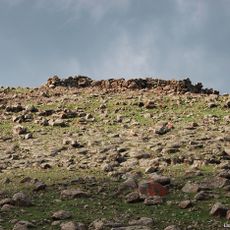
The site sits roughly 12 kilometers east of Tsalka near Gantiadi village and welcomes visitors during daylight hours. There are no formal facilities or checkpoints, so come prepared with water and sturdy footwear for walking across the rocky terrain.
The carvings are tiny: most lines are only 1–2 mm wide and deep, and the human hunters measure 2.5 cm to 18–20 cm, far smaller than the deer and horses beside them. The site is the only prehistoric rock art of this kind in Georgia; the carvings at Mghvimevi cave in Imereti and Agtsa in Abkhazia are limited to simple geometric motifs.
The community of curious travelers
AroundUs brings together thousands of curated places, local tips, and hidden gems, enriched daily by 94,639 contributors worldwide.