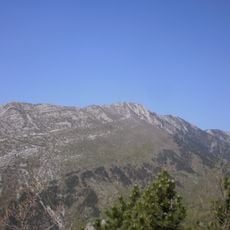
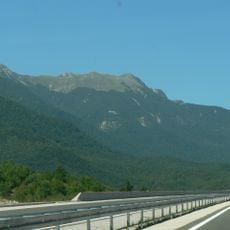
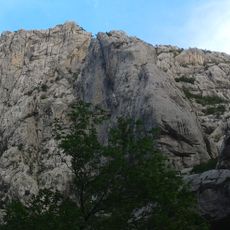
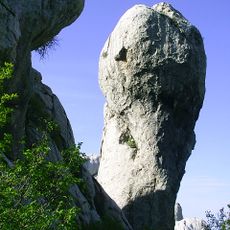
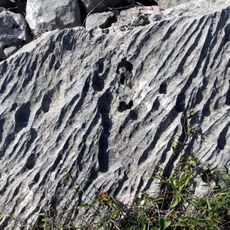
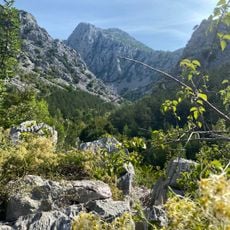
Paklenica, National park in Zadar County, Croatia.
Paklenica National Park lies in the Velebit massif about 30 km northeast of Zadar, near Starigrad-Paklenica. Its two limestone canyons, Velika and Mala Paklenica, cut deep into the mountain between high grey walls; the park covers 96 km² and rises to Vaganski vrh at 1757 m.
Paklenica was first declared a national park in 1929, under a law that had to be renewed annually and was not, so the status lapsed. It was proclaimed again on 19 October 1949, a few months after Plitvice Lakes, making it Croatia's second national park. On 7 July 2017 its beech forests at Suva draga–Klimenta and Oglavinovac–Javornik, 2031 ha, joined the UNESCO World Heritage listing of primeval beech forests of the Carpathians and other regions of Europe.
The name Paklenica likely comes from the black pines' resin, called paklina, once tapped here and used to waterproof boats; another explanation links it to the steep karst cliffs, said to resemble the underworld. The 1962 Winnetou film Der Schatz im Silbersee was shot in the gorge, and signposts still mark the locations.
The park lies about 30 km northeast of Zadar, roughly a kilometre from Starigrad-Paklenica, and has 150 km of marked trails. Camping is not allowed, but mountain huts and free shelters are available, and drinking water is found throughout. In some areas it is strongly advised not to leave the marked paths because of remaining landmine risk.
The park's canyons stood in for the American Wild West in the 1962 Winnetou film "Der Schatz im Silbersee"; signposts still mark the shooting locations. Manita peć, above the Velika Paklenica canyon, was fitted out as a show cave in 1937 and is visited on guided tours.
The community of curious travelers
AroundUs brings together thousands of curated places, local tips, and hidden gems, enriched daily by 94,661 contributors worldwide.